
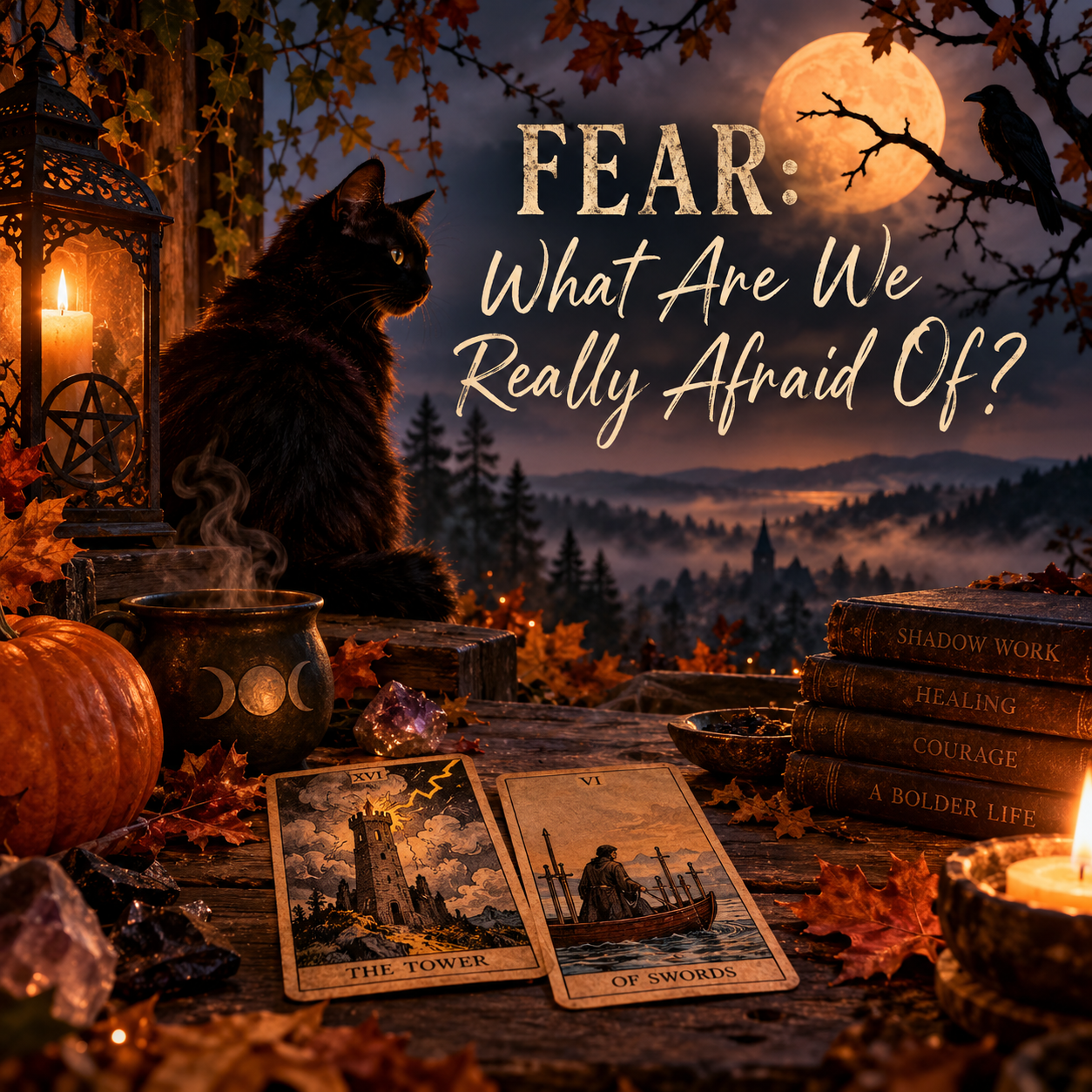
October has a funny way of turning fear into entertainment. Ghosts, skeletons, graveyards, haunted houses, and things that go bump in the night.
But our real ghosts aren't usually nearly so decorative.
Aging. Loss. Money. Illness. Loneliness. Failure. Leaving. Staying. Beginning again. Not knowing.
Fear has been showing up quite a bit in my life lately. Mostly, it's been fear of aging, of losing people I love, and perhaps most of all, of reaching the end of my life and realizing I didn't live it as fully as I could have.
Sometimes, knowing what I know now, I look back and wish I'd been a little bolder. Taken more risks. Trusted myself sooner. Worried less about what other people thought.
But regret isn't particularly useful unless we allow it to teach us something.
So lately, I've been turning that conversation toward the future. Instead of asking what I wish I'd done twenty years ago, I'm asking what the version of me twenty years from now would want me to do today.
And I suspect she'd have some rather colorful advice.
Grab life by the balls and don't let go. Be fierce. Be bold. Live every damn dream you can.
I rather like her.
And yet, the idea of living that boldly is both exhilarating and a little terrifying.
Funny how that works, isn't it?
The Deeper Story: Fear Has Something to Say

We've been taught to think of fear as something to conquer. Something to push through, overcome, or eliminate.
But what if fear isn't the enemy?
What if it's simply trying to tell us something?
Fear often stands guard over something precious. Our safety. Our identity. Our sense of belonging. The people we love. The life we've worked so hard to build.
In recovery circles, I've heard FEAR described two ways:
Fuck Everything And Run.
Or
Face Everything And Recover.
I love these because they capture two very different ways of responding to the same experience.
The first is what happens when our brain's alarm system takes over. The amygdala detects a threat, our sympathetic nervous system kicks into gear, and suddenly we're ready to fight, flee, freeze, or appease.
Sometimes that response is absolutely necessary. If a bear is chasing you through the woods, by all means, run.
But most of our modern fears aren't bears.
They're difficult conversations. Uncertain futures. Changing relationships. Aging bodies. The possibility that the life we've known may no longer be the life we're meant to live.
And our brains don't always distinguish very well between an immediate physical danger and a perceived emotional threat.
This is where the pause becomes so powerful.
When we notice ourselves moving into Fuck Everything And Run mode, we have an opportunity to stop. Breathe. Feel our feet on the ground. Give our nervous system a little space to settle.
That pause doesn't magically switch off the amygdala or eliminate fear. But it can help us regulate our response and bring the parts of our brain responsible for perspective, reasoning, and decision-making more fully back into the conversation.
I like to think of it as inviting the brain's CEO back into the office.
Because fear may have something important to say, but it doesn't necessarily deserve the final vote.
And knowing that we can choose how to respond, rather than simply react, can make all the difference.
The Wisdom in the Shadows

Many of you know that I read Tarot. Not usually for others, but for myself.
For me, Tarot isn't about predicting the future. It's a tool for reflection, much like journaling, meditation, or the other spiritual practices that help us see something from a different perspective.
Sometimes the cards reveal something we haven't considered.
And sometimes they simply hold up a mirror to something we already know.
This morning, while journaling, I found myself writing about my fears and the intuition I've been experiencing around an upcoming trip to Oregon.
I feel deeply called to be there with my family during a difficult time. I anticipate days filled with love, connection, support, and the simple sacredness of being together.
But I also sense that this time may be transformational. Potentially heartbreaking. Revealing.
There is something about knowing that life is changing, even when we don't yet know what those changes will ask of us.
After writing all of this, I pulled my daily Tarot cards.
The Tower. And, in the shadow position, the Six of Swords.
Well, isn't that interesting?
The Tower is one of those cards that can make even a seasoned Tarot reader raise an eyebrow. It represents upheaval, revelation, and the dismantling of structures that can no longer stand as they are. Not necessarily catastrophe, but the uncomfortable truth that some things cannot remain unchanged.
The Six of Swords, meanwhile, speaks of transition. Moving away from turbulent waters toward something quieter. A journey that may be necessary, even when it carries grief, uncertainty, or the weight of what we're leaving behind.
Together, these cards reflected almost exactly what I'd written in my journal just moments before.
Not a prediction of what will happen in Oregon. Not a warning that something terrible is coming.
Simply a mirror.
A reminder that transformation and loss are sometimes woven into the same experience. That moving forward doesn't always mean leaving something behind willingly. And that we can carry love and grief, courage and fear, all at once.
But the shadow card invited me to go a little deeper.
What am I afraid of losing? What am I holding on to? And what is this fear trying to protect?
Perhaps that's the real work of this season.
As we move toward Samhain, when the natural world begins its descent into winter and the veil between life and death is symbolically at its thinnest, we're invited to look more closely at the things we'd rather not see.
Our mortality. Our attachments. Our unfinished dreams. The inevitability of change.
Not to frighten ourselves, but to remember that life is precious precisely because it doesn't last forever.
And perhaps the greatest courage isn't living without fear.
Perhaps it's allowing ourselves to love deeply, live boldly, and remain open to life, even knowing that someday we will have to let go.
Simplicity Living Practice: The Thing Beneath the Thing
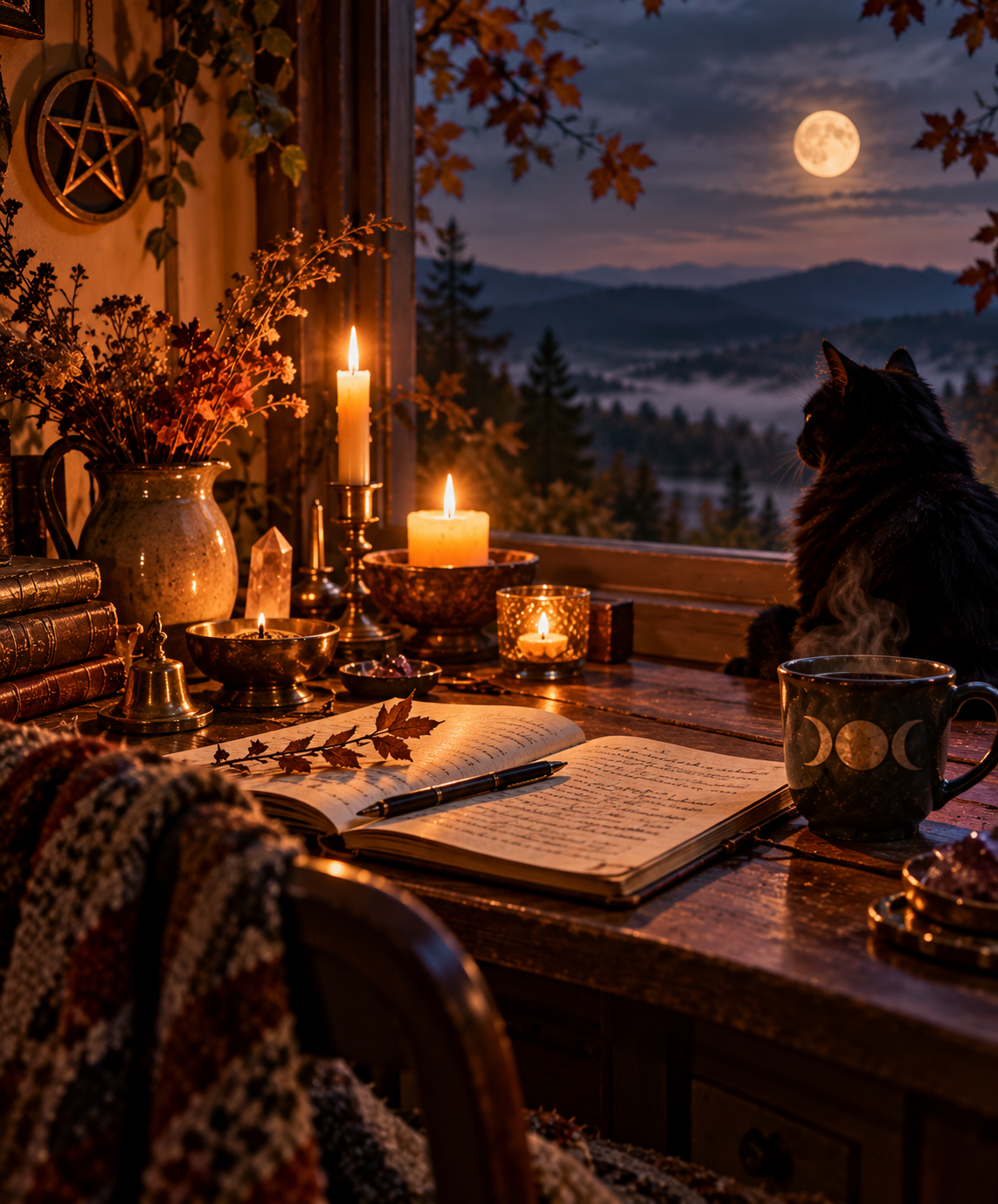
Writing is one of the safest and most sacred ways I know to explore what's happening within us.
Sometimes we don't even know what we're thinking or feeling until we put pen to paper and allow the words to come.
This week's practice is simple, but not necessarily easy.
Find a quiet place. Make yourself a cup of tea. Light a candle if you like. Open your journal and write:
I'm afraid that…
Don't censor yourself. Let whatever comes up find its way onto the page.
Then ask:
If that happened, what would I be afraid it meant?
Write your answer.
And then ask again.
Keep going gently, peeling back the layers until you begin to recognize what's beneath the fear.
Perhaps your fear of aging is really about losing independence. Perhaps your fear of leaving is about belonging. Perhaps your fear of failure is about not feeling worthy.
Or perhaps you'll discover something entirely unexpected.
There's no need to fix anything or force an answer. And if the exploration becomes overwhelming, you can always stop and return another day.
The purpose isn't to get rid of fear.
It's to understand what it has been trying to tell you.
Sage Wisdom
Fear makes a fine messenger and a terrible compass.
Listen to what it has to say. Thank it for trying to protect you.
And then remember that you still get to choose the direction.
Life is waiting.
Be bold.