
Gathering What Nourishes Us
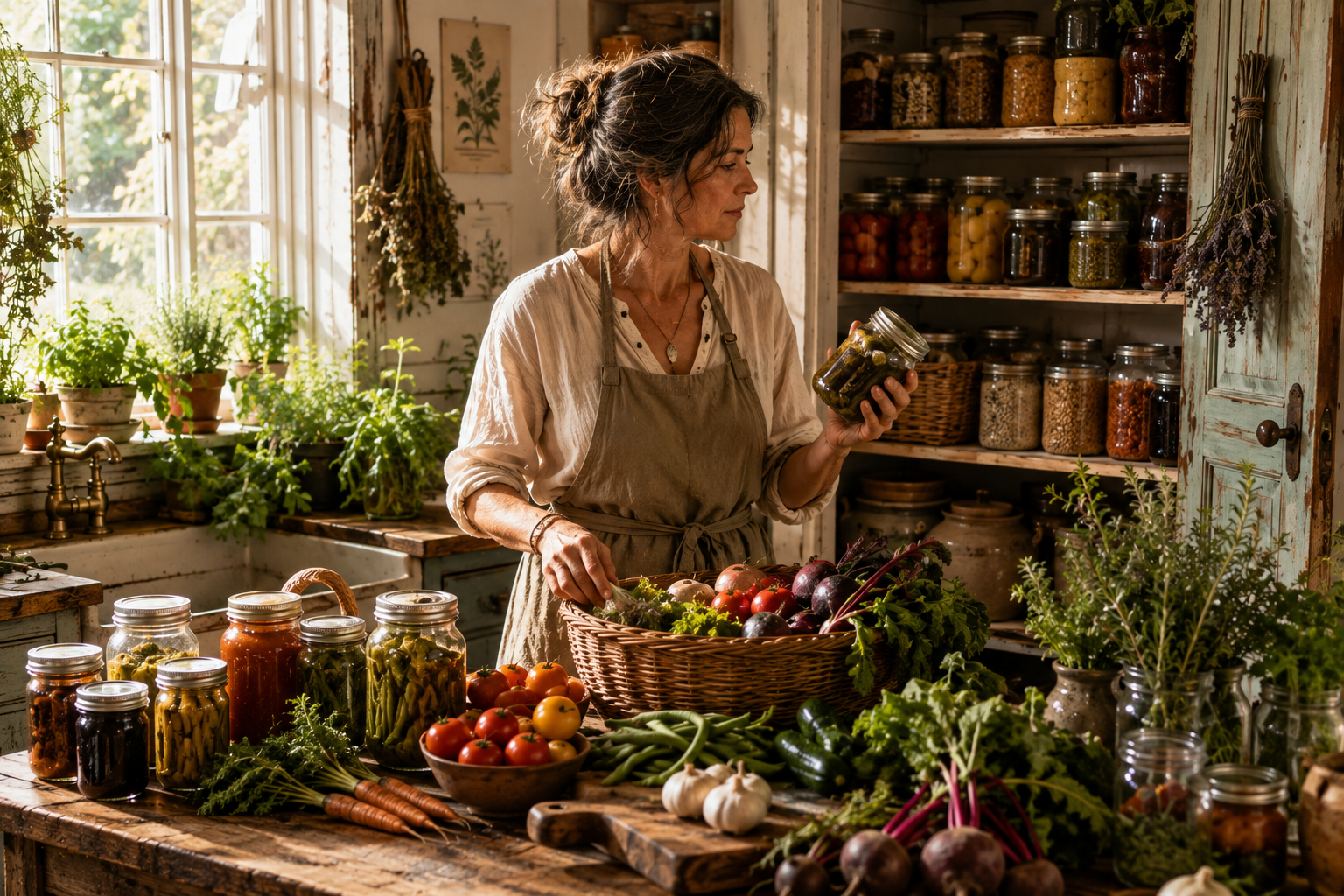
Monday, we gathered the harvest.
Tuesday, we considered the possibility that enough might be a harvest too.
And now comes the sorting.
There is something wonderfully practical about the old rhythms of harvest. Gathering was only the beginning. Once everything had been brought in from the fields and gardens, decisions had to be made. Some things were eaten immediately, enjoyed at their freshest and sweetest. Some were dried, canned, salted, stored in cellars, or otherwise preserved for the leaner months ahead. Some were shared with neighbors. Some of the very best were carefully set aside as seed for another season.
And some went to the compost pile.
Nothing dramatic about it. No judgment. No sense that the imperfect tomato or bruised apple had somehow failed.
It simply wasn't going into the pantry.
There is wisdom in that.
Because over the course of a life, we gather an extraordinary amount of things. Possessions, certainly, but also habits and obligations. Relationships. Beliefs. Expectations. Identities. Stories about ourselves. Ways of spending our time. Ways of coping. Ways of belonging. Things we once desperately wanted and things we somehow acquired without ever consciously choosing them.
Eventually, if we are paying attention, we arrive at a moment when gathering is no longer the work.
Sorting is.
Not Everything Goes Into the Pantry
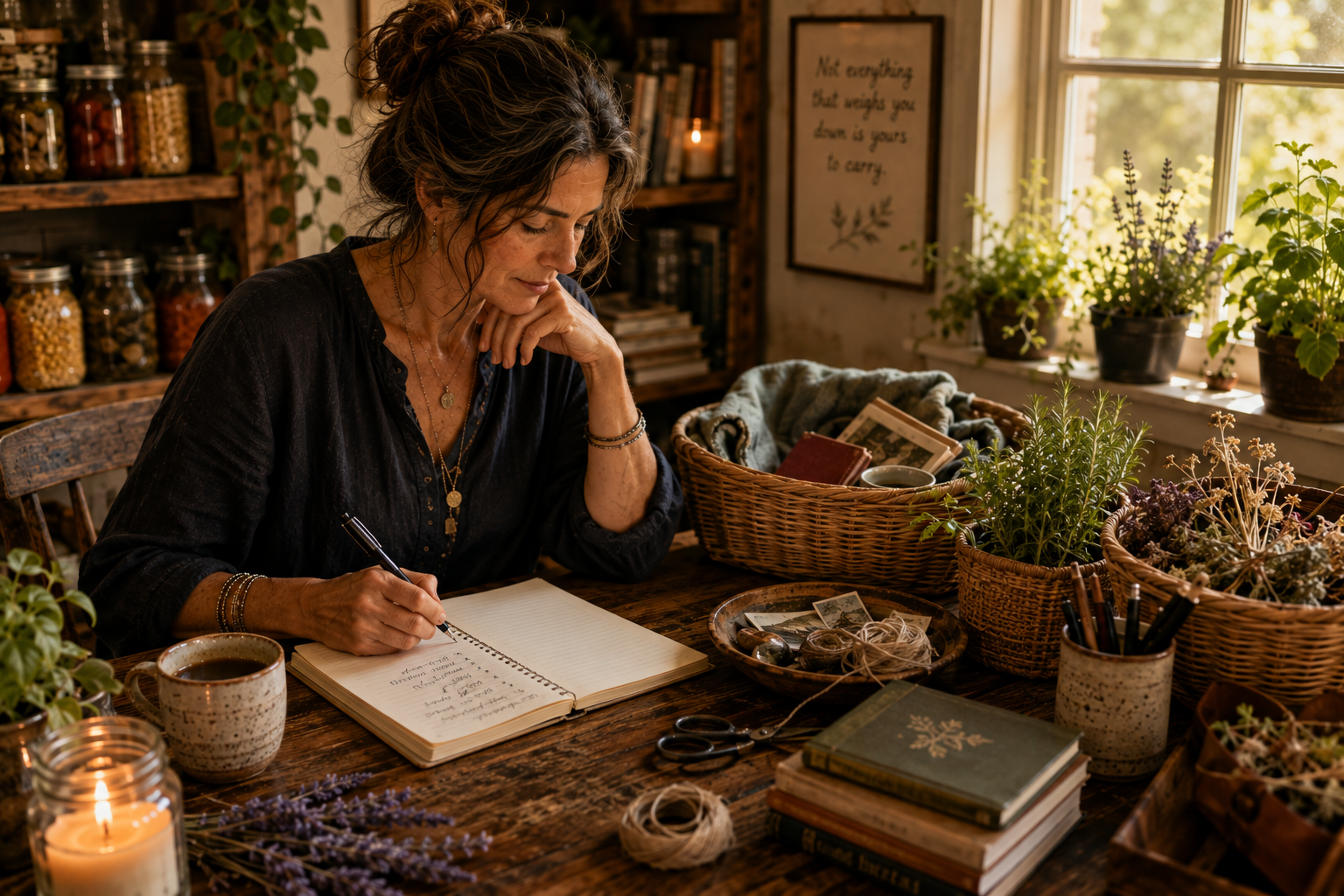
I have spent a great deal of my life accumulating.
Experiences. Education. Careers. Possessions. Responsibilities. Accomplishments. Ideas about who I was supposed to be and what a successful life was supposed to look like. Some of those things have nourished me deeply. They have become part of who I am, woven so completely into the fabric of my life that I cannot imagine myself without them. Others were right for a season.
And some simply took up space.
That distinction has become increasingly important to me because I am beginning to understand that we can fill our lives to overflowing and still be hungry.
We can have closets packed with clothes and nothing we really want to wear. Calendars filled with commitments and very little we actually look forward to. Hundreds of people connected to us through social media and still long for meaningful conversation. We can consume an endless stream of information and somehow feel less informed about what is happening inside our own hearts.
More does not necessarily nourish us.
Sometimes it simply fills the pantry.
The older I get, the less interested I am in keeping something simply because I have always kept it. A possession. An obligation. A habit. A belief. Even an old version of myself. There is a particular freedom in realizing that something can have been important once without needing to remain important forever.
That isn't rejection.
It is discernment.
The harvest asks us to look honestly at what we have gathered and decide what deserves to come forward with us.
What Actually Feeds Me?
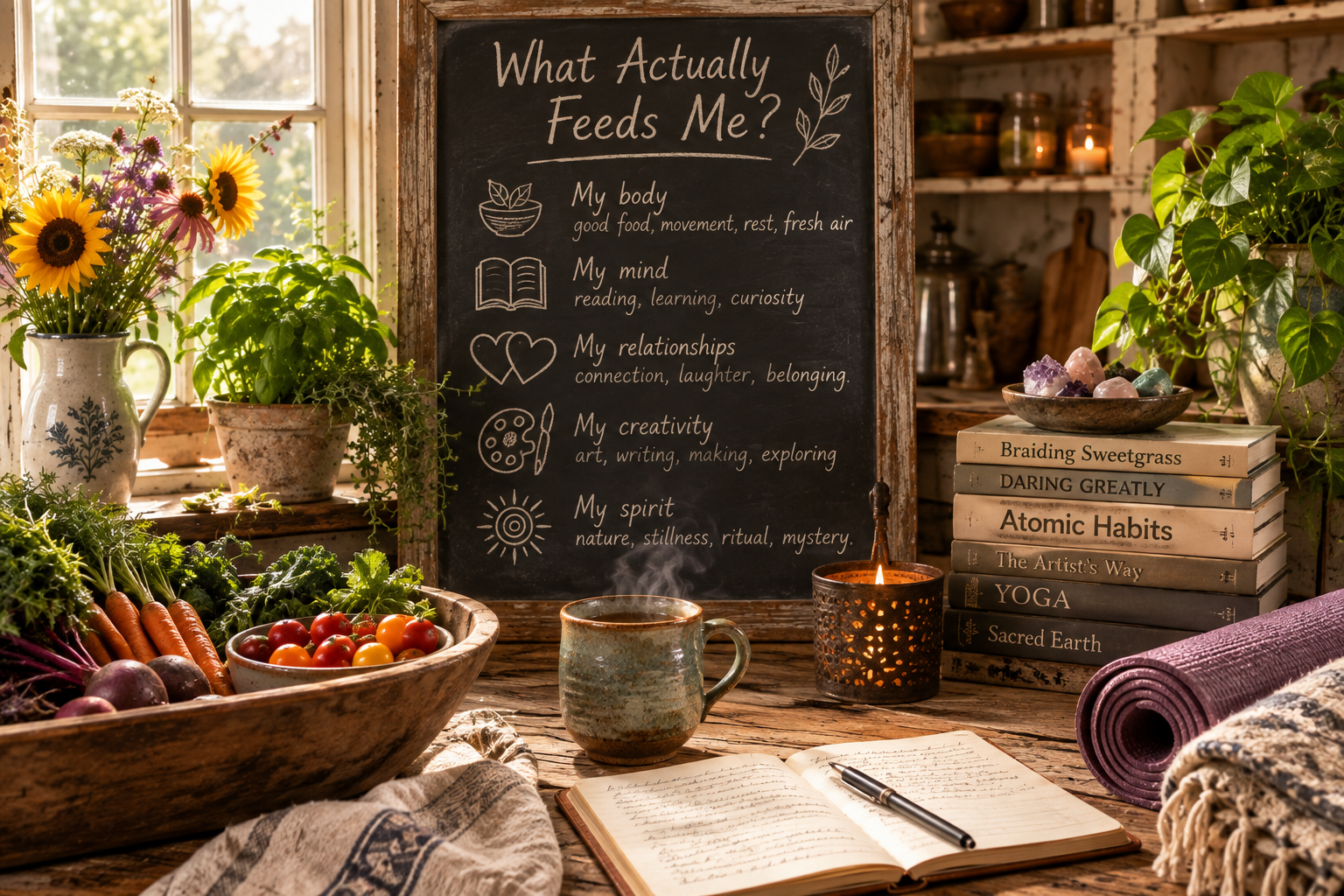
We usually think about nourishment in terms of food. Protein and vegetables and vitamins and water and all the things our bodies require to keep carrying us through the world. But I think nourishment has a much larger ecology.
There are things that nourish my body, certainly. Movement. Sleep. Good food. Walking outside. Rest when I need it.
But there are also things that nourish my mind. Reading. Writing. Learning. Curiosity. Conversations that leave me thinking about something differently than I did before. There are people who nourish me simply by being themselves. Relationships where I don't have to perform or prove anything. People with whom laughter comes easily and silence isn't uncomfortable.
Creativity nourishes me. Nature nourishes me. Travel nourishes me. Beauty nourishes me. Spiritual practice nourishes me when it brings me into deeper relationship with myself, the Earth, and whatever mystery seems to be moving through all of this.
And then there is the harder question: What am I consuming that leaves me hungry?
That question can be surprisingly uncomfortable. Because consumption isn't only about food, though admittedly, I do eat a lot of high-carb foods that leave me wanting. We consume news. Social media. Other people's opinions. Advertising. Entertainment. Busyness. Comparison. Shopping. Alcohol. Food. Work. Drama. Even self-improvement.
We can consume wellness practices until taking care of ourselves becomes another exhausting job.
We can maintain relationships because of history rather than connection. Keep commitments because we once said yes. Continue traditions that no longer feel meaningful. Hold onto possessions because they cost money or belonged to someone we loved. Carry beliefs because they were handed to us long before we were old enough to decide whether we actually believed them.
Something can occupy us without nourishing us.
That may be one of the most useful questions we can ask ourselves as we move toward the latter part of summer: Does this feed me, or does it merely fill me?
The answer doesn't require immediate action. Sometimes noticing is enough to begin. Because once we recognize what truly nourishes us, we naturally begin wanting to make more room for it.
Practice: Keep, Share, Compost
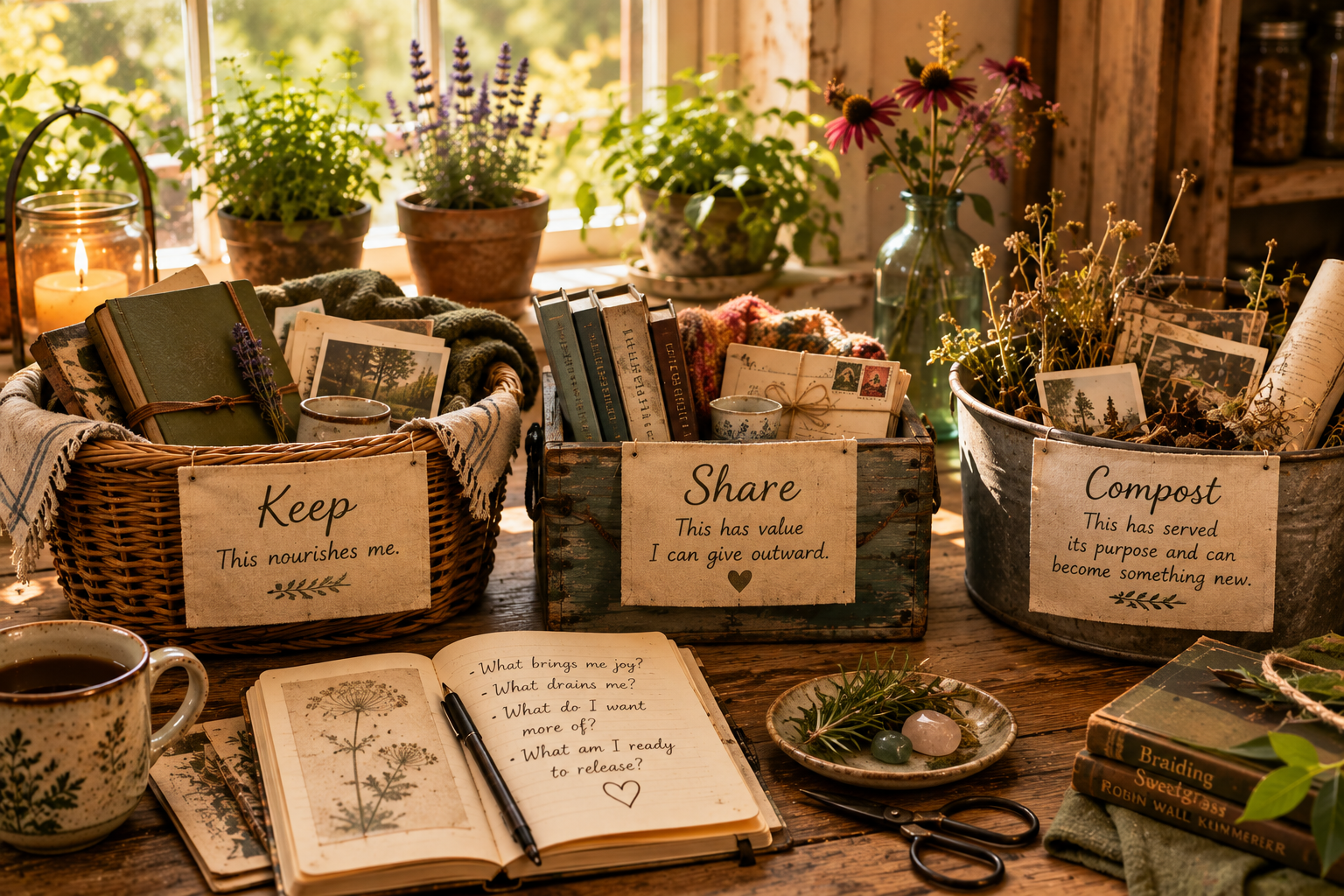
For today's practice, take a piece of paper and divide it into three columns.
KEEP — This nourishes me.
SHARE — This has value that I can give outward.
COMPOST — This has served its purpose and can become something new.
Then begin sorting your own harvest.
You might start with the easy things: possessions, commitments, routines, or habits. But if you are willing, go deeper. Consider relationships and the boundaries they may need. Beliefs you have carried for years. Expectations you inherited from someone else. Dreams that once belonged to you but no longer do.
Consider old versions of yourself.
What still feeds the person you are becoming?
What might be shared?
And what is ready for the compost pile?
There is no need to throw anything away angrily.
I particularly love the metaphor of compost because compost isn't a place where useless things go. Compost is transformation. The scraps and remnants of one season slowly break down and become nourishment for another. The thing that is finished isn't erased. It changes form. It becomes soil.
Perhaps some of the things we are ready to release can be understood that way too.
The career that ended taught us something. The relationship that changed revealed something. The dream we outgrew led us somewhere. The person we used to be carried us here. We don't have to drag every version of ourselves into the future simply to honor the role it played in the past.
We can thank it.
We can bless it.
And then we can let it become soil.

Carry On
The work of harvest isn't finished when we gather what has grown. Eventually, we have to decide what comes with us. Some things will nourish us now. Some deserve to be preserved because we know we will need them later. Some become seeds for whatever we are growing next. Some are meant to be shared generously with others.
And some have completed their work.
Discernment isn't about creating an emptier life for the sake of emptiness. It isn't minimalism as deprivation or another exercise in relentlessly improving ourselves.
It is about creating a life in which what remains actually feeds us.
As summer begins its slow turn toward autumn, perhaps we can loosen our grip on the idea that everything we have gathered must be kept.
Keep what nourishes you. Share what can nourish someone else. Compost what has finished becoming what it came here to be. And trust the soil. Something else will grow there.