
Living in Alignment

Alignment begins when we pause long enough to listen to ourselves and choose the path that reflects what matters most.
This past week we've explored the wisdom of paying attention, rebuilding self-trust, and the remarkable power of small choices. Each of these practices offers something valuable on its own, but together they point toward something deeper: alignment.
Alignment is not a destination. It is an ongoing relationship with ourselves.
It is the practice of noticing when we are moving in a direction that feels true and gently adjusting course when we are not.
Like a sailor responding to changing winds or a hiker following a trail through the woods, alignment is less about rigid certainty and more about continual awareness. We pause. We pay attention. We make small corrections. We keep moving forward.
Alignment Isn't Perfection
Many of us have spent years measuring ourselves against impossible standards.
We set goals, create plans, and imagine that if we can simply do everything right, we'll finally arrive at some place where life feels easier, happier or more meaningful.
But perfection is a moving target. No matter how close we get, it always seems to remain just out of reach.
Alignment offers a different path.
Where perfection asks, "Am I doing this correctly?" alignment asks, "Does this feel true?"
Perfection tends to operate through judgment. Alignment operates through curiosity.
Perfection often creates an all-or-nothing mindset. We either succeed or fail. We stay on track or we fall off. We eat perfectly or we don't. We meditate every day or we've somehow failed at mindfulness.
Alignment recognizes that life is more nuanced than that.
There are seasons when we have abundant energy and seasons when we need rest. There are times when we move confidently forward and times when we need to pause and reassess. Alignment allows room for all of it.
Like setting an intention rather than a rigid goal, alignment provides direction without demanding perfection. It gives us something to move toward while leaving space for being human.
The question shifts from "Did I get everything right?" to "Am I moving in the direction of what matters most?"
That subtle shift can change everything.
When Values, Energy, and Actions Work Together
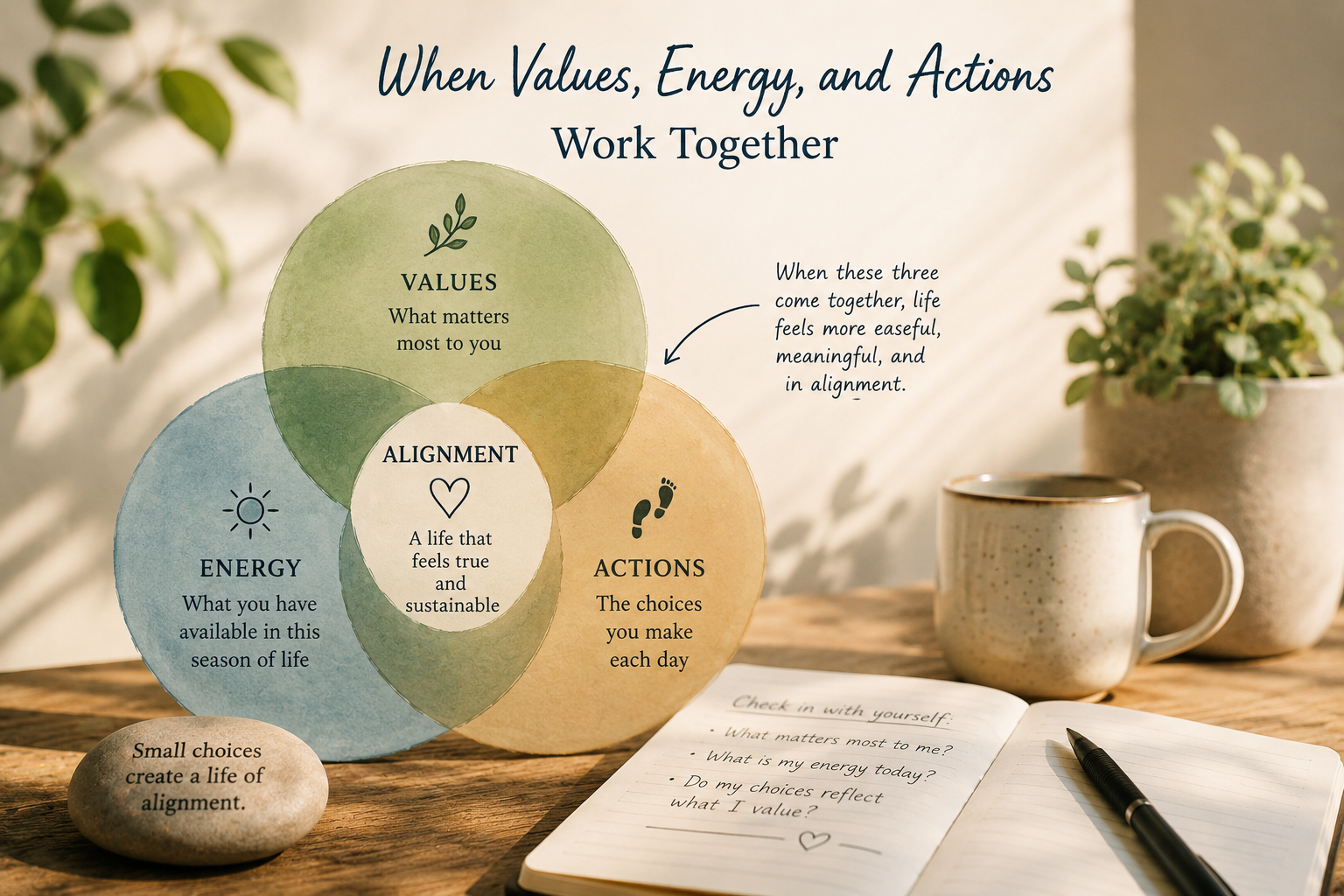
When our values, energy, and actions work together, life begins to feel less like a struggle and more like an authentic expression of who we are.
One of the simplest ways to think about alignment is as the meeting place between our values, our energy, and our actions.
Values are what matter most to us.
Energy is the capacity we have available in this season of life.
Actions are the choices we make each day.
When these three elements work together, life often feels more easeful. Not necessarily easy, but coherent. We experience a sense of integrity between what we believe and how we live.
Misalignment often occurs when one of these elements becomes disconnected from the others.
Perhaps we value health but continually ignore our need for rest.
Perhaps we value connection but fill our schedules so completely that there is little room for meaningful relationships.
Perhaps we value creativity but spend every ounce of energy responding to the needs and demands of others.
Over time, these small disconnects can create frustration, exhaustion, resentment, or a vague sense that something isn't quite right.
The solution is rarely a dramatic life overhaul.
More often, it begins with asking simple questions:
What matters most to me right now?
What is my energy truly capable of supporting?
Do my daily choices reflect what I say is important?
Alignment grows through honest answers to these questions.
Recognizing Alignment and Misalignment

Alignment often feels like moving with life, while misalignment feels like carrying a weight that was never ours to bear.
Our minds are not always the first to recognize misalignment.
Often, our bodies know before our thoughts catch up.
Alignment tends to feel like:
A sense of steadiness or inner calm
Increased energy rather than constant depletion
Greater clarity around decisions
A feeling of moving forward, even in small ways
Trust in ourselves and our choices
Misalignment may appear as:
Persistent exhaustion despite adequate rest
Irritability or resentment
A sense of being pulled in too many directions
Difficulty making decisions
Feeling disconnected from what once mattered
These experiences are not signs that something is wrong with us. They are information. Just as physical pain can alert us to an injury, discomfort can alert us to areas of our lives that need attention.
Rather than judging ourselves for feeling off course, we can become curious.
What is this feeling trying to tell me?
What might need to change?
Where have I drifted away from what matters most?
The answers often emerge when we are willing to listen.
Living From Intention Rather Than Obligation

Living from intention creates space for choice, while living from obligation can leave us feeling trapped by a life we never consciously chose.
Many of us have become highly skilled at fulfilling obligations. We show up. We follow through. We take care of responsibilities. We carry what needs carrying.
These qualities have value. But when obligation becomes the primary force directing our lives, we can slowly lose touch with ourselves. We begin living according to expectations rather than intentions.
Alignment invites us to reconnect with choice.
This doesn't mean abandoning responsibilities or living without commitments. Rather, it means bringing greater awareness to how and why we spend our time, energy, and attention.
Intention asks:
How do I want to show up?
What kind of life am I creating?
What am I saying yes to?
What am I saying no to?
Even small acts of intentionality can create meaningful shifts.
Taking a walk instead of scrolling.
Preparing a nourishing meal instead of rushing through another convenience option.
Making time for a conversation with someone you love.
Going to bed when your body asks for rest.
Spending ten minutes creating, journaling, praying, meditating, or simply sitting quietly.
These choices may appear insignificant on their own. Yet they shape the texture of our lives.
Small choices become habits.
Habits become patterns.
Patterns become the life we are living.
Alignment is rarely found through grand gestures. More often, it emerges through hundreds of small decisions that honor who we are and who we are becoming.
Final Thoughts
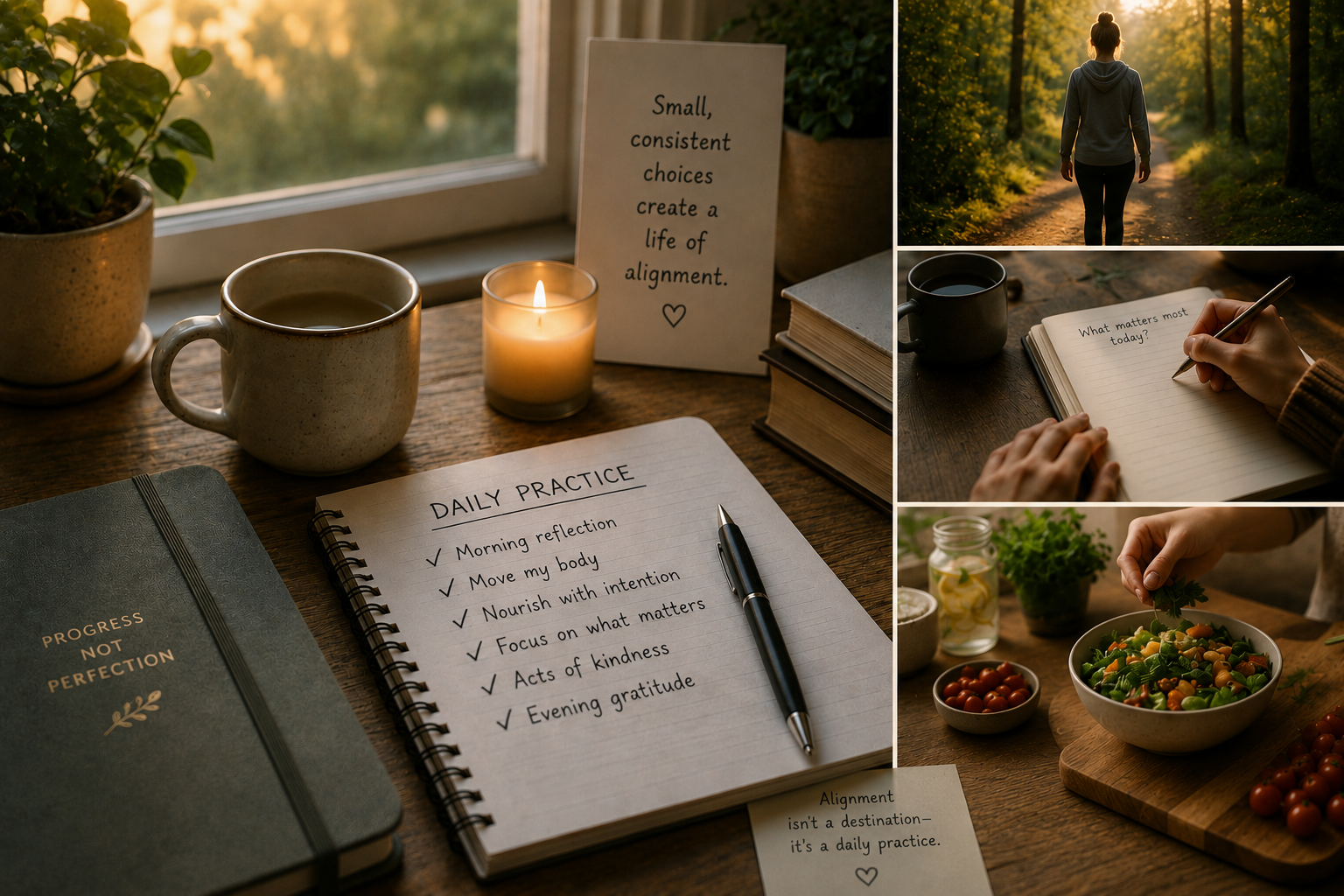
Alignment is not a destination we reach once, but a daily practice of returning, again and again, to what matters most.
Alignment is not something we achieve once and then keep forever.
It is a living practice.
A continual process of paying attention.
Trusting ourselves.
Making small adjustments.
Returning again and again to what matters most.
Some days we will feel deeply connected to our values and intentions. Other days we will drift. That is part of being human.
The invitation is not perfection.
The invitation is simply to notice.
And when we notice, to choose our next step with care.
One small choice at a time.
Reflection
What matters most to you right now?
Where does your calendar reflect your values?
What small adjustment would create greater alignment?
-Dani Keating
Heath and Life Coach
Coaching with Dani