
The History of Samhain

Long before Halloween became a celebration of costumes, candy, and things that go bump in the night, there was Samhain (pronounced SOW-in).
Rooted in ancient Celtic traditions, Samhain marked the end of the harvest and the beginning of winter. It was a threshold between the light and dark halves of the year, a time to gather close, tend the hearth, and prepare for the quieter months ahead.
It was also believed that the veil between the living and the dead grew thin, allowing the spirits of those who came before us to draw near.
Today, Samhain remains one of the eight festivals on the Wheel of the Year, celebrated by many Pagans and modern witches.
But you needn't be a witch to appreciate its wisdom.
Everything has a season. Everything changes. And endings, however difficult, make room for beginnings.
Honoring Those Who Came Before
I've always loved the idea that our ancestors are never entirely gone.
They live in our stories, our traditions, the recipes we prepare without measuring, and the expressions that tumble from our mouths sounding suspiciously like our mothers.
Some we knew and loved. Others lived centuries before us, their names long forgotten, their lives woven quietly into our own.
And not all ancestral stories are happy ones. Some carry wounds, complicated relationships, and patterns we would rather not repeat.
Honoring our ancestors doesn't mean romanticizing the past. It means acknowledging what came before, expressing gratitude for what nourished us, and choosing what we wish to carry forward.
Perhaps that is one of Samhain's greatest gifts: the invitation to remember without remaining bound to what was.
We are, after all, both the descendants of yesterday and the ancestors of tomorrow.
Simplicity Living Practice: Celebrating All Hallows' Eve
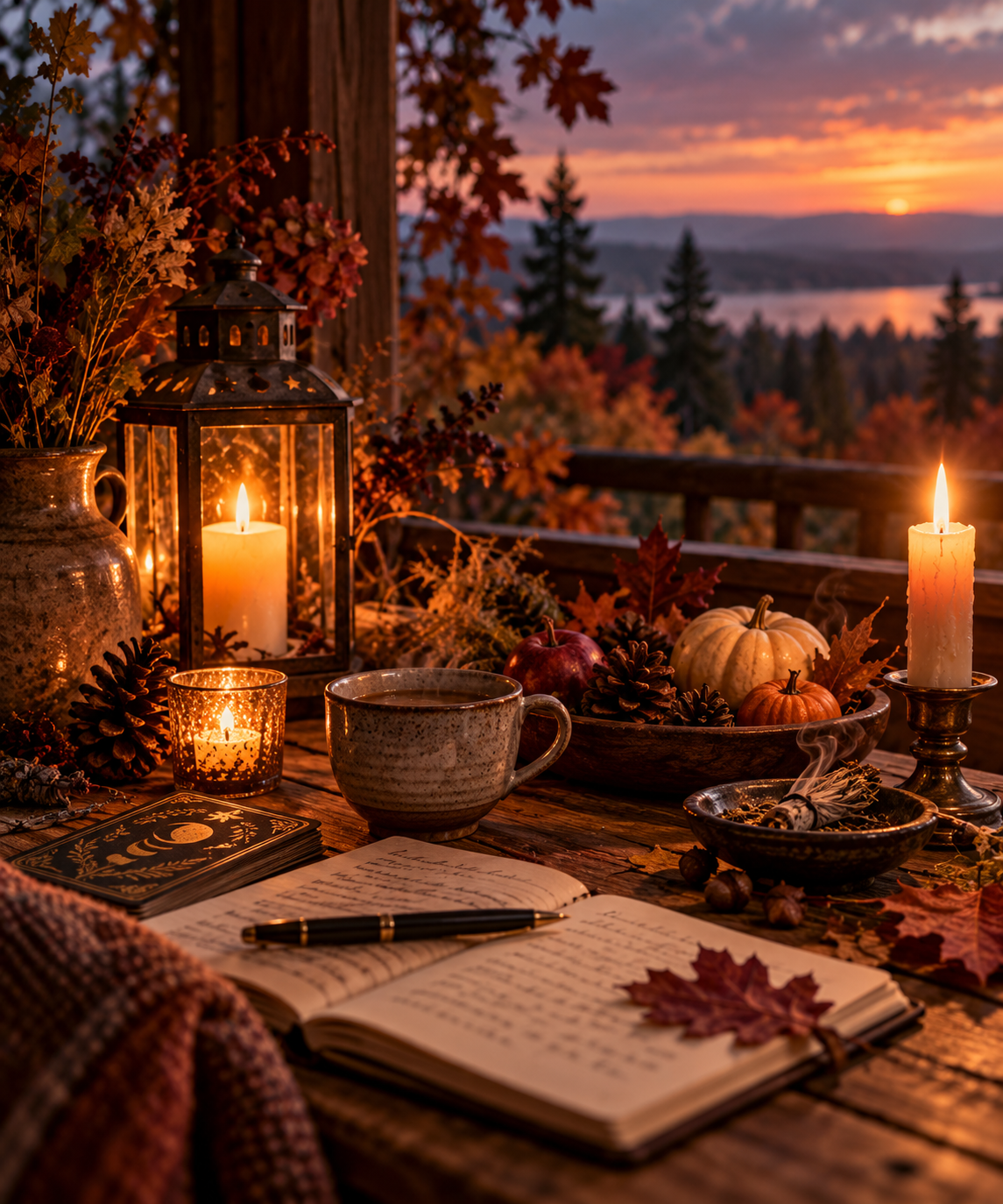
You don't need an elaborate altar, expensive decorations, or a complicated ritual to celebrate Samhain.
A little candlelight and intention will do.
This October 31, consider creating a quiet moment of remembrance.
Light a candle for someone who has passed, speaking their name aloud.
Set a place at the table or prepare a favorite family recipe in remembrance.
Spend a few minutes outdoors, noticing the changing season and the beauty of things returning to the earth.
Write down something you're ready to release. An old belief, a regret, a fear, or a story that no longer serves you.
Offer gratitude for the people, experiences, and lessons that helped shape the person you've become.
And then simply sit.
No agenda. No expectations. No need to make the moment anything more than it is.
Sometimes the most sacred thing we can do is pay attention.
Sage Wisdom
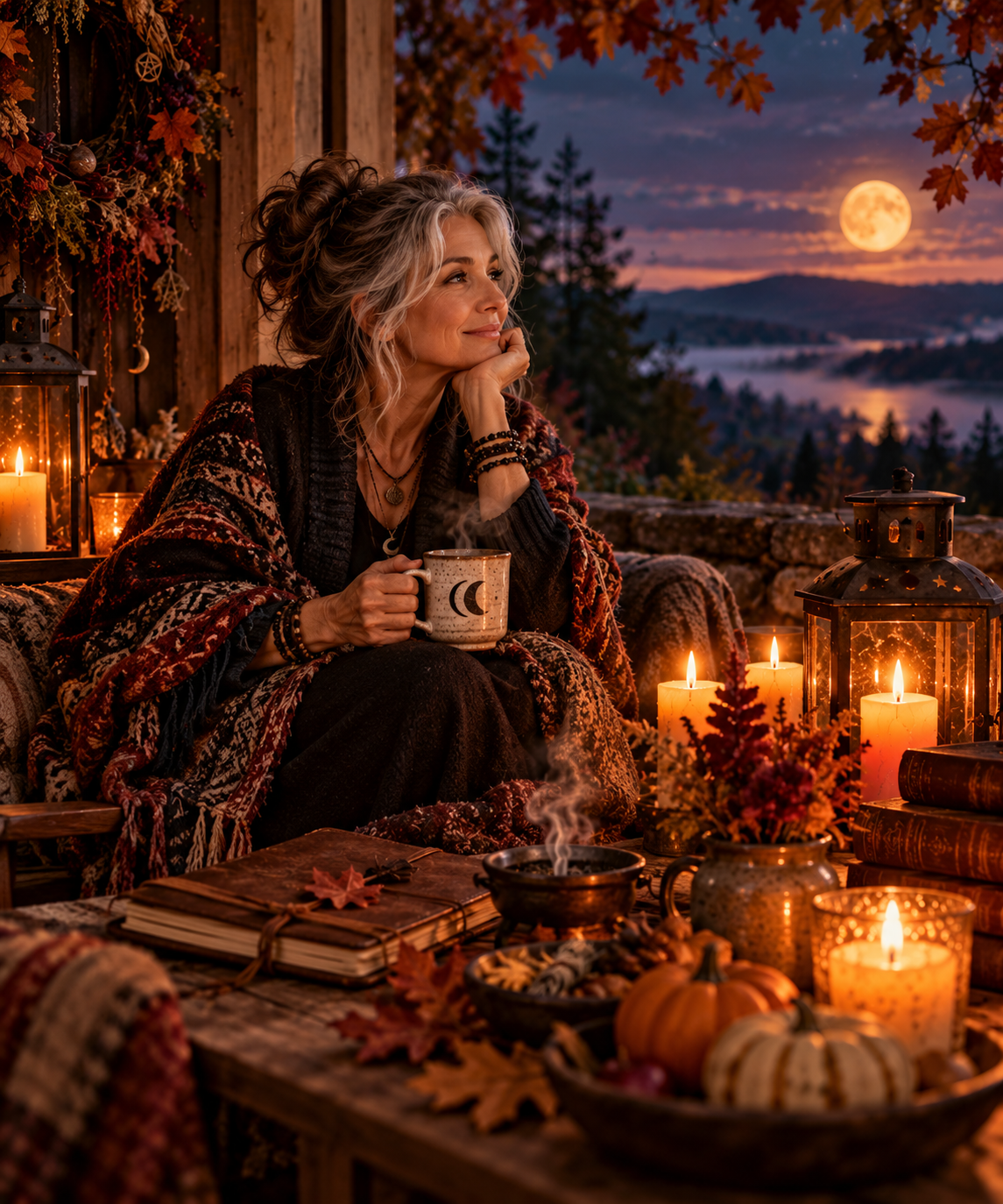
Sage has been particularly quiet this week.
She's sitting beside a window overlooking the autumn garden, a cup of tea warming her hands. A candle flickers beside a faded photograph of someone she once loved.
Outside, the leaves are falling.
She watches them for a while before smiling.
"Funny, isn't it?" she says. "We spend so much of our lives trying to hold on, when nature spends every autumn teaching us how to let go."
She takes another sip of tea.
"Remember the people who loved you. Learn from those who hurt you. Thank the seasons that shaped you. And when something has reached its natural end, let it rest."
Outside, another leaf drifts to the ground.
"Besides," she adds, "the trees aren't worried about what comes next."
Blessed Samhain. May we honor what was, find peace in what is, and welcome whatever is yet to come.