
Top Line Living in Recovery Workshop Recap
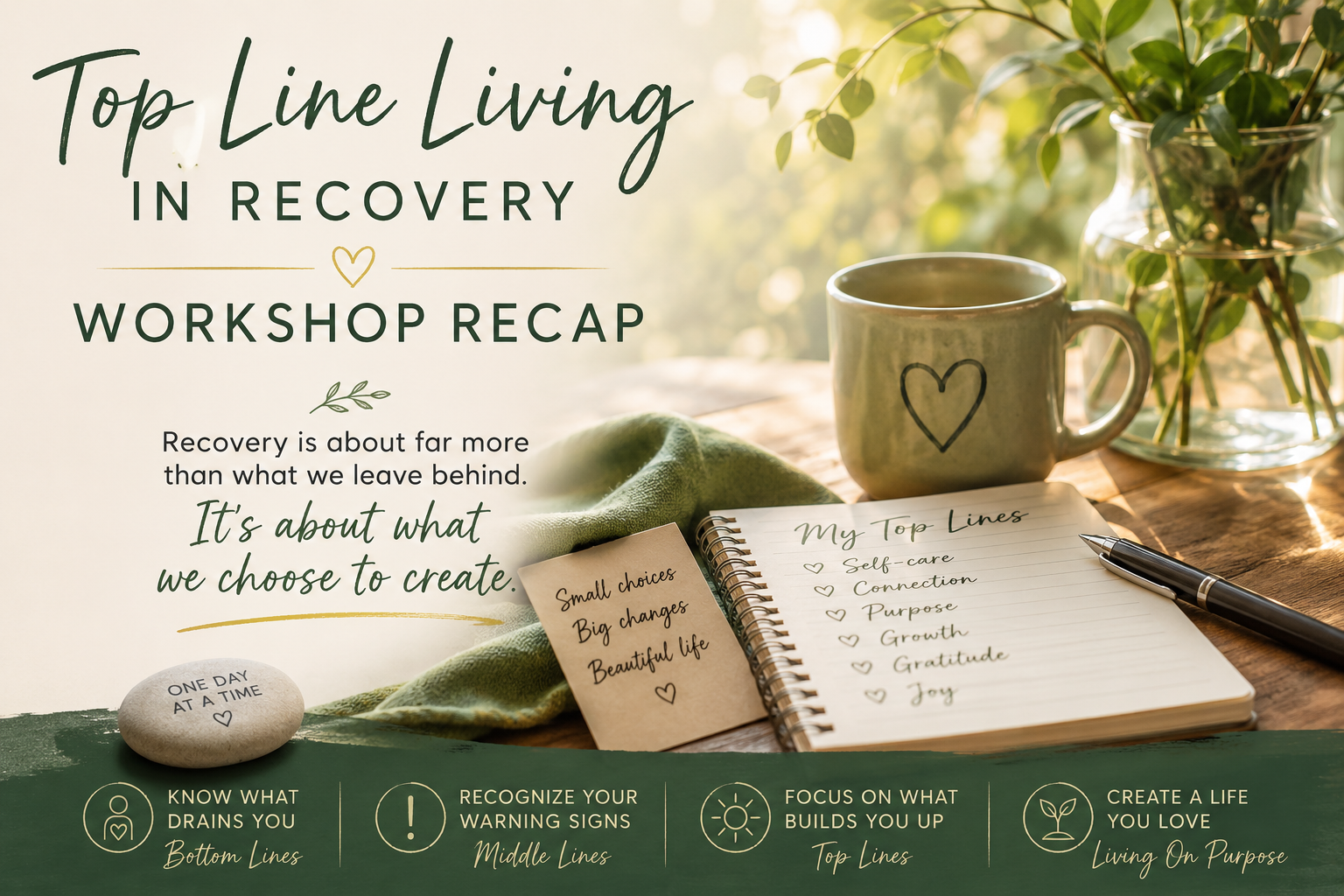
A few months ago, one of my dear friends asked me to build a workshop that would help address a need she has observed in the addiction recovery community: developing a deeper understanding of self-care and what it means to truly live into our top lines.
The request immediately resonated with me.
Less than three years ago, I found myself standing at the end of a difficult relationship that forced me to examine nearly every aspect of my life. It became a season of profound reflection—a time to ask difficult questions, rediscover who I was, and intentionally choose who I wanted to become.
I returned to the foundations of my own recovery and, in doing so, rediscovered a concept that has quietly transformed the way I live: Top Line Living.
Most people in addiction recovery become familiar with bottom lines—the behaviors that move us away from the life we want. They are the actions we commit to avoiding because they disconnect us from ourselves, our relationships, and our recovery.
Top lines are something different. They are the practices that move us toward the life we want to create. They are the daily choices that nourish our physical health, emotional well-being, spiritual life, relationships, creativity, purpose, and joy. They remind us that recovery is not simply about surviving. It is about learning to thrive.
Drawing from my own experience, along with years of study in coaching, emotional intelligence, mindfulness, and well-being, I created the Top Line Living in Recovery workshop.
Yesterday, I had the privilege of facilitating that workshop for the very first time. As I looked around the room, I was reminded that recovery is about far more than what we leave behind.
It is about what we choose to create.
Throughout the afternoon, we explored three simple but powerful questions:
What moves me away from my healthiest self? (These are our bottom lines.)
What tells me I'm beginning to drift? (These are our middle lines—the warning signs that invite us to pause and reconnect before we find ourselves heading down a familiar path.)
What helps me become the person I want to be? (These are our top lines.)
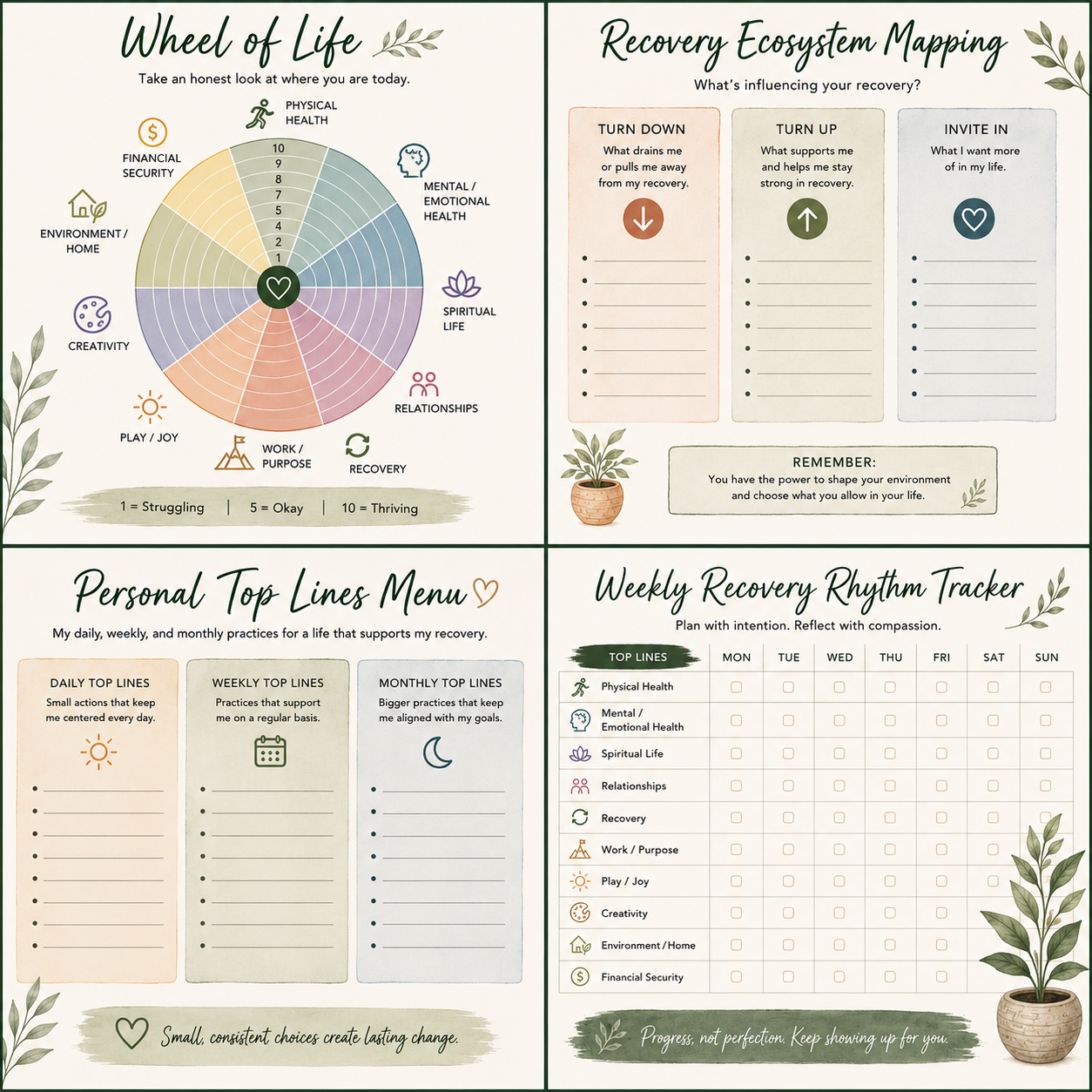
From there, participants completed a Wheel of Life assessment, taking an honest look at ten important dimensions of well-being—from physical health and recovery to relationships, creativity, purpose, and financial security. Rather than viewing recovery through a single lens, we explored the whole person.
We then mapped our personal recovery ecosystems, identifying what we need to turn down, what we need to turn up, and what we might be ready to invite into our lives.
Finally, each participant created a Personal Top Line Menu—a collection of daily, weekly, and monthly practices uniquely suited to support their recovery and well-being.
What struck me most wasn't the worksheets or even the conversations. It was the hope. There is something deeply empowering about realizing that recovery isn't measured only by the absence of harmful behaviors. It is measured by the presence of meaningful ones.
One healthy meal.
One honest conversation.
One walk outside.
One meeting.
One boundary.
One creative project.
One quiet moment of gratitude.
Recovery is built through these seemingly ordinary moments, repeated with intention.
Releasing What No Longer Serves
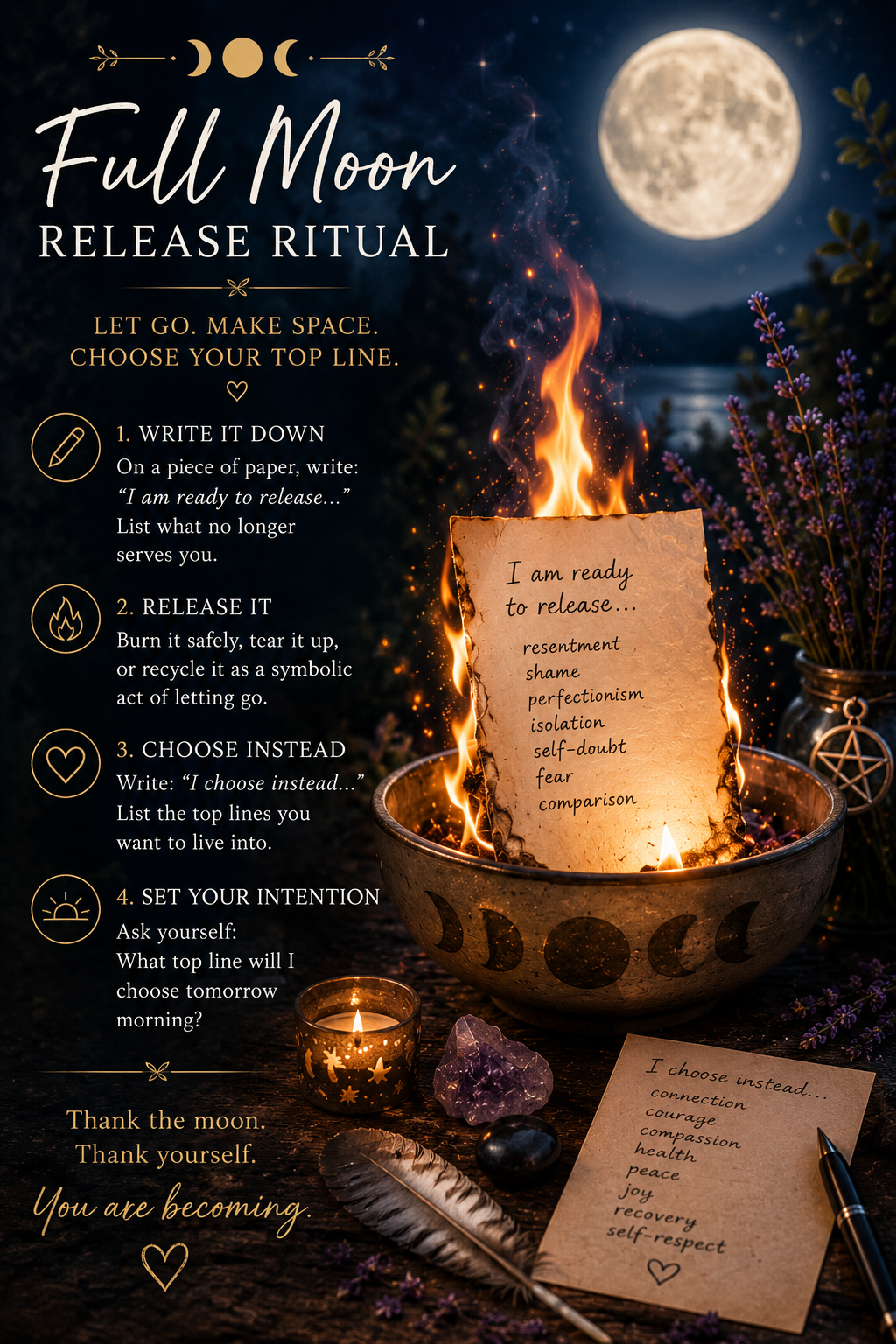
Tomorrow evening, we will welcome the Full Moon—a time that many traditions have long associated with illumination, completion, and release. Whether or not you follow lunar traditions, there is something beautiful about using this moment as an invitation to pause.
Ask yourself: What bottom line am I ready to release?
Perhaps it is self-criticism.
Perhaps it is resentment.
Perhaps it is perfectionism.
Perhaps it is the belief that you are somehow not enough.
Write it down. Thank it for whatever purpose it may have once served. Then safely burn the paper, tear it into small pieces, or simply recycle it as a symbolic act of letting go.
Then ask yourself one final question: What top line will I choose tomorrow morning?
Because transformation rarely happens in one extraordinary moment. It happens through ordinary choices made consistently over time.
Progress Not Perfection
Yesterday's workshop reminded me that we are all works in progress. None of us has arrived. We are all learning, growing, falling down, getting back up, and discovering new ways to care for ourselves and one another.
I left feeling deeply grateful—for the participants who trusted me, for the friend who planted the seed for this workshop, and for my own recovery journey that made it possible.
As I left the workshop yesterday, I found myself feeling hopeful—not because anyone had found all the answers, but because each person left with a clearer picture of the life they wanted to create. That is the heart of Top Line Living. We don't transform our lives through one grand gesture. We transform them through small, intentional choices, made one day at a time.
If this message resonates with you, I'd love for you to join us at a future Top Line Living in Recovery workshop. Until then, I hope you'll continue following the blog as we explore the practices that help us move beyond surviving and into truly flourishing.