
BOUNDARIES: No Is a Complete Act of Self-Care
The Selfishness Myth
How many times have you heard—or thought—that taking care of yourself and your needs first is selfish? That you should put others first? That caring for yourself should come only after everyone else has been taken care of?
These ideas were once deeply woven into our culture.
But times have changed.
As our understanding of wellbeing has evolved, we've begun to recognize just how important self-care really is. Taking care of our own needs doesn't make us less capable of caring for others. Quite the opposite. When we are rested, grounded and emotionally well, we have more of ourselves available to give.
Because if saying yes to someone repeatedly requires saying no to yourself, eventually resentment, exhaustion—or both—come knocking.
Boundaries Protect What Matters
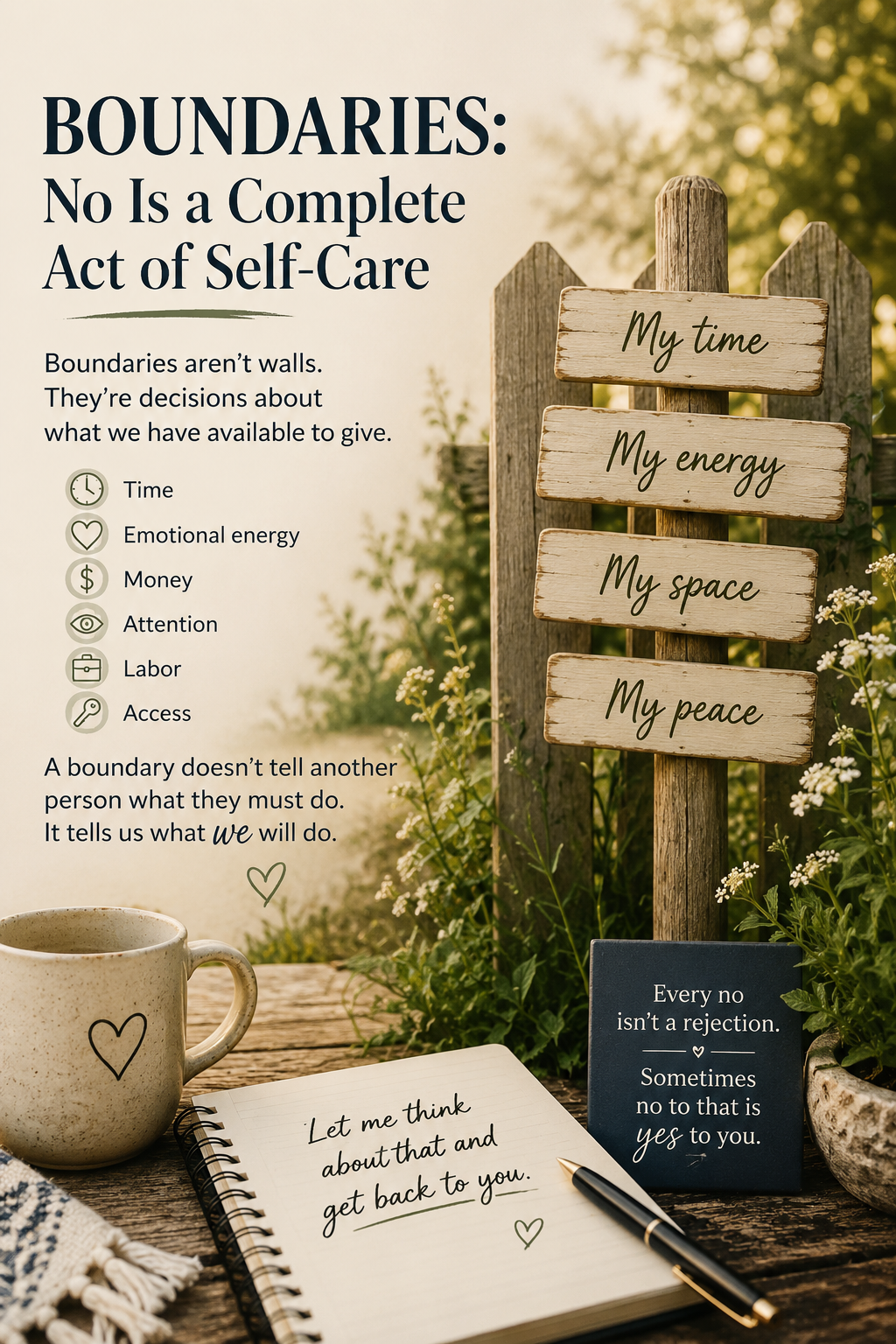
Boundaries aren't walls. They're decisions about what we have available to give.
Time. Emotional energy. Money. Attention. Labor. Access.
Boundaries protect us from continually doing things we don't really want to do and from the downstream effects of overextending ourselves: exhaustion, resentment and sometimes even avoiding people because we don't want to have to say no.
When you begin setting boundaries, you may experience resistance from people who are accustomed to you not having them. They may not like the invisible fence you've installed around your time, energy and space. Some relationships may change. A few may even end. That is a real possibility.
But healthy relationships can make room for boundaries. The people who care about us may need time to adjust, but they can learn to respect our limits. And something else can happen too: when we begin setting healthy boundaries, we give other people permission to consider their own.
That's how relationships become healthier—not because everyone always gets what they want, but because everyone gets to have needs.
And here's an important distinction: A boundary doesn't tell another person what they must do. It tells us what we will do.
Self-care requires knowing where we end and another person's responsibility begins.
That kind of discernment takes practice, especially when many of us grew up believing that being a good person meant being accommodating, agreeable and endlessly available.
It doesn't.
Practice: Find One Automatic Yes
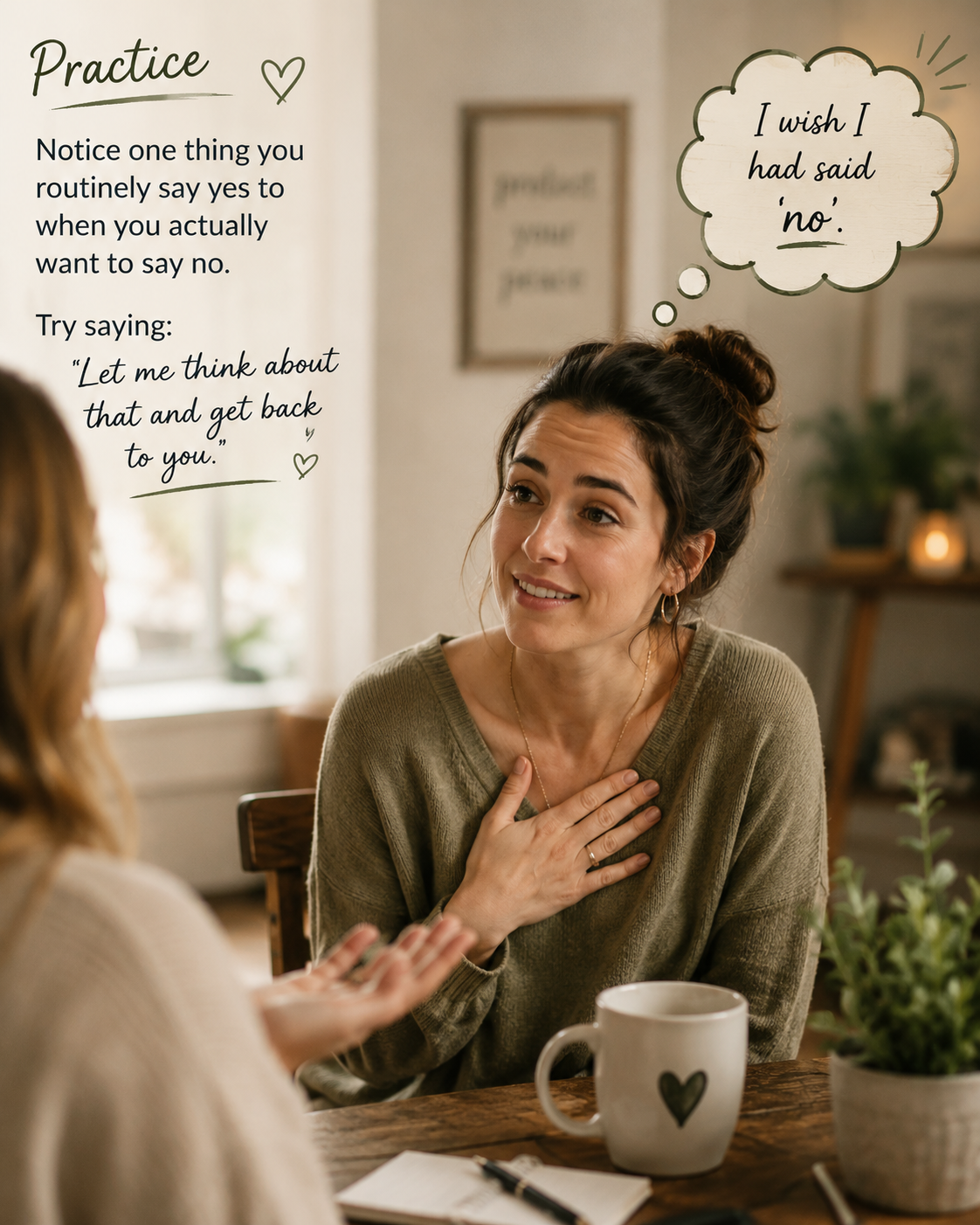
Think about your day-to-day life and notice one thing you routinely say yes to when you actually want to say no.
You don't necessarily have to change anything yet.
Just notice.
Notice what happens in your body. Notice the impulse to agree before you've even considered whether you want to. Notice the stories that appear: They'll be disappointed. They'll think I'm selfish. It'll be easier if I just do it.
Then practice saying: Let me think about that and get back to you.
That's it.
That tiny pause interrupts the automatic yes and creates enough space for you to discover what you actually want to say.
Carry On
Boundaries aren't about becoming less loving, less generous or less available to the people we care about.
They're about making sure our generosity doesn't require abandoning ourselves.
We don't have to be endlessly available to be loving. We don't have to exhaust ourselves to be generous. And we don't have to sacrifice our own wellbeing to prove that we care.
Sometimes self-care looks like rest. Sometimes it looks like nourishment, movement or asking for help.
And sometimes it sounds like one small, powerful word:
No.
Every no isn't a rejection.
Sometimes no to that is yes to you.