
Before we begin, I want to acknowledge that this piece is a departure from my usual writing. While this blog typically centers on wellbeing, simplicity, and intentional living, I may occasionally use this space to explore broader cultural and civic questions. Writing is one of the ways I exercise agency, challenge my own thinking, and speak honestly about the world I hope we are creating together.
Whether you agree with my perspective or not, thank you for being here and lending me your time and attention. In a world that increasingly rewards certainty and speed, I remain grateful for readers willing to slow down, reflect, and engage with ideas—and I remain committed to showing up authentically in return.
I woke at 3 a.m. this morning with an uncomfortable question sitting in my chest:
Is the American experiment over? Or are we just being asked to participate?
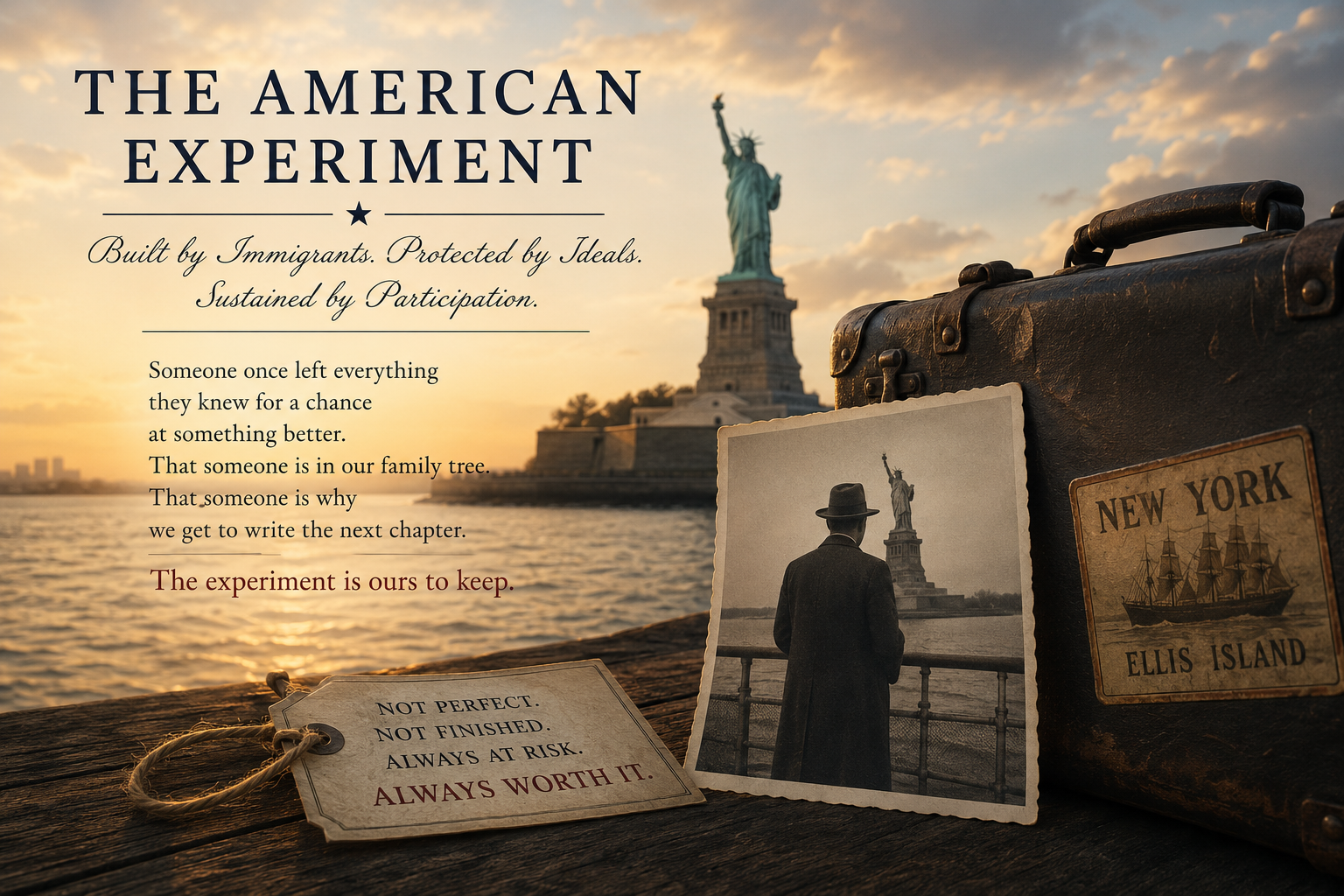
The American experiment was entrusted to us — never guaranteed—it was always meant to be participated in, protected, and passed forward.
It feels dramatic to ask that aloud. Maybe even a little indulgent. And yet I suspect I am not alone in wondering.
There is something unsettled in the air right now. Institutions that once felt durable feel increasingly fragile. Public trust appears thinner than I remember. Conversations seem shorter, angrier, more certain, and less curious. We consume information faster than we can process it, and react more quickly than we reflect. It can feel, at times, as though we are watching systems strain under pressures they were never designed to carry.
I keep returning to my grandfather.
Not so long ago, my maternal grandfather immigrated to this country from Northern Ireland. I find myself wondering what that must have taken—not practically, but emotionally. To leave behind familiar roads, landscapes, family stories, traditions, and all the invisible threads that make a place feel like home. To exchange certainty for possibility.
Migration is often discussed in numbers, policies, labor markets, and headlines. But underneath every immigration story is something profoundly human. Someone stood in a doorway and chose uncertainty. Someone left people they loved. Someone accepted risk because they believed life could become larger, safer, freer, or more hopeful for the next generation.
That story is not unusual.
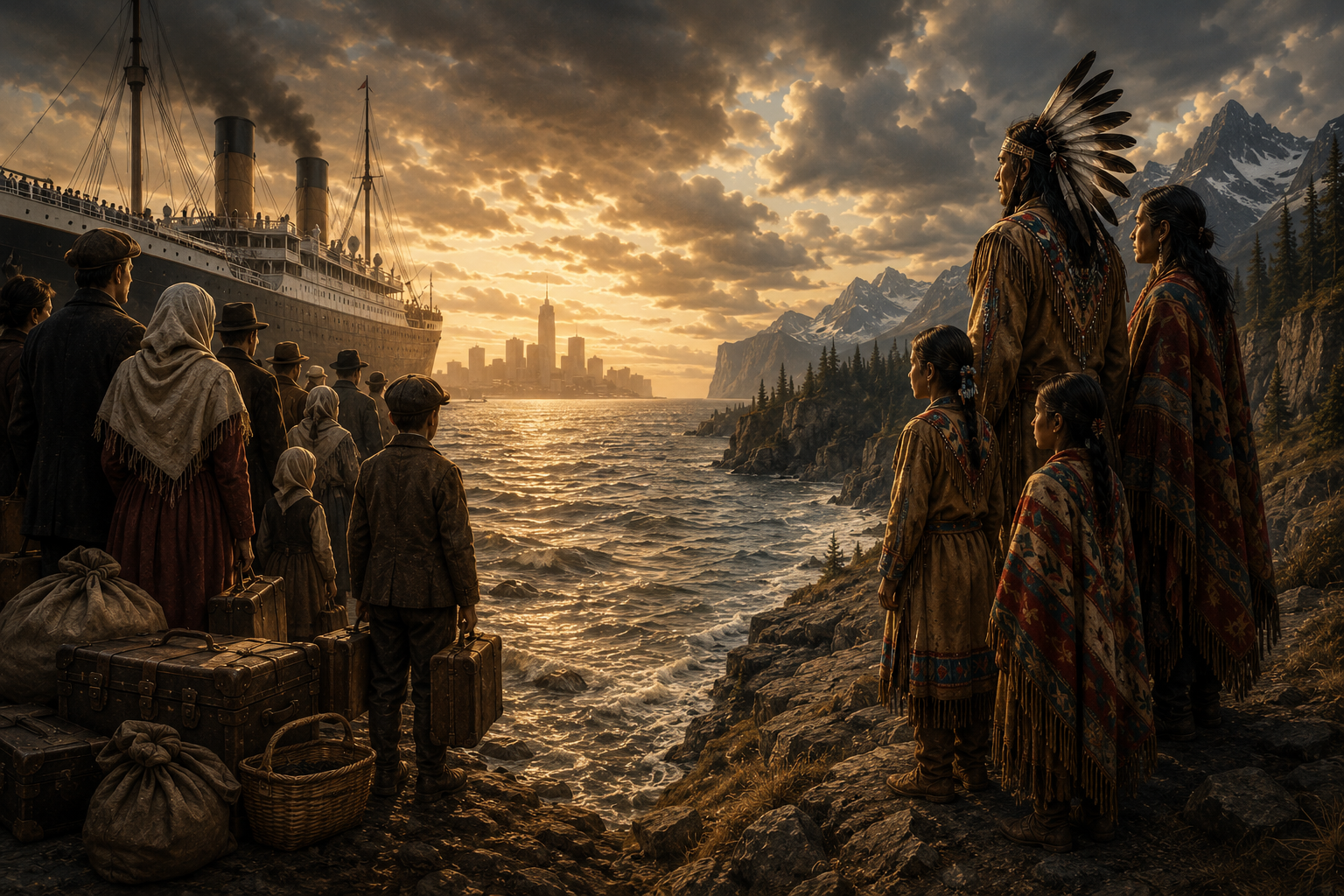
Many of us descend from those who came searching for possibility; others descend from those who endured—and democracy may depend on whether we learn to honor both stories.
For many Americans, somewhere in the family tree there is movement. Someone immigrated. Someone crossed a border. Someone fled conflict, escaped hardship, followed opportunity, or simply imagined a different future. And for millions of Americans, the story was not one of arrival by choice at all, but of forced displacement, enslavement, and survival under systems that denied freedom while helping build the economic foundations of the country itself.
And for Native communities whose ancestors did not arrive but remained through centuries of change, there are entirely different stories still—stories of stewardship, endurance, dispossession, survival, and continued belonging to places they never left.
Different histories.
But often the same longing:
To belong.
To feel safe.
To matter.
To have a voice in shaping the future.
That, to me, has always been the promise of America.
Not perfection.
Possibility.
Not the guarantee of success, but the belief that ordinary people could influence the direction of the country they call home.
For centuries, people came here carrying some version of that dream. Not because America was easy, fair, or free of contradiction. It never was. But because there was a persistent belief that life could improve—that your children might have opportunities you did not, that effort mattered, and that ordinary citizens had agency in shaping their future.
That idea matters.
Because lately I find myself wondering whether some of our anxiety as a nation stems from the sense that people are losing faith in that promise—not abandoning it entirely, but questioning whether it still belongs to them.
And perhaps that brings me back to the question that woke me up.
Is the American experiment over? Or are we simply being asked to participate more fully than we have in a long time?
Democracy has always been more fragile than we like to admit.

250 years later, the American experiment remains what it has always been—not self-sustaining, but entrusted.
The framers understood something essential about human nature: power accumulates. They designed divided authority, elections, constitutional limits, checks, balances, and competing interests not because they trusted leaders, but because they understood that no person and no institution remains immune from self-interest forever.
But they were not clairvoyant.
They could not have imagined a world of algorithmic media, billion-dollar campaigns, twenty-four-hour outrage cycles, viral misinformation, and a political economy where attention itself has become a commodity.
And yet, I don’t think that means the experiment failed. I think it means democracy requires maintenance. That maintenance is less romantic than revolution and less satisfying than outrage. It asks citizens to stay informed even when exhausted. To remain engaged when discouraged. To reject the temptation to retreat into cynicism or outsource responsibility to political heroes.
That may be the hardest part.
Because cynicism often feels intelligent. Hope feels naïve. Participation feels inconvenient.
But democracies rarely disappear in one dramatic moment. More often they weaken gradually when citizens begin to believe their participation no longer matters.
I’ll admit something that has surprised me.
There was a time when I imagined a future in politics.
I no longer do. Not because I stopped caring. Quite the opposite.
I care enough to know that systems matter as much as personalities. We spend enormous energy searching for extraordinary leaders and far less energy asking whether our institutions incentivize the kind of behavior we actually want.
Perhaps we ask too much of individuals and too little of structure.
Perhaps the question is not, “Who will save us?”
Perhaps the better question is: What kind of government makes saving unnecessary?
This is not, in my view, fundamentally about political parties.
It is about incentives.
How long should power be held?
How transparent should campaigns become?
How do we reduce financial influence without limiting civic participation?
How do we reward public service over performance?
How do we build institutions resilient enough that citizens trust outcomes even when they lose?
Reasonable people will disagree on the answers.
That is not weakness. That is democracy. But I suspect many of us agree on the underlying desire.
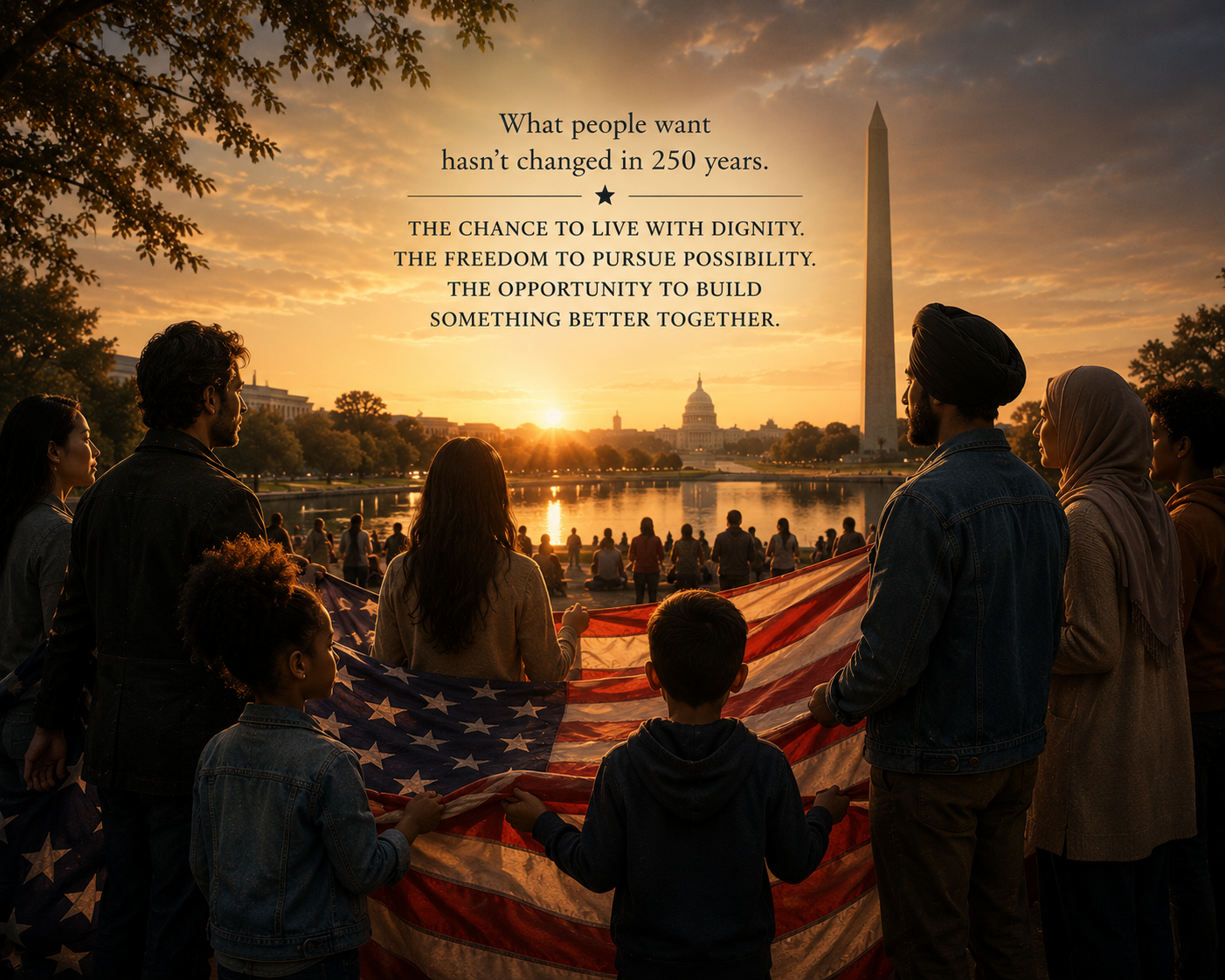
What people have always wanted is not perfection, but dignity, belonging, and the chance to help shape a future worth inheriting.
People want institutions that feel fair.
People want leaders who act with integrity.
People want to believe effort matters.
People want government to function.
People want to feel represented.
People want to trust that public office exists to serve the public.
Those aspirations do not belong to one ideology.
They belong to citizenship.
So perhaps the question is not whether the American experiment is over.
Perhaps the question is whether enough of us still believe it is worth participating in.
I am only one voice.
But I suspect there are many others asking similar questions.
And maybe that means the experiment is not over after all.
Maybe it is simply asking more of us than it has in a very long time.
-Dani Keating
Health & Life Coach