
LISTENING: Nature Is Not Quiet
Go Somewhere Quiet
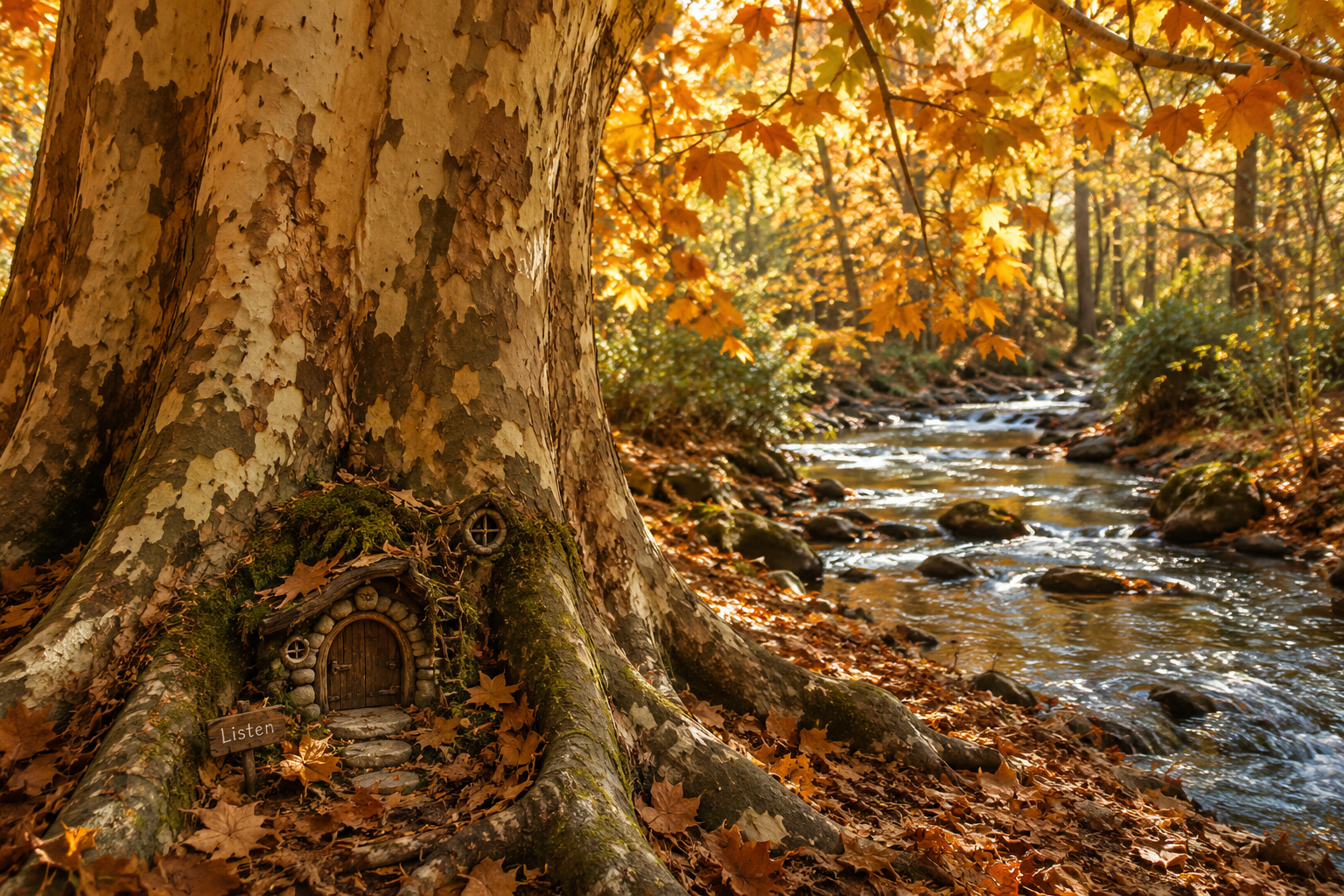
Go into the woods looking for silence and you'll discover something rather quickly: Nature is incredibly loud.
Birds calling. Cicadas screaming their little heads off. Wind moving through leaves. Water rushing over rocks. Rain tapping against branches. Frogs. Insects. Acorns dropping. Twigs snapping beneath your feet.
Nature doesn't offer silence in the way we usually imagine it.
It offers something else.
The Difference Between Noise and Sound
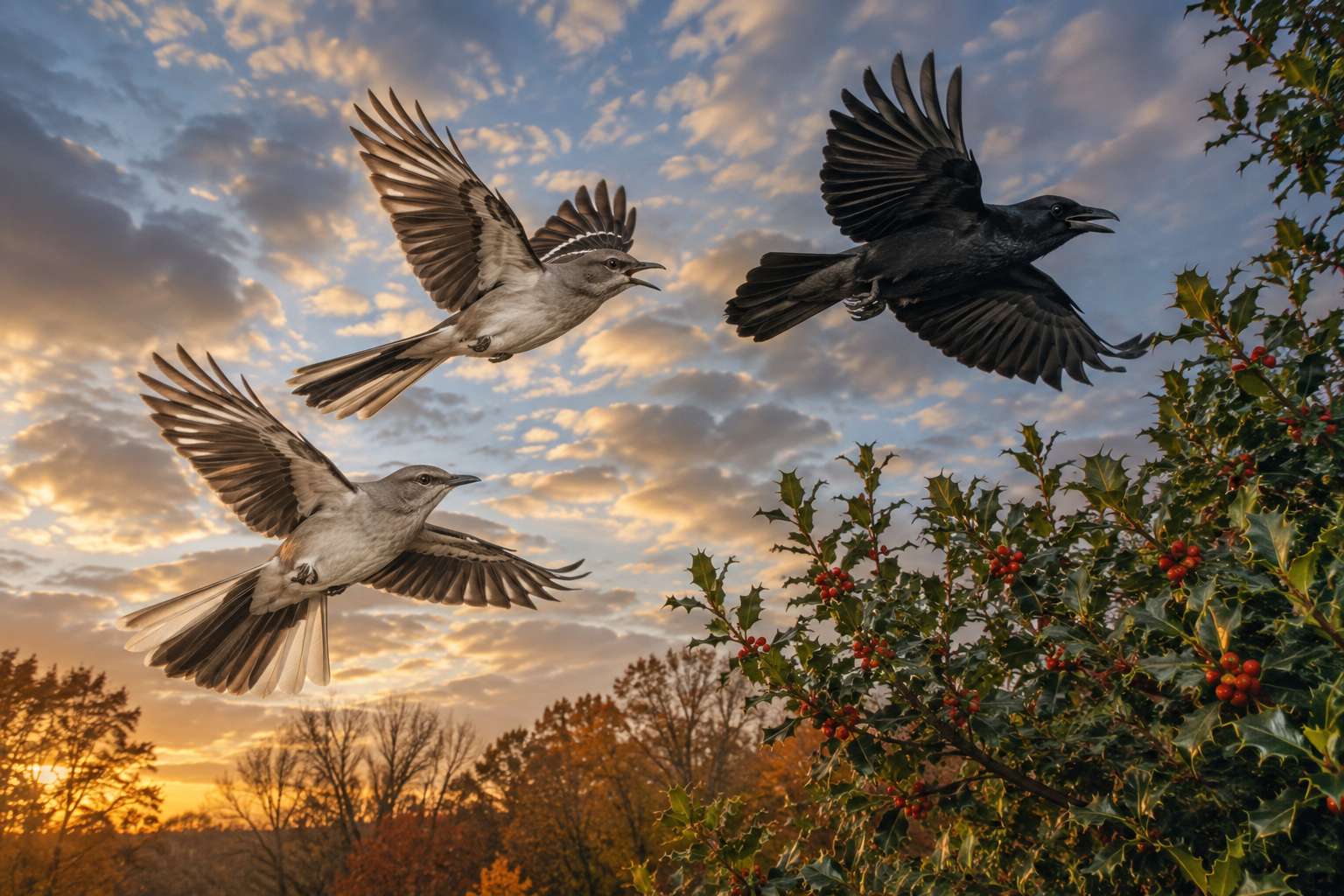
Just beside our front porch is a big holly tree that a pair of mockingbirds call home.
Mockingbirds are incredibly territorial, and ours regularly get into it with the other birds in the neighborhood—particularly the crows. I've spent countless hours observing the Mockingbird-Crow Wars.
I've become so attuned to them that I can hear when a mockingbird is in distress, desperately trying to protect its perceived territory.
And the crows always call to me.
Nearly every spring, I forge a relationship with a crow visitor for a month or two before she eventually moves on. I learn her calls. I notice when she arrives. I begin recognizing the rhythms of her day.
What fascinates me is how differently I experience the sounds of nature from the noise of humans.
Birdsong can be loud. Thunder can shake the house. Cicadas can reach an almost ridiculous volume. And yet those sounds rarely feel intrusive to me. They feel grounding. Soothing. Somehow, they invite me home.
Mechanical noise does something different.
Traffic. Airplanes. Construction. Leaf blowers. Sirens. Engines. The persistent hum and grind of a world we've built to keep moving.
Living ten minutes from an airport, there are days when that noise feels almost inescapable.
Part of the difference may be that much of our constructed noise asks something of our nervous system. It is repetitive, mechanical, and often impossible to predict or control. It arrives whether we want it or not, layered over everything else already competing for our attention.
Natural sound is often complex too—but it has rhythm, variation, and relationship. A bird calls and another answers. Wind rises and falls. Rain changes tempo. Frogs begin their evening chorus.
We don't necessarily have to defend ourselves against it.
We can listen.
And when human-generated noise recedes, something interesting happens to our attention. Instead of constantly filtering and bracing against input, the mind can begin opening toward what is already there.
Suddenly, we notice details.
The breeze against our skin. Our breathing. A tight shoulder. An aching knee. Hunger. Fatigue. Sadness. Contentment. Things that may have been speaking quietly beneath all that noise.
Perhaps nature doesn't become quieter.
We do.
Practice: Take a Listening Walk
For the past two days, we've been expanding our awareness by simply noticing. Today, we're going to add in movement.
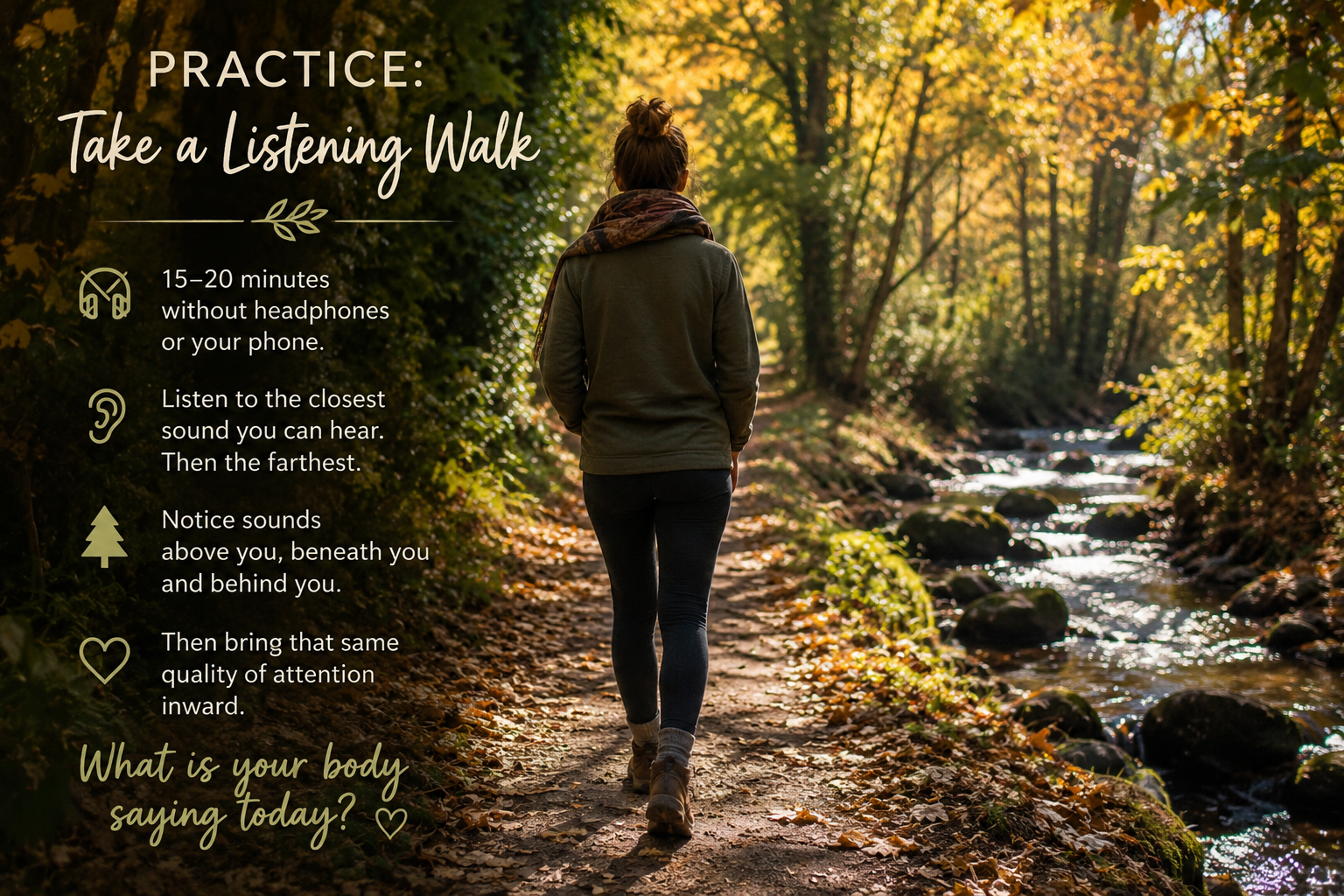
Take a 15–20 minute walk without headphones and without your phone in your hand.
Don't try to clear your mind.
Just listen.
Begin with the closest sound you can hear. Then see if you can find the farthest. Listen for something above you. Beneath you. Behind you.
Notice the layers.
A bird nearby. An airplane far overhead. Your shoes against the ground. Wind in the trees. A dog barking three blocks away. Your own breath moving in and out.
Then, somewhere along the walk, bring that same quality of attention inward.
Listen to your body with the same curiosity you've been offering the world around you.
What is your body saying today?
You don't have to fix anything.
For now, just hear it.
Take This With You
The natural world has been speaking the whole time.
The birds call. The wind answers. The trees creak. The rain taps. The insects hum. Our bodies add their own small voices to the chorus.
Perhaps silence was never really about the absence of sound.
Perhaps it is about making enough space to listen.
Sometimes we simply need to become quiet enough to join the conversation.