
Caring for the Body That Carries Me
As a young girl, I wanted to practice medicine. Though I didn't know what kind of doctor I wanted to be, sports medicine seemed like a great fit. I studied massage therapy in the Bay Area and then entered the kinesiology program at the University of Colorado, Boulder. There, I realized western medicine was not my jam.
For years I had been drawn to naturopathy and Eastern philosophy. The approach of conventional medicine felt jarring to me. It seemed more focused on treating illness than cultivating wellness, and too often influenced by the pharmaceutical and insurance industries. I couldn't continue down that path, so I closed the chapter on studying medicine. But my desire to help people live well never subsided.
Fast forward many years.
Things have come full circle.
Retired and working as a life coach with a fledgling practice, I accepted a part-time position in June as the office manager for the Willow Wellness Center in Del Ray, working alongside Dr. Cindy Durakis, DC, CFNMP.
I had first become a patient of Dr. Durakis the previous fall, hoping to find relief from chronic neck pain. Within a few months, I began noticing meaningful changes as structural improvements started to take hold. A combination of chiropractic adjustments and targeted physical therapy was bringing my health back to the forefront.
You know what's strange?
Sometimes we don't even realize we're living with pain until the pain is gone. Only then do we recognize just how much discomfort had quietly become our normal.
Our Bodies Are Worthy of Care
Pain is often the very last indicator that something is wrong. Usually there are many small signs long before—a loss of mobility, stiffness, fatigue, poor posture, disrupted sleep, or reduced strength. Yet preventing pain has never been the primary focus of our healthcare system.
Our bodies are lifelong companions worthy of attention and care. They are remarkably resilient when we support both their structure and function. By investing in preventative care, we increase the possibility of a longer health span—not simply living longer, but living better.
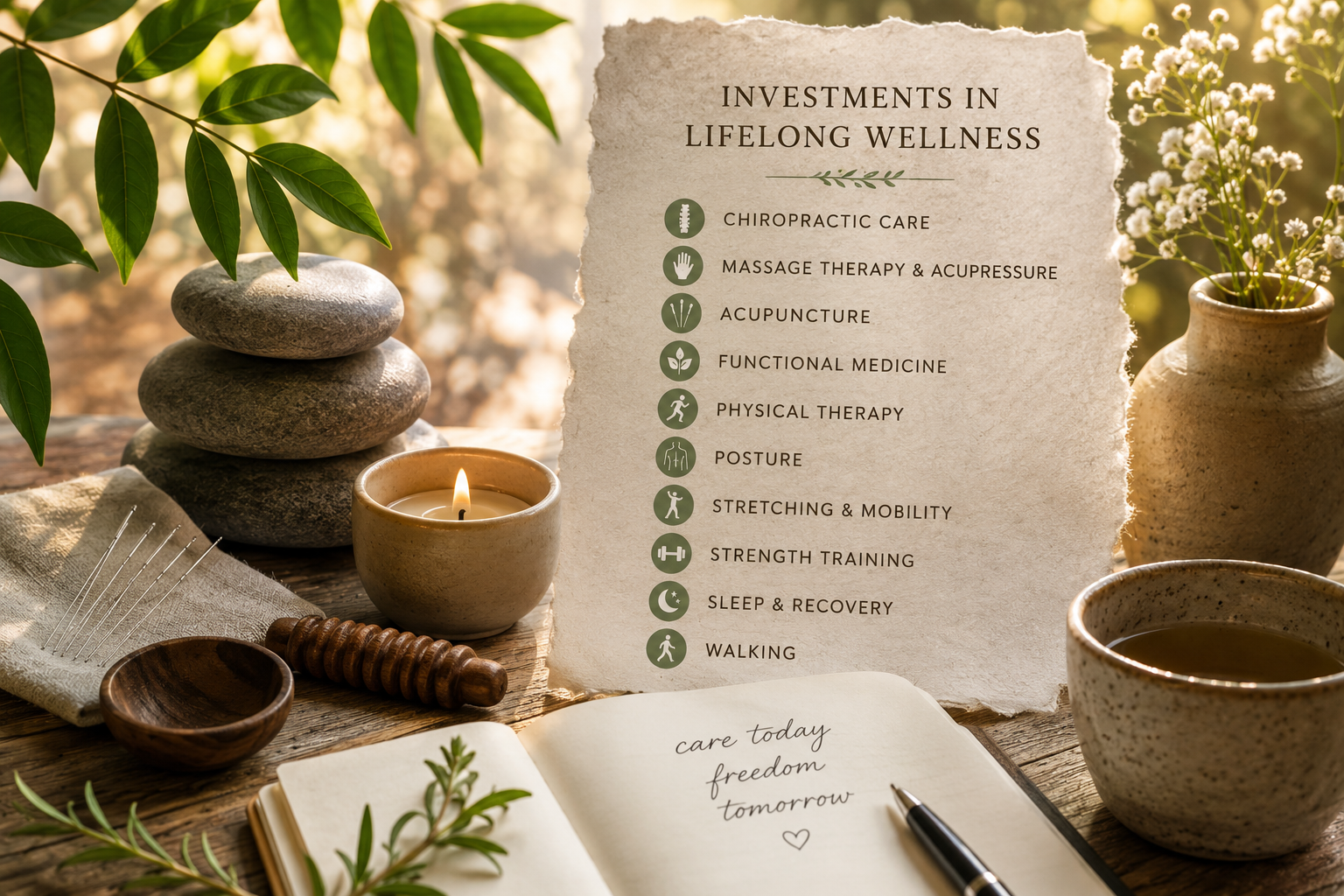
I want to talk about some of the practices that support lifelong wellbeing. Not because I now work in a wellness center, or even because I believe every approach is right for every person, but because caring for ourselves is not frivolous. It is one of the wisest investments we can make.
Chiropractic Care
Chiropractic care focuses on the alignment and movement of the spine and joints to help the nervous system function at its best. Many people seek chiropractic care for pain relief, but it can also improve mobility, posture, balance, and overall function. It is most effective when viewed as part of ongoing preventative care rather than only a response to pain.
Massage Therapy & Acupressure
Massage therapy works with the body's muscles and connective tissues to reduce tension and improve circulation, while acupressure applies focused pressure to specific points that have long been used in Eastern medicine. Both can reduce stress, ease muscle pain, and encourage relaxation. They also remind us how deeply our emotional and physical wellbeing are connected.
Acupuncture
Acupuncture uses very fine needles placed at specific points on the body to encourage balance and healing. Many people find it helpful for chronic pain, headaches, stress, inflammation, and a variety of other conditions. Research continues to explore its mechanisms, but for many, it has become an important complement to traditional medical care.
Functional Medicine
Functional medicine looks beyond symptoms to understand the underlying causes of illness by examining lifestyle, nutrition, environment, and overall physiology. Rather than asking, "How do we treat this disease?" it often asks, "Why is this happening in the first place?" I'll explore this approach in greater depth tomorrow.
Physical Therapy
Physical therapy helps restore movement, strength, balance, and function after injury, surgery, or chronic pain. It teaches the body healthier movement patterns while building resilience for everyday life. Often, the exercises learned in therapy become lifelong tools for staying active.
Posture
Good posture isn't about standing perfectly straight; it's about creating alignment that allows the body to move efficiently. Healthy posture reduces unnecessary strain on muscles and joints while supporting balance, breathing, and long-term spinal health. Small adjustments made consistently can prevent years of discomfort.
Stretching & Mobility
Stretching and mobility exercises maintain flexibility while preserving healthy joint movement. Together they reduce stiffness, improve balance, and help us continue doing the activities we love as we age. Mobility is one of the greatest predictors of independence later in life.
Strength Training
Strength training builds muscle while also helping maintain bone density, which naturally declines as we age. Strong muscles protect our joints, improve balance, and reduce the risk of falls and fractures. Strength is one of the greatest gifts we can give our future selves.
Sleep & Recovery
Sleep is when much of the body's repair work occurs. During deep sleep, the brain clears metabolic waste through its glymphatic system while memories are consolidated and tissues recover from the day. Prioritizing quality sleep supports physical health, emotional resilience, and long-term brain function.
Walking
Walking is one of the simplest and most effective forms of movement available to nearly everyone. It strengthens the heart, supports healthy joints, improves mood, and helps regulate blood sugar while requiring little more than a comfortable pair of shoes. Consistency matters far more than intensity.
None of these practices are indulgences.
They are investments in maintaining movement, reducing pain, protecting our independence, and preserving the ability to continue doing the things that bring us joy. Longevity isn't simply about adding years to life. It's about helping ensure those years remain active, capable, and deeply fulfilling.
Practice: Body Check-In

Today, pause for just a few moments and notice your body with curiosity rather than judgment.
Where do I feel strong?
Where do I feel tension?
What has my body been asking for lately?
What is one small way I can care for it this week?
Sometimes awareness is the very first act of healing.
Carrying the Light Forward
Working at the Willow Wellness Center has reinvigorated my focus on my own health. It's reminding me to pay attention, day in and day out, to my posture, my nutrition, movement, hydration, sleep, and all the small daily choices that allow me to show up as my best self for the people and things I love most.
Our bodies carry us through every chapter of life.
Perhaps one of the greatest acts of gratitude is learning to care for the body that has carried us this far.