
Caring for the Mind That Guides Us
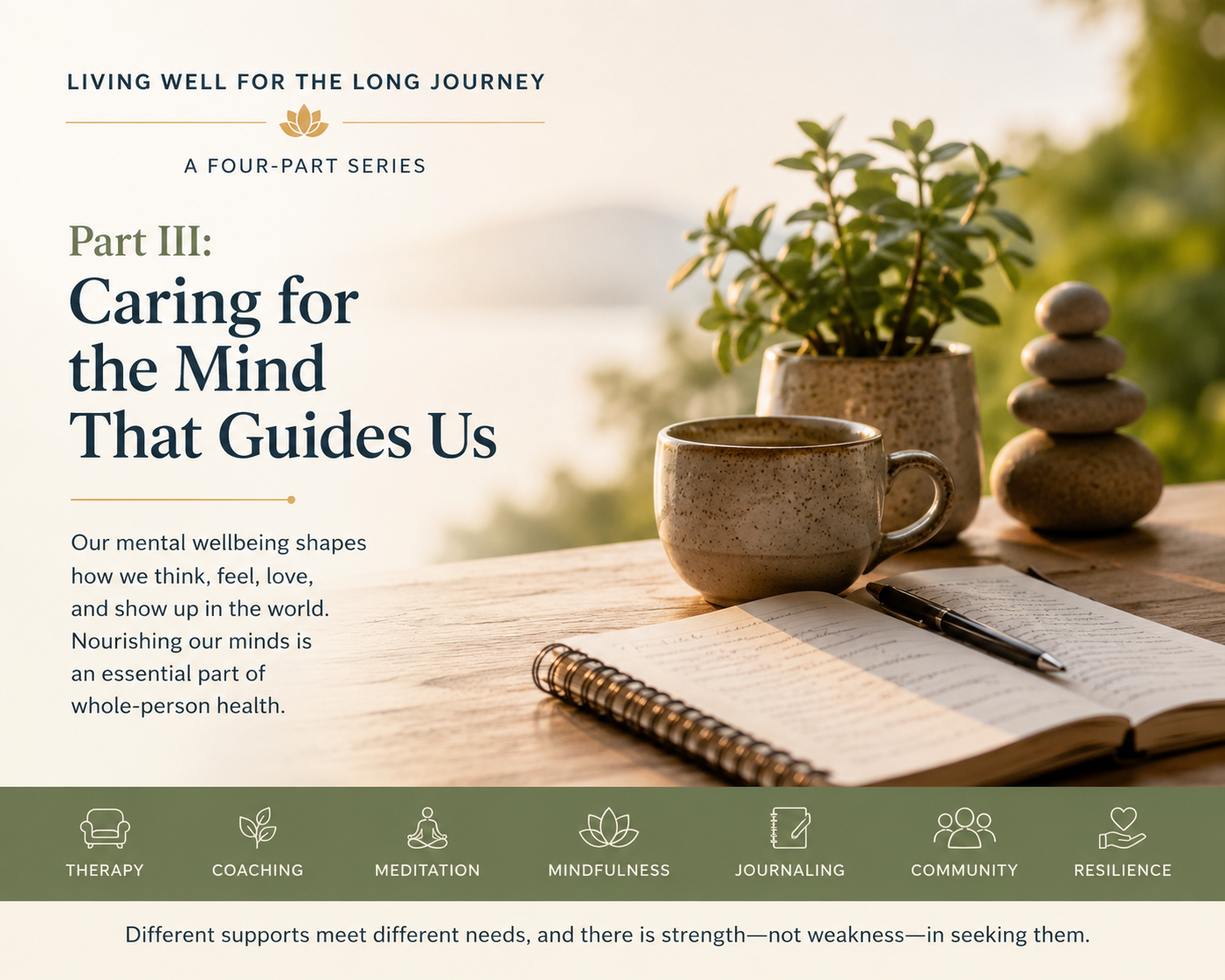
It’s not uncommon to think of mental health as something that only needs attention when something is wrong. As a society, we often devote far more energy to our physical health than to our mental wellbeing. Not because the mind is less important, but because we tend to celebrate physicality in the United States. Strength, fitness, and appearance are often seen as aspirational, while caring for our mental health can still carry unnecessary stigma. In some workplaces, that stigma can even discourage people from seeking support, despite the clear benefits to both personal wellbeing and long-term health.
A more proactive approach is to care for our minds with the same intention we bring to caring for our bodies.
I have been working with a Licensed Clinical Social Worker since 2012. What began as a desire to work through a few specific issues gradually became something much more meaningful. Therapy became an integral part of my overall wellbeing plan and, ultimately, my longevity plan.
And not just for me.
I often tell friends that I continue to see my therapist not because something is wrong, but because talking with her helps preserve the relationships I value most. I have a safe place to process frustrations, untangle difficult emotions, and make sense of life's inevitable challenges. In doing so, I am able to show up with greater patience, presence, and compassion for the people I love.
Working with a therapist or other mental health professional is just one modality. There are many different practices that help us nurture our minds.
I have also been a lifelong meditation and mindfulness practitioner. Working with life coaches has been another important part of my personal growth journey, helping me clarify my values, navigate transitions, and continue growing into the person I hope to become.
The truth is, there is no single path to mental wellbeing. Different practices support different needs at different stages of life. The goal is not to do everything, but to discover the tools that help you remain grounded, resilient, and fully engaged in your own life.
Mental Health Is Part of Whole-Person Health
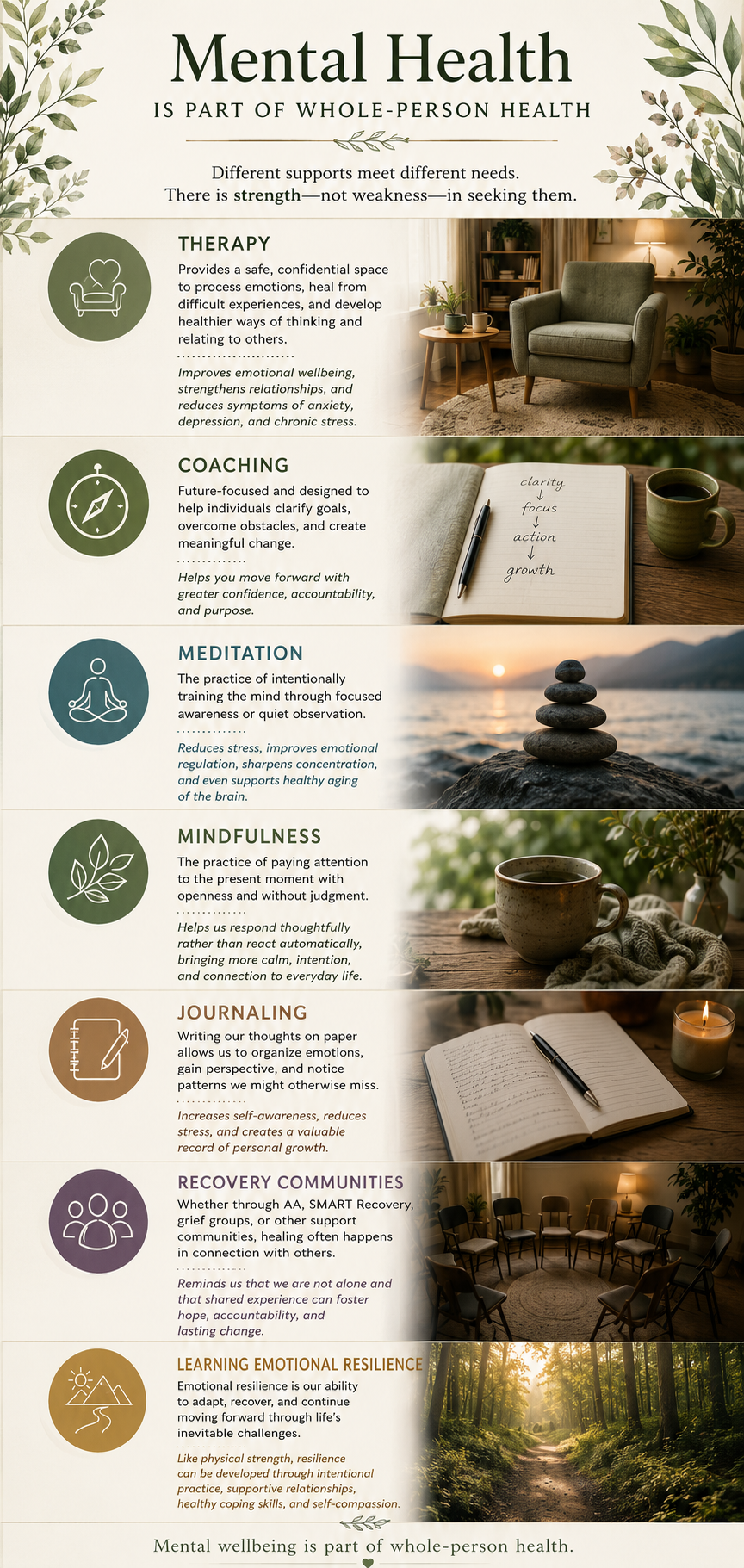
Therapy
Therapy provides a safe, confidential space to process emotions, heal from difficult experiences, and develop healthier ways of thinking and relating to others. It can improve emotional wellbeing, strengthen relationships, and reduce symptoms of anxiety, depression, and chronic stress.
Coaching
Coaching is future-focused and designed to help individuals clarify goals, overcome obstacles, and create meaningful change. Rather than exploring the past, coaching helps people move forward with greater confidence, accountability, and purpose.
Meditation
Meditation is the practice of intentionally training the mind through focused awareness or quiet observation. Regular meditation has been shown to reduce stress, improve emotional regulation, sharpen concentration, and even support healthy aging of the brain.
Mindfulness
Mindfulness is the practice of paying attention to the present moment with openness and without judgment. It helps us respond thoughtfully rather than react automatically, making everyday life feel calmer, more intentional, and more connected.
Journaling
Writing our thoughts on paper allows us to organize emotions, gain perspective, and notice patterns we might otherwise miss. Journaling can increase self-awareness, reduce stress, and create a valuable record of personal growth over time.
Recovery Communities
Whether through Alcoholics Anonymous, SMART Recovery, grief groups, or other support communities, healing often happens in connection with others. Recovery communities remind us that we are not alone and that shared experience can foster hope, accountability, and lasting change.
Learning Emotional Resilience
Emotional resilience is our ability to adapt, recover, and continue moving forward through life's inevitable challenges. Like physical strength, resilience can be developed through intentional practice, supportive relationships, healthy coping skills, and self-compassion.
Different supports meet different needs, and there is strength—not weakness—in seeking them.
Mental wellbeing is part of whole-person health.
Practice: A Moment of Reflection
I invite you to journal, meditate, or even discuss the following with someone you trust:
What has been occupying my mind lately?
What do I need more of?
What support would help me thrive?
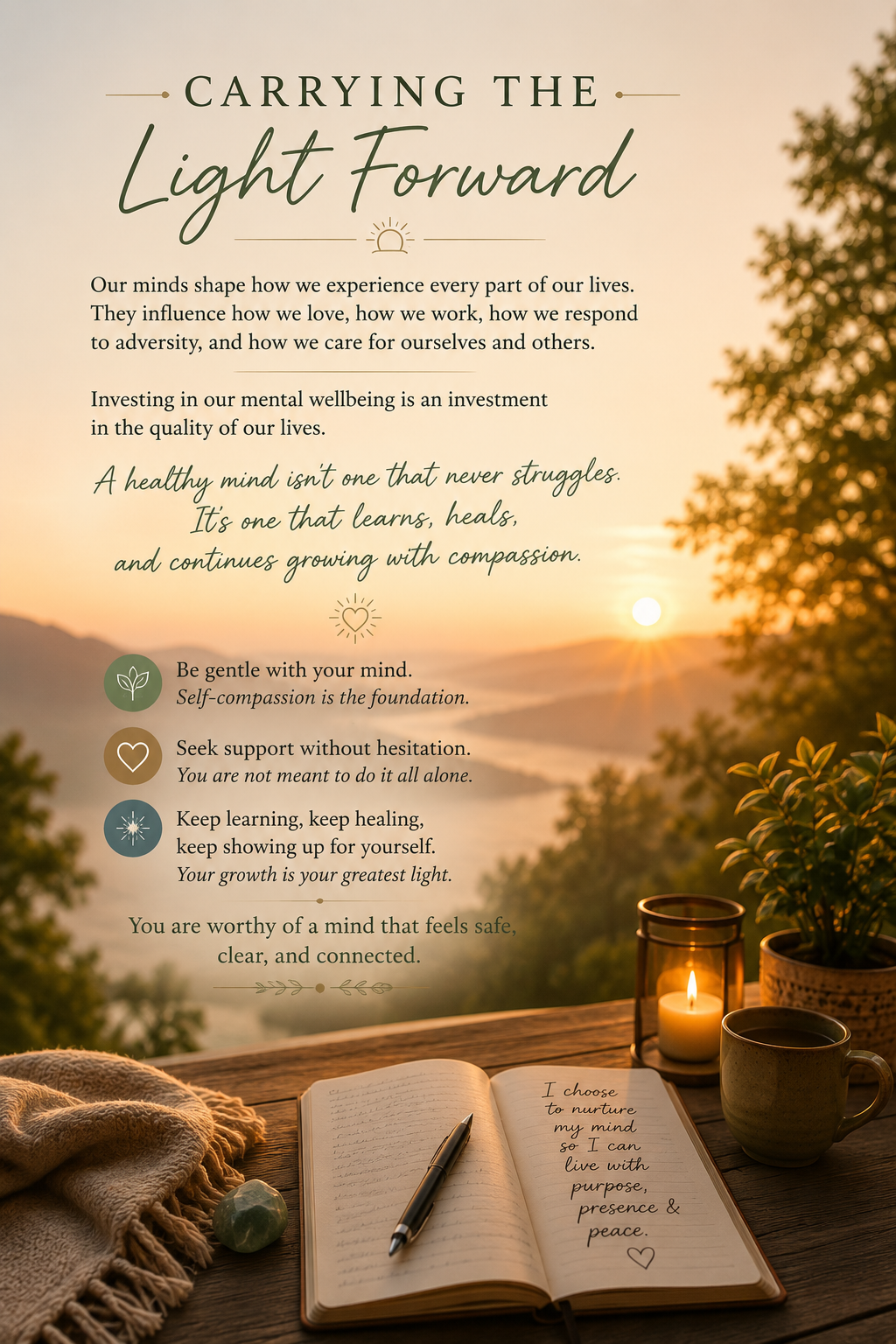
Carrying the Light Forward
Our minds shape how we experience every part of our lives. They influence how we love, how we work, how we respond to adversity, and how we care for ourselves and others. Just as we nourish our bodies through movement and healthy food, our minds also deserve regular care, attention, and support.
Whether that support comes through therapy, coaching, meditation, mindfulness, journaling, recovery communities, or simply learning new ways to navigate life's challenges, investing in our mental wellbeing is an investment in the quality of our lives. We don't have to wait until we're struggling to begin caring for our minds. Preventive care is just as valuable here as it is anywhere else.
A healthy mind isn't one that never struggles.
It's one that learns, heals, and continues growing with compassion.