
MABON: WILD—Leave Something for the Wild
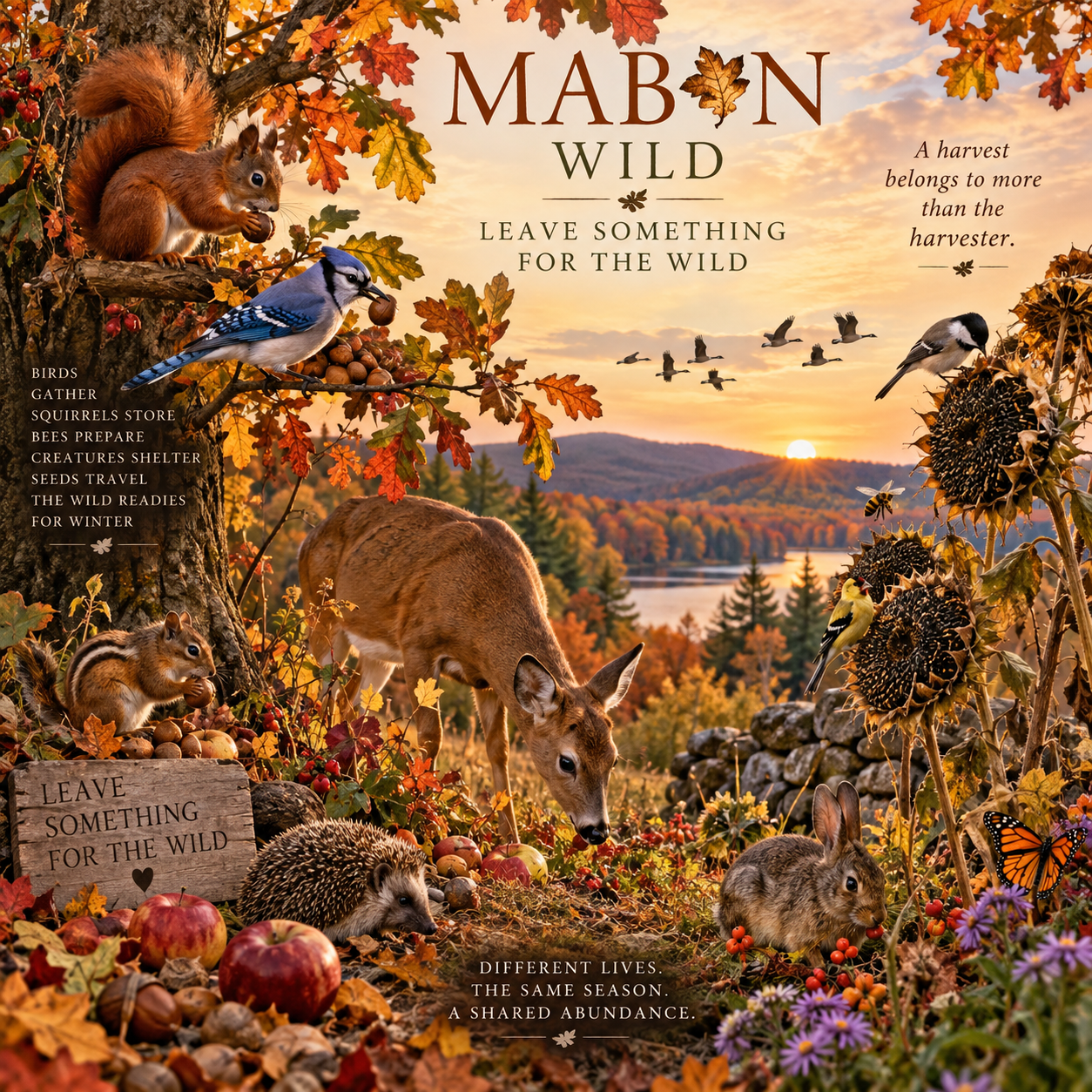
There is something about autumn that makes us want to tidy.
We cut back the garden. Rake the leaves. Pick the last tomatoes. Gather the apples beneath the tree. Pull the dead stalks and sweep the porch clean. We prepare our homes and gardens for the coming cold by putting everything in order.
But the wild has its own preparations underway.
Birds are migrating. Squirrels are gathering. Bees are making their final rounds. Seeds cling to dried flower heads, and beneath fallen leaves, insects and small creatures are already finding places to survive the winter.
Mabon is a harvest festival, but isn't only about what we gather. Perhaps it is also about what we leave behind.
A Harvest Shared
For most of human history, harvest meant survival. What could be grown, gathered, hunted, preserved, and stored determined whether people made it through winter.
But humans were never the only ones harvesting.
The apple that falls and remains beneath the tree becomes food. The sunflower left standing becomes a pantry of seeds. Fallen leaves become shelter. Hollow stems become winter homes. Berries left on branches feed creatures moving through a landscape where food is becoming scarce.
The wild is gathering, too.
There is an old wisdom in not taking everything.
Across cultures and traditions, people have practiced forms of reciprocity with the land—leaving portions of crops, returning offerings, sharing abundance, or simply understanding that everything growing around us does not automatically belong to us.
That idea feels especially important now.
Modern life teaches us to maximize. Harvest everything. Use everything. Clean everything up. Make the garden neat. Make the yard presentable.
Nature is considerably less interested in appearances.
A messy corner can be habitat. A pile of leaves can be shelter. A dried seed head can be supper. What looks finished to us may still be sustaining something else.
The question shifts from What can I take?
To What can I leave?
Reciprocity Is a Relationship
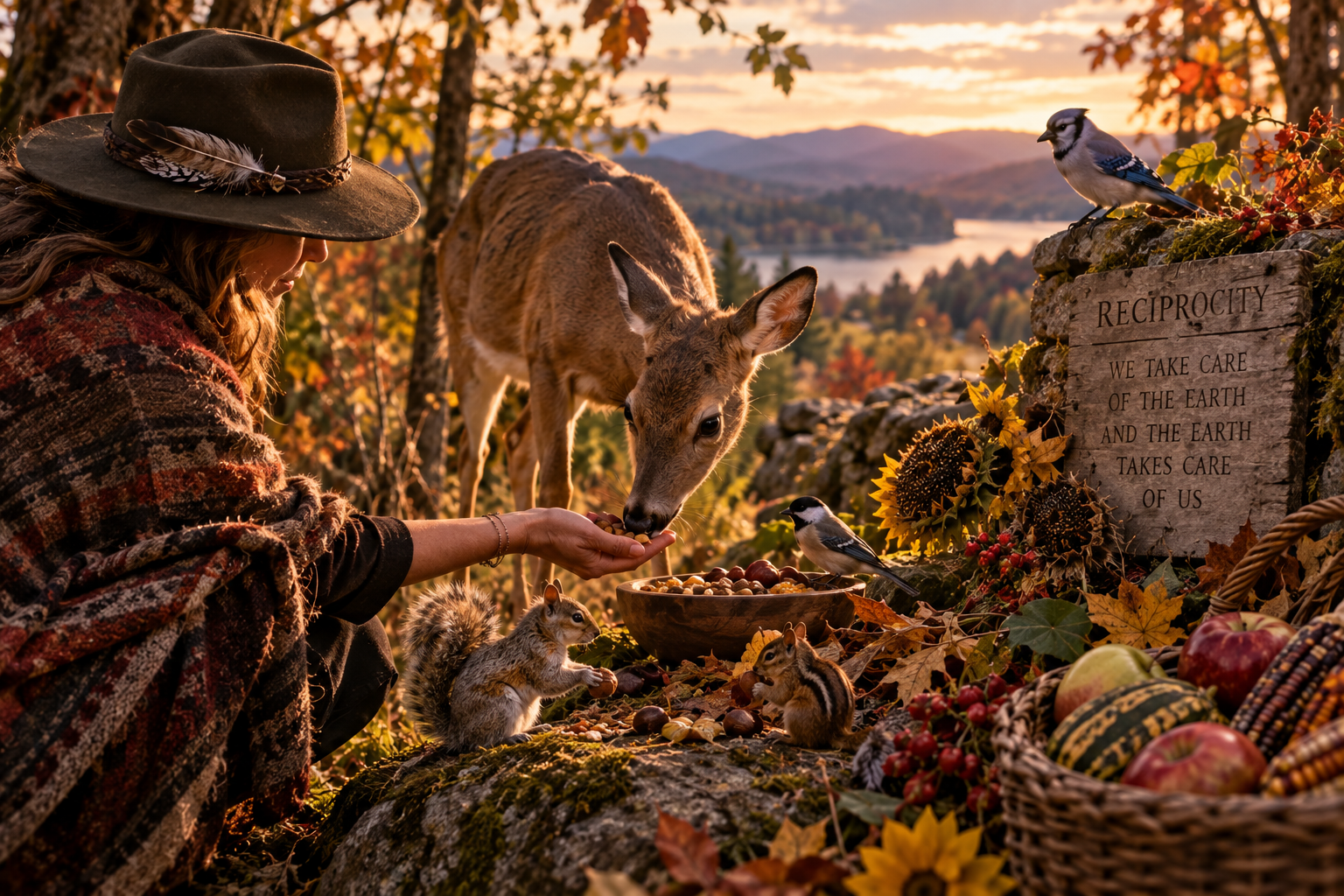
Reciprocity does not mean that we never harvest. Mabon celebrates abundance precisely because the Earth gives so generously.
We eat the apple. We gather the herbs. We bring the flowers inside. We preserve the tomatoes and roast the squash and fill our kitchens with the smell of whatever the season has offered.
But relationship asks something different of us than consumption does. It asks us to notice that we are not the only ones at the table.
That may be one of the quieter lessons of Mabon. Gratitude is more than saying thank you for what we receive. Sometimes gratitude means refusing to take the last one.
The last berry. The last flower. The last handful of seeds. The last perfectly tidy corner of the garden.
Leave something.
Not because the Earth needs a ceremonial gesture from us, but because countless other lives are participating in this season alongside us.
Simplicity Living Practice: Wilding
Today, find one small place where you can resist the urge to harvest, clear, prune, rake, or tidy.
Leave seed heads standing for birds. Allow some fallen leaves to remain where they can provide habitat. Leave a little fruit where appropriate. Let native plants finish their natural cycle. Create one quiet corner that belongs more to the wild than it does to you.
If you do not have a garden, the practice can be even simpler. Scatter appropriate native seeds, support a local habitat restoration project, or simply walk outside and notice what the creatures around you are gathering for themselves.
Topaz carries the warmth of the late-season sun, making it a lovely color to bring into today's practice—a candle, stone, cloth, or small object placed on your altar as a reminder of abundance shared rather than abundance possessed.
The Moon spends almost the entire day between signs before slipping into Pisces late tonight. There is something fitting about that liminal pause: a day for loosening our grip rather than adding another task. Let something remain unfinished. Let something belong to itself.
Sage Wisdom
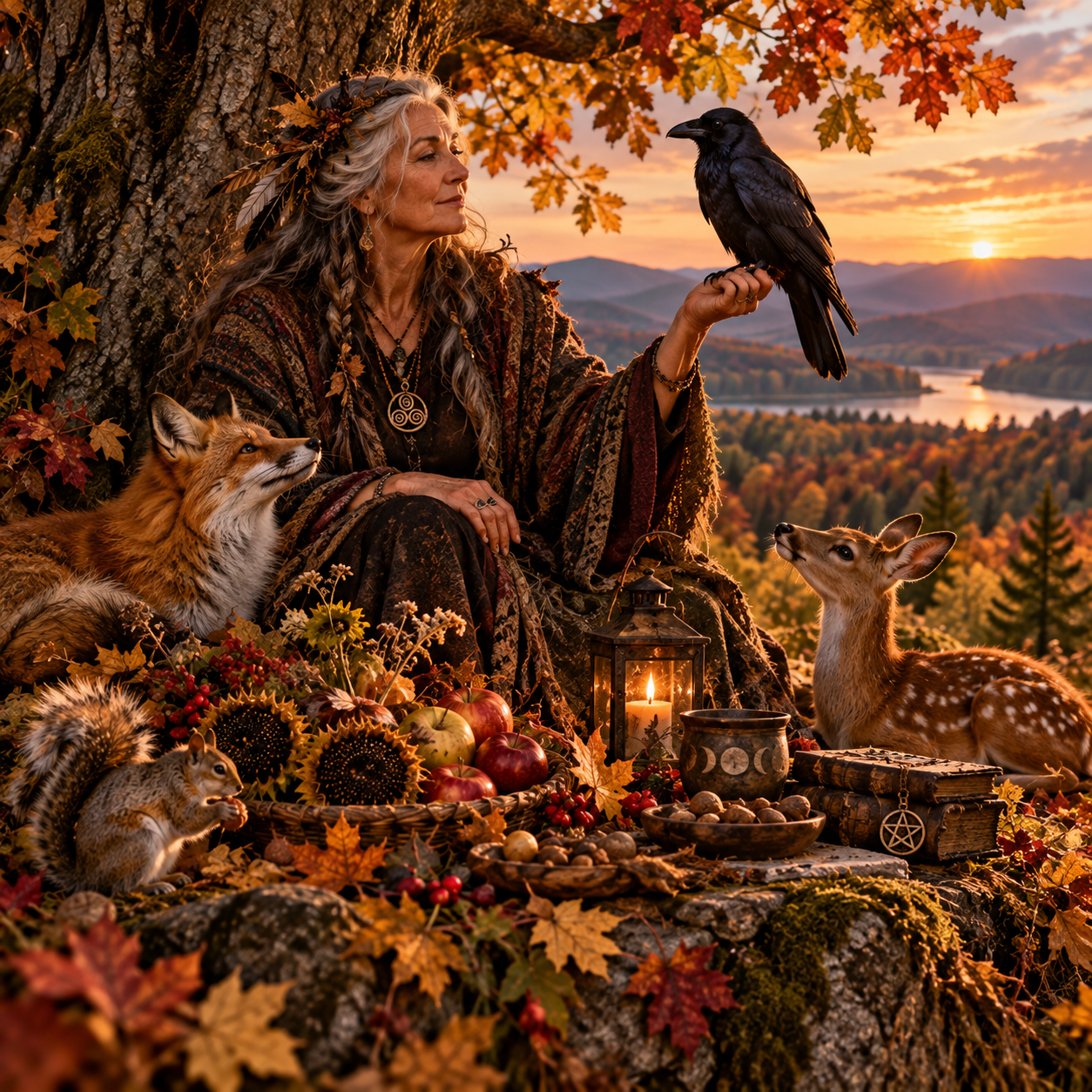
A harvest belongs to more than the harvester.
There is enough wisdom in that sentence for an entire season.
We are part of the wild world, not standing outside it. The berries, seeds, leaves, insects, birds, animals, soil—and us—belong to the same turning.
So take what nourishes you.
Give thanks for what sustained you.
And then leave a little behind.
Something for the birds.
Something for the soil.
Something for the unseen creatures preparing for winter.
Something simply because it was never ours alone.