
NOISE: When Did Everything Get So Loud?
The Soundtrack We Don't Notice
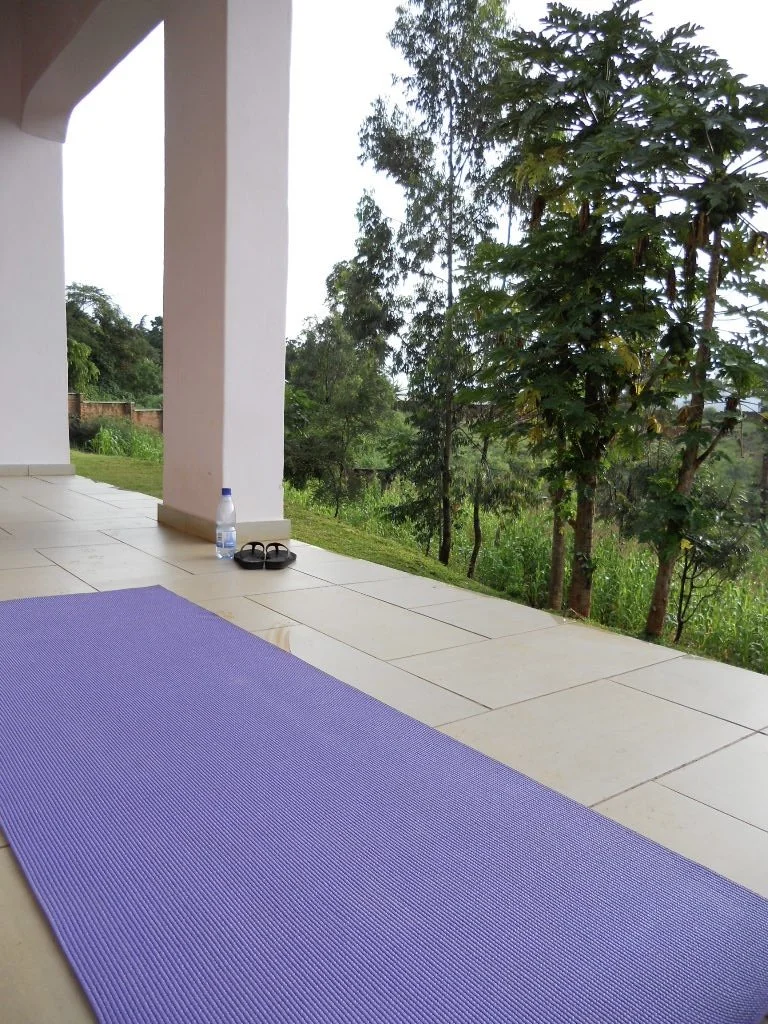
Yoga on my brother’ back porch in Zomba.
As the hustle and bustle of life reignites around Labor Day weekend, I wanted to spend this week talking about something we often don't: silence.
Since retirement, I've returned to living more of my life outdoors, and with it has come a return—a homecoming, if you will—to the sounds of nature. Crickets and cicadas. Birds calling to one another. Wind sifting through the leaves of trees.
And, perhaps more importantly, I've begun noticing the feelings and thoughts that arise when I actually stop and listen.
We are so accustomed to constant sound—HVAC systems, leaf blowers, music in stores, phones, alerts, podcasts, televisions, traffic—that much of it simply disappears into the background.
Which raises an interesting question. Not simply, How loud is your life? But: When did you stop noticing?
I remember the first time I became acutely aware of how sound affected me.
During my first trip to Africa in 2011, the sounds I experienced filled me with awe. Sitting on the back porch of my brother's house in Zomba, I could hear children singing at a school nearby. New bird calls piqued my curiosity. I stopped what I was doing and listened.
Those sounds brought tears to my eyes and an almost unrelenting smile to my face.
Then I noticed something else. The sounds that weren't there. No planes overhead. No steady stream of cars. No traffic. No constant evidence of modern industrial life whizzing past me.
And my body responded.
I relaxed in a way I hadn't realized I needed. Meditation and yoga on my brother's back porch came easily. My curiosity expanded. So did my desire for adventure and discovery. There seemed to be more room inside me for simply experiencing where I was.
Three weeks later, I landed at Dulles Airport.
Standing in line for customs, televisions blared messages overhead. After weeks away from that kind of constant input, the sound felt almost like an assault. I wanted to cover my ears. Escape. Turn around, get back on a plane, and return to the sound of children singing in Africa.
Noise Is Still Input
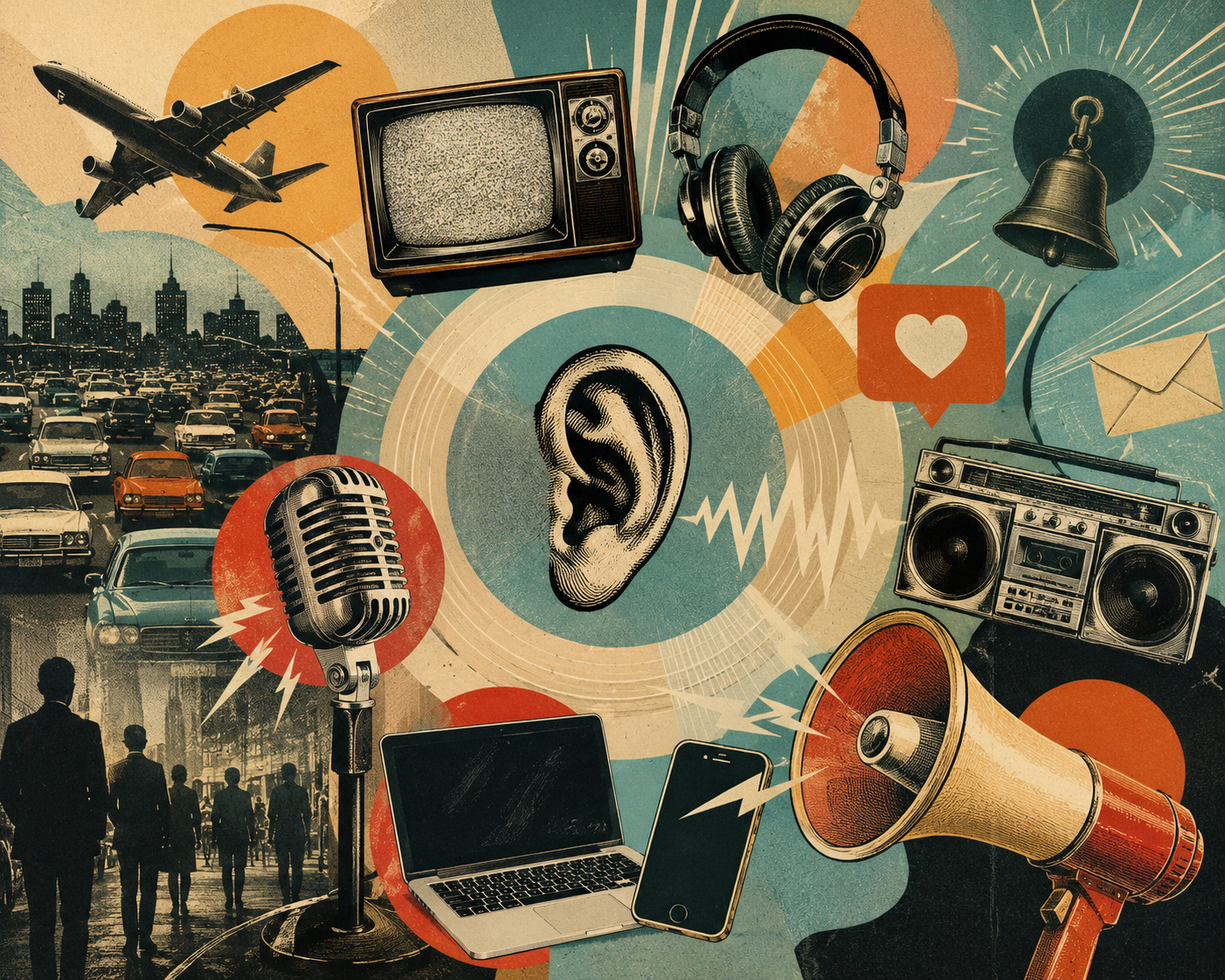
Noise pollution is one of the by-products of modern, industrialized life. We are surrounded by sound nearly all day, every day.
But I've begun to think about noise as something broader than decibels. News. Social media. Podcasts. Opinions. Notifications. Advertising. Other people's urgency.
All of it is input.
And sometimes what we call exhaustion may partly be the experience of simply never having enough space between those inputs.
Silence, then, isn't necessarily the absence of sound. It can be the absence of input. A clearing. A place where we begin to notice what has been there all along.
Our brains and bodies are continually receiving and sorting sensory information. Some sounds demand our attention. Others become background. But background doesn't necessarily mean gone. The refrigerator still hums. Traffic still moves outside the window. The phone still pings from the other room.
We may have more agency than we realize over how much of that noise we allow into our lives—and what kinds of sound we choose instead.
Last night, while glamping in western North Carolina, Mark and I lay in bed with the windows wide open, listening to the symphony of the outdoors. Insects. Wind. Leaves. The occasional call of something neither of us could identify. After a while, we quietly streamed a Gordon Lightfoot playlist.
And something beautiful happened.
The music carried us backward into some of the happiest memories of our childhoods. We began sharing stories. Remembering people and places. The music didn't compete with the sounds outside; somehow, it joined them. The gentle hum of nature, familiar songs and cool mountain air created their own kind of magic. There was room to decompress. Room to remember. Room to connect.
Maybe that's part of what becoming aware of noise can teach us. The goal isn't necessarily to make life silent. It's to become more discerning about what gets to fill the space.
Practice: Notice the Noise
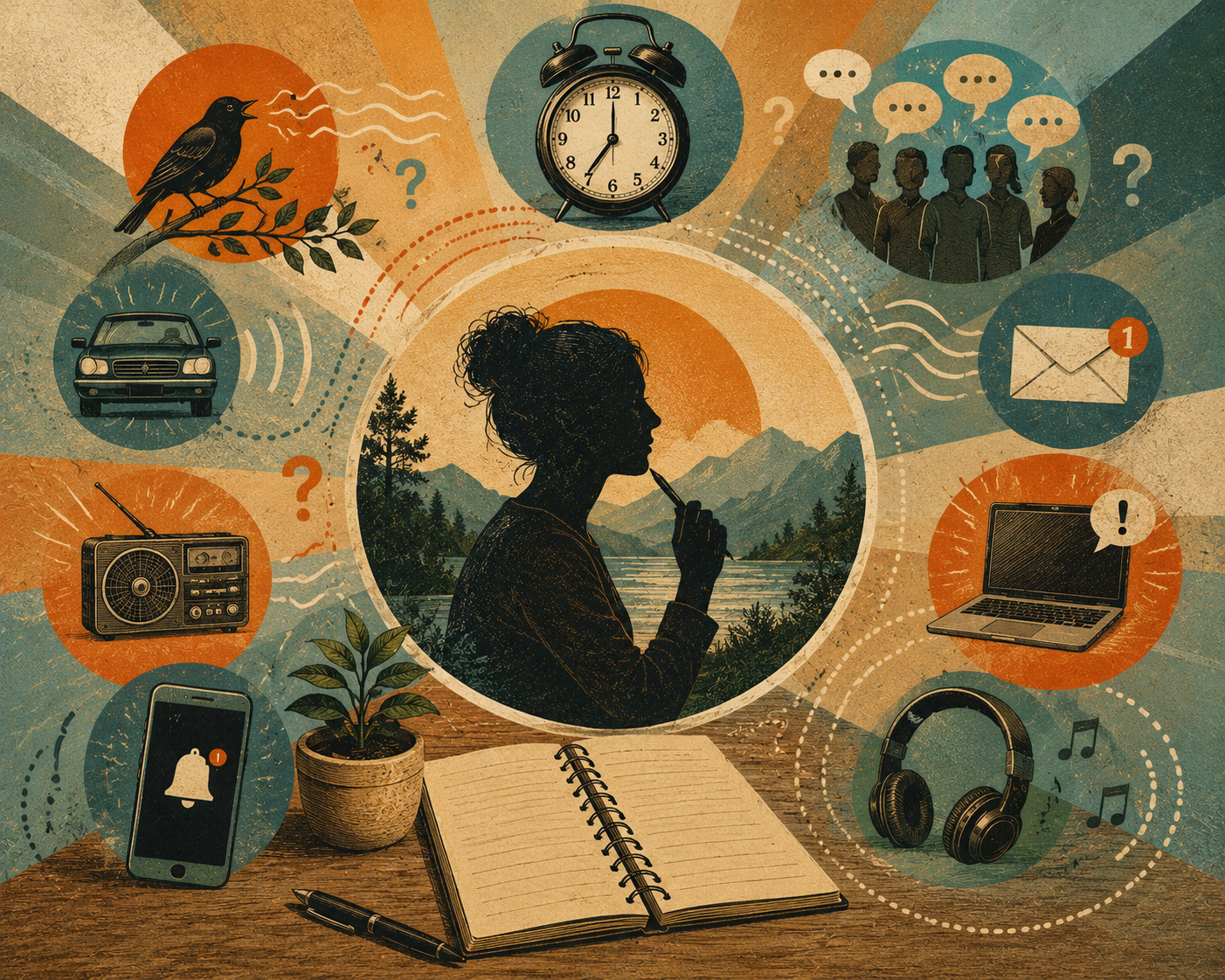
When we begin a new practice, the first step is almost always awareness. Before changing anything, we need a baseline—a starting place from which we can notice what is.
So for one day, don't change anything.
Just notice.
What do you hear when you first wake up? What sounds follow you through your morning? What do you automatically turn on? When do you reach for music, television, a podcast or your phone simply because quiet feels strange?
And notice your body, too.
Does a particular sound make you tense? Does another make you soften? What happens when the noise stops?
At the end of the day, ask yourself: Which sounds nourish me—and which ones simply fill space?
Write down what you notice.
Because the things we notice become waypoints. Small markers that say: This is where I was when I began paying attention.
And awareness gives us somewhere to begin.
Take This With You
Silence doesn't begin by eliminating every sound.
It begins by noticing what we've been listening to.
And perhaps, eventually, choosing what deserves to be heard.