
The Price of Enough
Intentional simplicity is sometimes born from hardship.
During the past several years that I have been writing blogs, I have intentionally stayed focused on simplicity living, seasonal alignment, mindfulness, and spirituality. In many ways, it was my refuge. My way of staying grounded and out of the political fray. As a federal employee for more than thirty years, I often felt restrained from speaking too openly about what I was witnessing in our culture and institutions. The fear was not abstract. It was practical. I had spent decades building toward what many Americans hope for but increasingly never reach: stability, health insurance, and a pension.
The time for restraint is over.
Because life is not always sunshine and daisies, no matter how much my hopeful nature wishes it to be.
I retired in January and, like tens of thousands of other federal employees who accepted early retirement offers, I still have not received my pension. Before leaving federal service, one of the final documents I received warned me not to expect retirement payments for at least three to six months. My best friend retired on September 30th and, seven months later, still has not received hers.
At the same time, the rapid dismantling of administrative infrastructure and widespread federal workforce reductions have sent shockwaves through the Washington, D.C. region. Entire communities are now carrying a level of economic anxiety that feels both unfamiliar and deeply destabilizing. Highly educated and experienced professionals are scrambling for jobs that either no longer exist or are being offered at dramatically reduced salaries. Families are leaving the area entirely. Others are draining savings accounts while waiting for systems that once functioned reliably to begin moving again.
And then there is housing.
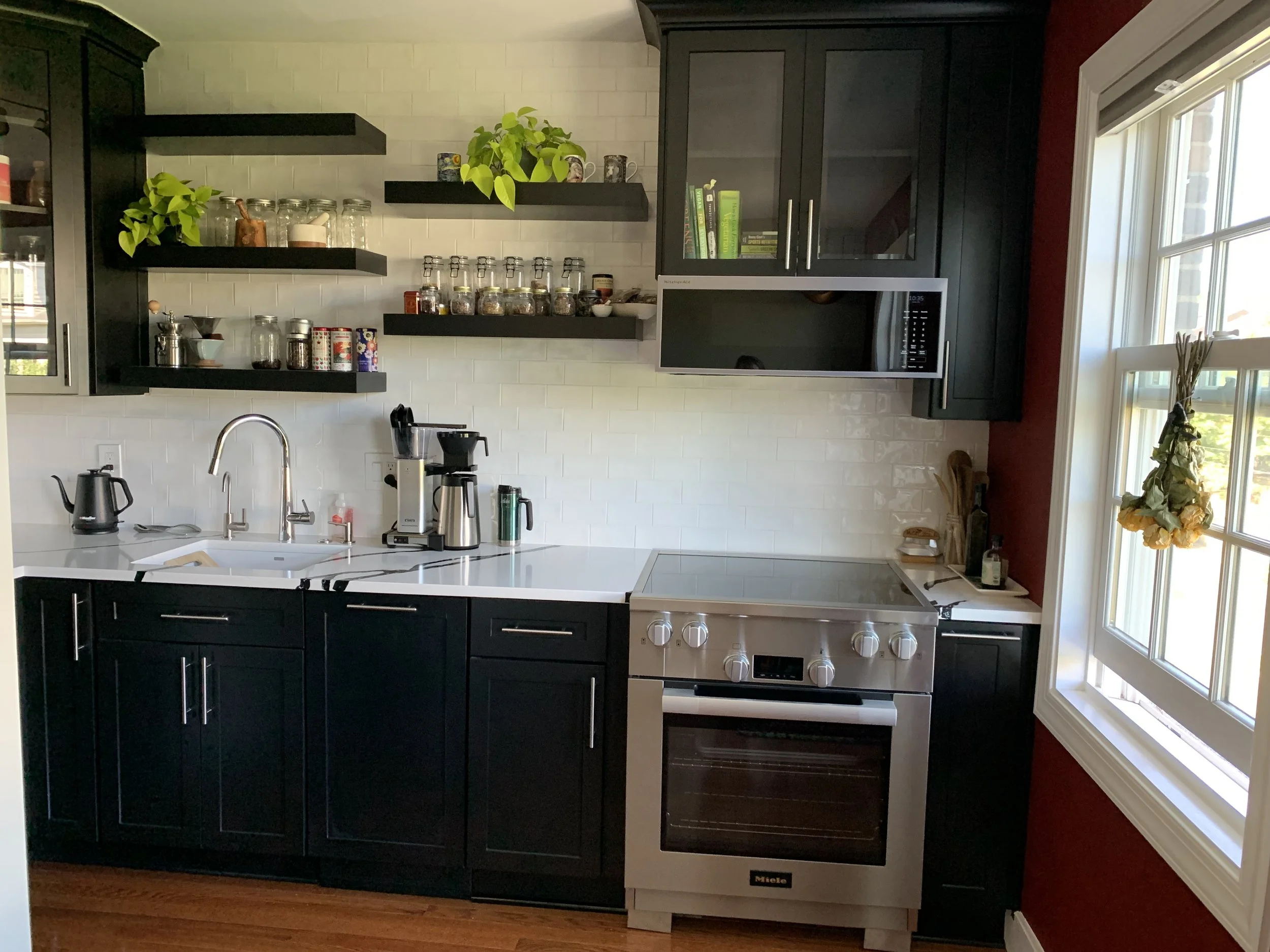
FOR RENT. My condo in Alexandria, VA.
My condo with a newly renovated kitchen has now sat vacant for seven months. I have lowered the rent four separate times. The property management company handling the rental has assured me I am far from alone. Properties across the region are sitting unrented and unsold as the market strains under uncertainty, inflated costs, and a growing mismatch between what people earn and what life now demands financially.
At the same time, development continues at a staggering pace. In my own neighborhood of Del Ray in Alexandria — once a quirky, walkable community filled with modest homes and local character — developers are buying properties at lightning speed and replacing them with luxury duplexes and accessory dwelling units priced far beyond what many working families can realistically afford. The language used to justify this expansion is often rooted in solving the housing crisis, but increasingly the result feels less like community and more like extraction.
The small-town feeling that once made this place magical is slowly disappearing beneath density, speculation, traffic, rising taxes, and relentless monetization.
And if you are feeling exhausted by all of this, you are not alone.
We have all felt it at the gas station. At the grocery store. Opening utility bills. Watching insurance premiums rise. Looking at restaurant prices that now feel absurd. According to the U.S. Bureau of Labor Statistics, the average hourly wage for private-sector American workers is now roughly $37 per hour. Yet according to the U.S. Census Bureau and the Harvard Joint Center for Housing Studies, millions of Americans are spending well over 30–40% of their income on housing alone — far above the long-standing recommendation of 28–30%.
Somehow, even people who are doing “everything right” are struggling to breathe.
And I say this while recognizing that I am still more fortunate than many. I have healthcare. I own property. Eventually my pension will arrive, along with backpay. But even so, retirement has humbled me profoundly. I have felt, at times, like a college student again — staring at bills, recalculating expenses, wondering how hard-earned stability suddenly became so fragile.
This experience has forced me to confront something I believe many Americans are quietly beginning to realize:
The way we are living is not sustainable.
For decades we have been conditioned to believe that happiness exists somewhere outside of ourselves. Marketing has become one of the most psychologically sophisticated industries on Earth, and its message is relentless:

Cutting pop (regular or diet) from your life is one of the best things you can do for your health …
Buy this.
Upgrade that.
Become more attractive.
More successful.
More productive.
More admired.
More desired.
And once we acquire the thing we believed would finally complete us? The feeling fades. Because happiness is intrinsic, not extrinsic. So we chase the next thing. Sometimes the thing is material: a bigger home, a nicer car, a wardrobe, another streaming subscription, another Amazon delivery arriving like a tiny dopamine hit on the doorstep.
Other times the thing is emotional.
Attention.
Validation.
Achievement.
Status.
Praise.
Being chosen.
Being desired.
Being envied.
Being seen.
Perhaps we are not buying objects at all. Perhaps we are trying to purchase a feeling of worthiness.

Seeking external validation is essentially gambling with your life. Maybe it will make you happy. Maybe it won’t.
A promotion.
A title.
A relationship.
A flirtation.
A perfect social media image.
The approval of our children.
The admiration of strangers.
The illusion that we are somehow “winning.”
But eventually the nervous system grows exhausted from performing. The soul grows weary from trying to earn enoughness. And somewhere beneath all the noise, a deeper question begins whispering: What am I actually trading my life for?
Because money is not merely money.
Money is life energy.
If I earn $25 per hour and my cell phone bill costs $125 per month, then five hours of my life every month are spent paying for my phone.
Five hours I will never get back.
When we begin translating our expenses into hours of our lives, something startling happens. The numbers stop being abstract. We begin to see the true cost of the lives we are living.
Consider a simplified version of average monthly American expenses:
Expense Monthly Cost Hours of Life
Mortgage + HOA $2,000 54
Phone $140 3.7
Internet/WiFi $70 1.8
Gasoline $200 5.4
Food $500 13.5
That is 78.4 hours of labor each month for only the most basic necessities — and that does not include healthcare, insurance, debt, childcare, clothing, taxes, emergencies, or retirement savings.
This is why so many people feel trapped.
Not because they are lazy. Not because they are irresponsible. But because modern life has quietly become a machine designed to consume enormous amounts of human energy simply to maintain baseline existence.
And yet, despite this reality, we rarely stop long enough to ask ourselves the most important question of all:
How much is enough?
This is where simplicity living becomes far more than decluttering your closet or minimizing your possessions.
It becomes a radical act of reclaiming agency.
I often invite people to begin with something deceptively simple. Stand in your home and look around. Identify five things you could remove from your life tomorrow that would not meaningfully diminish your happiness.
Then let them go.
Donate them.
Gift them.
Release them.
Not because minimalism is trendy, but because every object we own requires some amount of mental, emotional, financial, or physical energy to maintain.
Then move to your digital life.
List every subscription.
Every recurring payment.
Every bill.
Write them all down in one place.
Then ask yourself:
What am I actually paying for here?
What value is this bringing into my life?
And most importantly: How many hours of my life does this truly cost me?
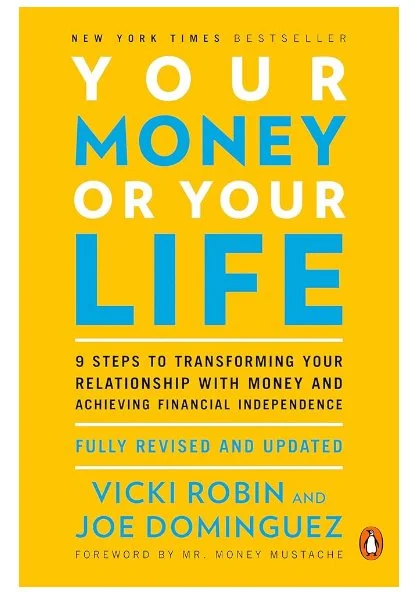
I did this exercise years ago when I read Your Money or Your Life by Vicki Robin and Joe Dominguez. It changed my relationship with money and transformed my behavior completely. Now, unexpectedly retired without pension income or rental income, I have had to do it all over again.
I have cut nearly all unnecessary subscriptions. Switched to the cheapest phone plan I could find. Reduced driving dramatically. Stopped eating at restaurants almost entirely. Ironically, many of these changes have improved my physical and emotional wellbeing alongside my finances.
I walk more.
Cook more.
Consume less.
Read more.
Need less.
And somewhere in that process, life becomes quieter. Clearer. More honest.
Difficult times often reveal truths that comfort keeps hidden.
They force us to examine how we are living, why we are exhausted, and whether the life we are working so hard to maintain is actually nourishing us at all.
So many people are running endlessly on what I call “the treadmill of enough.” Working jobs they do not love to sustain lifestyles they barely have time to enjoy. Chasing external validation while their nervous systems quietly deteriorate beneath the weight of constant striving.
One day, many of us wake up and realize we are wearing golden handcuffs.
The salary.
The house.
The image.
The endless subscriptions to a life we no longer even know if we want.
And yet there is another way.
Not a perfect way. Not an easy way. But a more intentional one.
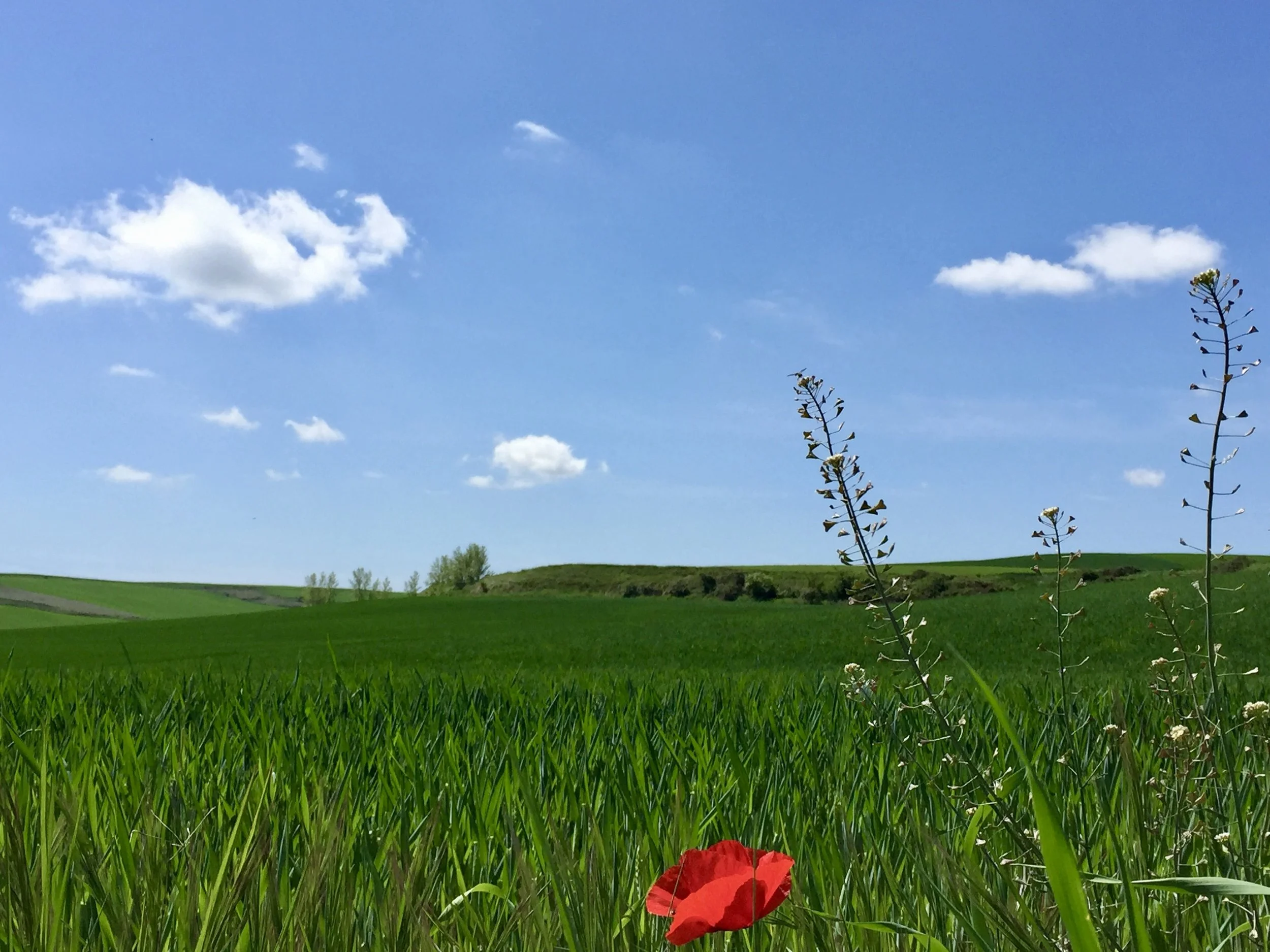
Walking 500 miles across Spain with just a backpack, I realized the less I owned, the happier and more free I felt.
A life built around purpose instead of performance.
Enough instead of excess.
Alignment instead of appearance.
Community instead of comparison.
Presence instead of endless consumption.
This is the deeper work.
Not just finances. But purpose.
Energy management.
Physical health.
Relationships.
Mindfulness.
Identity.
The stories we inherited about success and worth.
Because if we do not consciously define what matters to us, the culture will define it for us. And much of modern culture profits from our exhaustion, distraction, insecurity, and perpetual dissatisfaction.
I believe we are hungry for something more human than that.
This is the work I now devote myself to through coaching.
Not because I have all the answers, but because I have lived enough life to know that transformation rarely happens in isolation. Sometimes we need someone to help us slow down long enough to hear our own inner wisdom again beneath the noise of the world.
I offer free one-hour consultations and individual coaching sessions for those seeking clarity, simplicity, direction, or simply a place to begin.
Because this work is not about grinding harder.
It is about remembering that your life is not a commodity.
And perhaps the most radical thing any of us can do in this moment is to stop asking how to become more productive inside a broken system… and begin asking instead:
What would it look like to build a life that is truly enough?
— Dani Keating