
We Were Never Meant to Live Like This
Geoengineering, Burnout, and the Forgotten Art of Enough
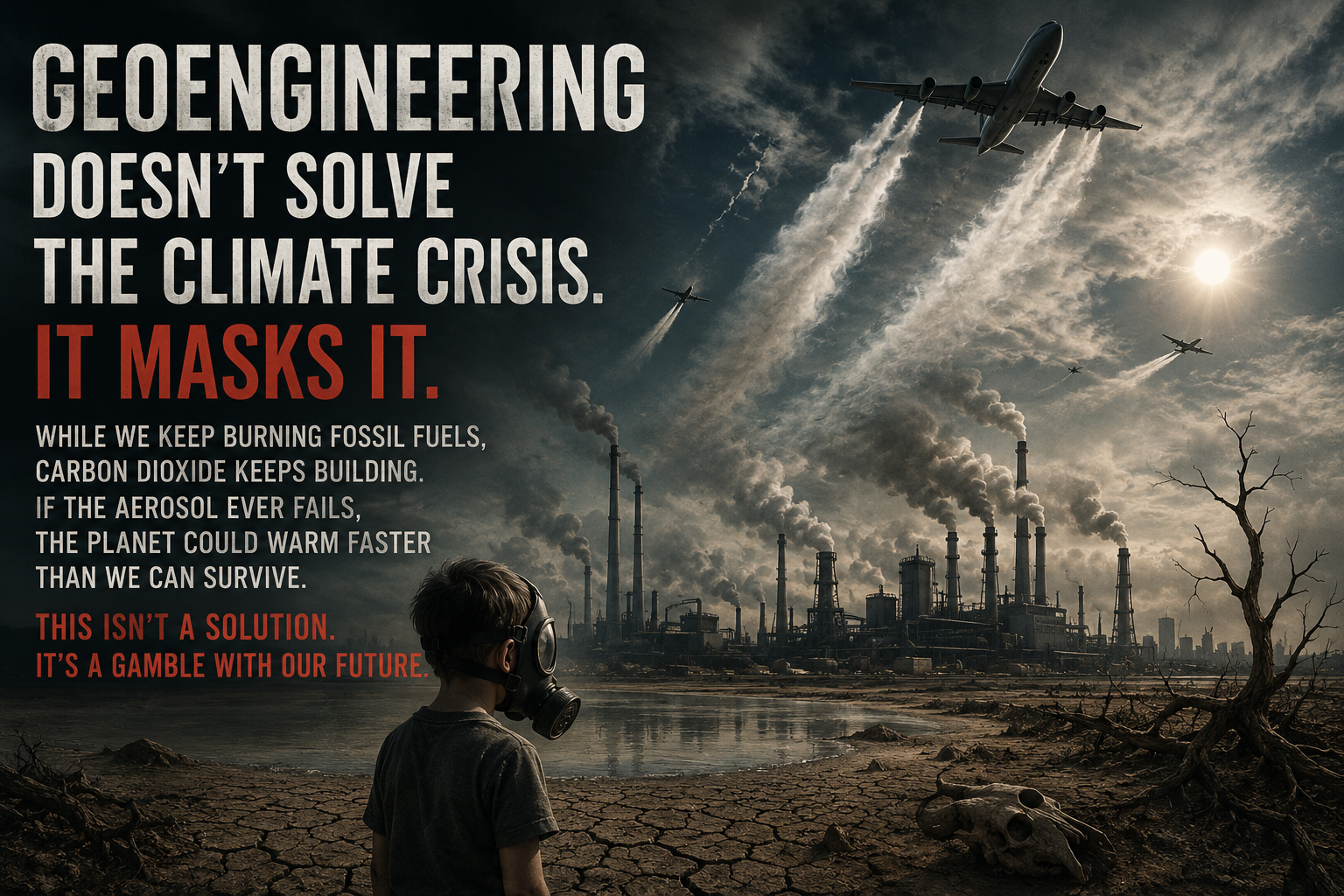
The most dangerous illusion of modern civilization may be the belief that we can engineer our way out of consequences without changing how we live.
A few days ago, I read an article by Corbin Hiar in Politico about geoengineering,— specifically, proposals to inject reflective particles into the atmosphere to block sunlight and artificially cool the Earth, all while potentially generating billions for companies like Stardust Solutions.
The premise is deceptively simple: because humanity has failed to meaningfully reduce carbon emissions, scientists and private corporations are exploring ways to manipulate the Earth’s climate systems in hopes of buying more time. Spraying aerosols into the atmosphere. Altering cloud formations. Engineering planetary systems at scale.
I understand the desperation behind such proposals. I spent years working around climate and Arctic policy issues inside high-level federal systems, and I understand how dire the science has become. But I also understand the profound risks of treating geoengineering as a technological escape hatch rather than what it actually is: a planetary-scale gamble.
Because geoengineering does not solve the climate crisis.
It masks it.
The danger is not simply the technology itself, but the moral hazard it creates — the illusion that we can continue burning fossil fuels, consuming endlessly, and expanding industrial growth because science will somehow engineer us out of consequence. Meanwhile, carbon dioxide would continue accumulating in the atmosphere at staggering levels beneath an artificially cooled sky.
And if those aerosol systems were ever interrupted — through political instability, economic collapse, war, technological failure, or unintended environmental consequences — the Earth could experience rapid warming at a pace ecosystems and human civilization would struggle to survive.
That reality produces something in me far deeper than alarm.
It produces grief.
And, if I’m being honest, outrage that humanity continues searching for ways to manipulate the symptoms of collapse while refusing to confront the culture of endless extraction and consumption driving the crisis itself.
More technology.
More intervention.
More control.
More complexity.
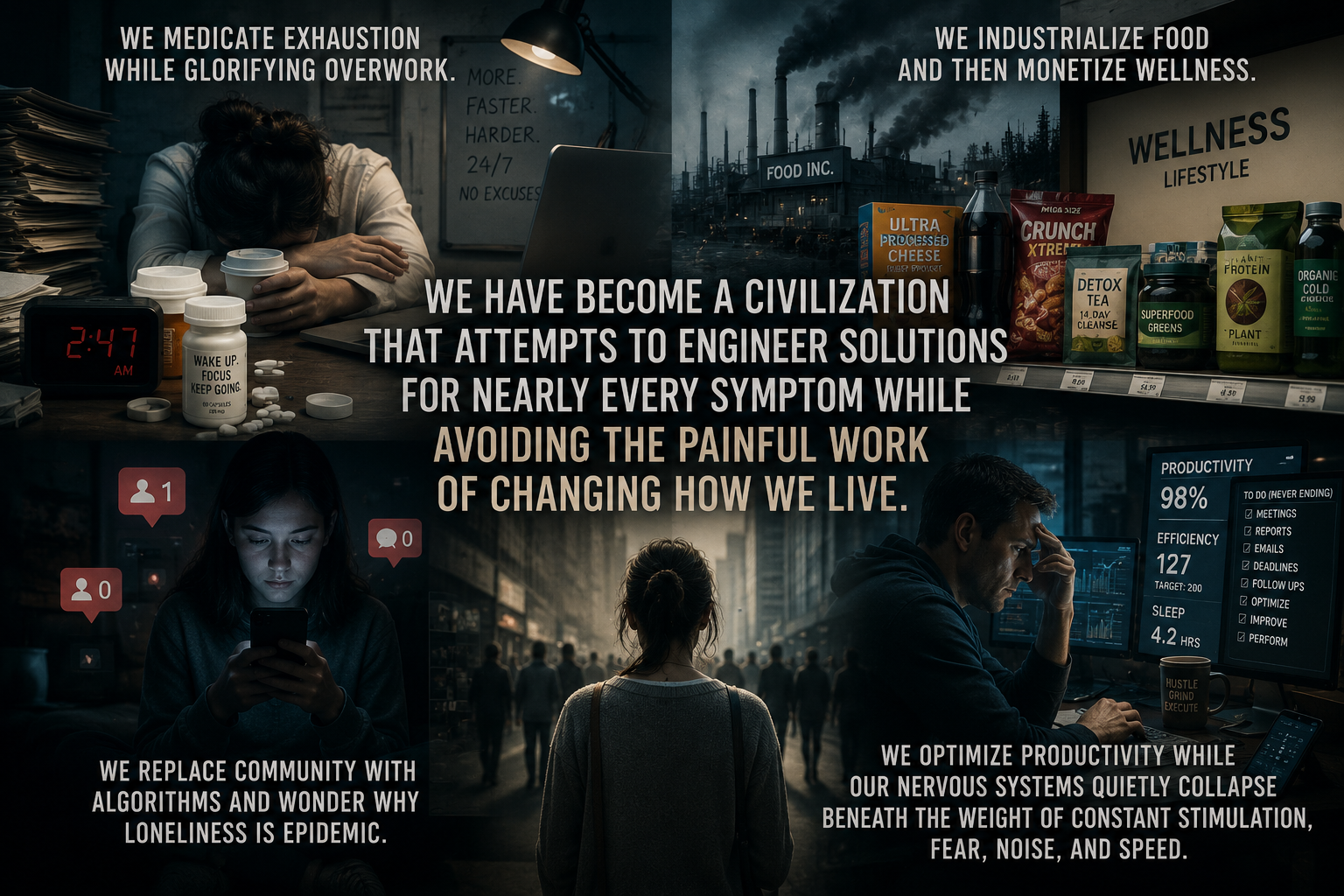
We engineered a world obsessed with optimizing performance, yet somehow forgot how to nourish the human spirit.
It struck me that geoengineering is not just a climate conversation. It is the logical culmination of the modern worldview.
We have become a civilization that attempts to engineer solutions for nearly every symptom while avoiding the painful work of changing how we live.
We medicate exhaustion while glorifying overwork.
We industrialize food and then monetize wellness.
We replace community with algorithms and wonder why loneliness is epidemic.
We optimize productivity while our nervous systems quietly collapse beneath the weight of constant stimulation, fear, noise, and speed.
And now, faced with ecological breakdown, we are once again asking: How do we control the system more efficiently?
Rarely do we ask:
Why have we become so disconnected from the living systems that sustain us in the first place?
The deeper crisis is not technological.
It is relational.
We have lost relationship:
with nature,
with our bodies,
with silence,
with seasons,
with community,
and with enoughness.
No species can consume endlessly on a finite planet. Yet modern economies are built almost entirely upon perpetual growth, perpetual extraction, perpetual consumption, and perpetual distraction. The machine cannot slow down because slowing down threatens the systems that profit from our exhaustion.
And so people everywhere are feeling it.
The anxiety.
The burnout.
The numbness.
The strange feeling that something is profoundly off, even if we cannot fully name it.
I see it constantly in conversations with friends, clients, and strangers. Intelligent, capable, compassionate people who are utterly overwhelmed by the pace and demands of modern life. People who feel guilty for being exhausted. People who quietly suspect that they have organized their lives around metrics that have very little to do with actual wellbeing.
More money.
More productivity.
More status.
More convenience.
And somehow, despite all of it, many people feel less alive than ever.
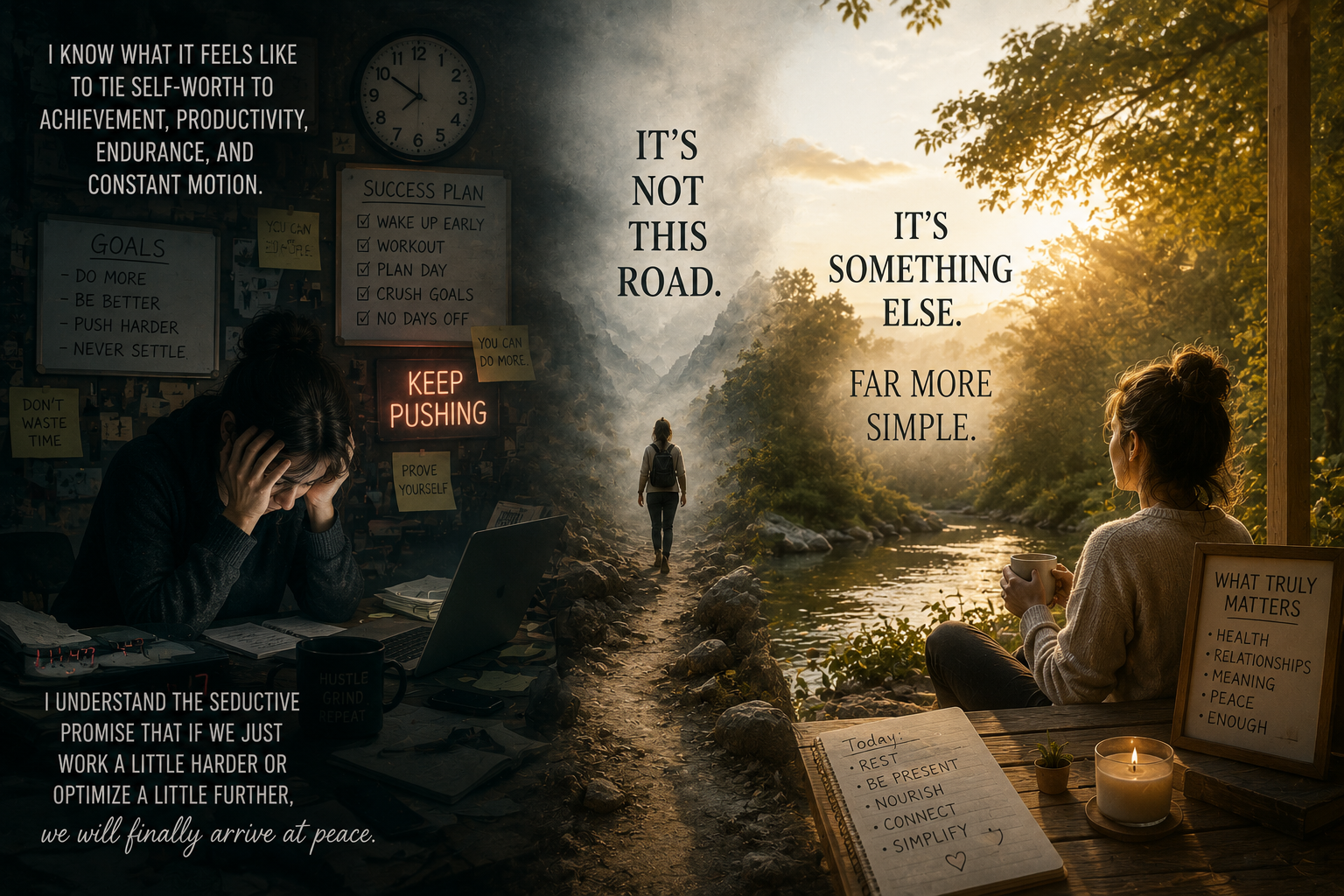
We spend so much of our lives chasing peace through achievement, only to discover that what we were truly longing for was presence.
I do not write this from a place of superiority. I spent decades inside high-performance systems. I know what it feels like to tie self-worth to achievement, productivity, endurance, and constant motion. I understand the seductive promise that if we just work a little harder or optimize a little further, we will finally arrive at peace.
But peace does not come from endless acceleration.
At some point in my own life, I began realizing that what I truly longed for was not more success, but more presence.
More mornings without rushing.
More real conversations.
More time outdoors.
More creativity.
More silence.
More moments where my nervous system did not feel under assault.
Not less ambition, necessarily. But a different definition of a successful life.
One rooted not in accumulation, but in alignment.
This is part of why simplicity living has become so important to me. Not as aesthetics. Not as minimalism for social media. But as a form of resistance against a culture that constantly tells us we are not enough unless we consume more, produce more, and perform more.
Simplicity asks different questions.
What if enough is actually enough?
What if rest is productive?
What if slowness is intelligent?
What if community matters more than optimization?
I do not believe we are going to innovate our way out of every consequence of disconnection. Technology has its place. Science matters. But without wisdom, restraint, stewardship, and relationship, technology alone cannot save us from ourselves.
The climate crisis is not separate from the mental health crisis.
Neither is separate from the loneliness crisis.
Nor the burnout crisis.
Nor the crisis of meaning unfolding quietly beneath all the others.
These are not isolated problems. They are symptoms of a civilization that has drifted too far from the rhythms that sustain human life.
And yet, despite all of this, I remain hopeful.
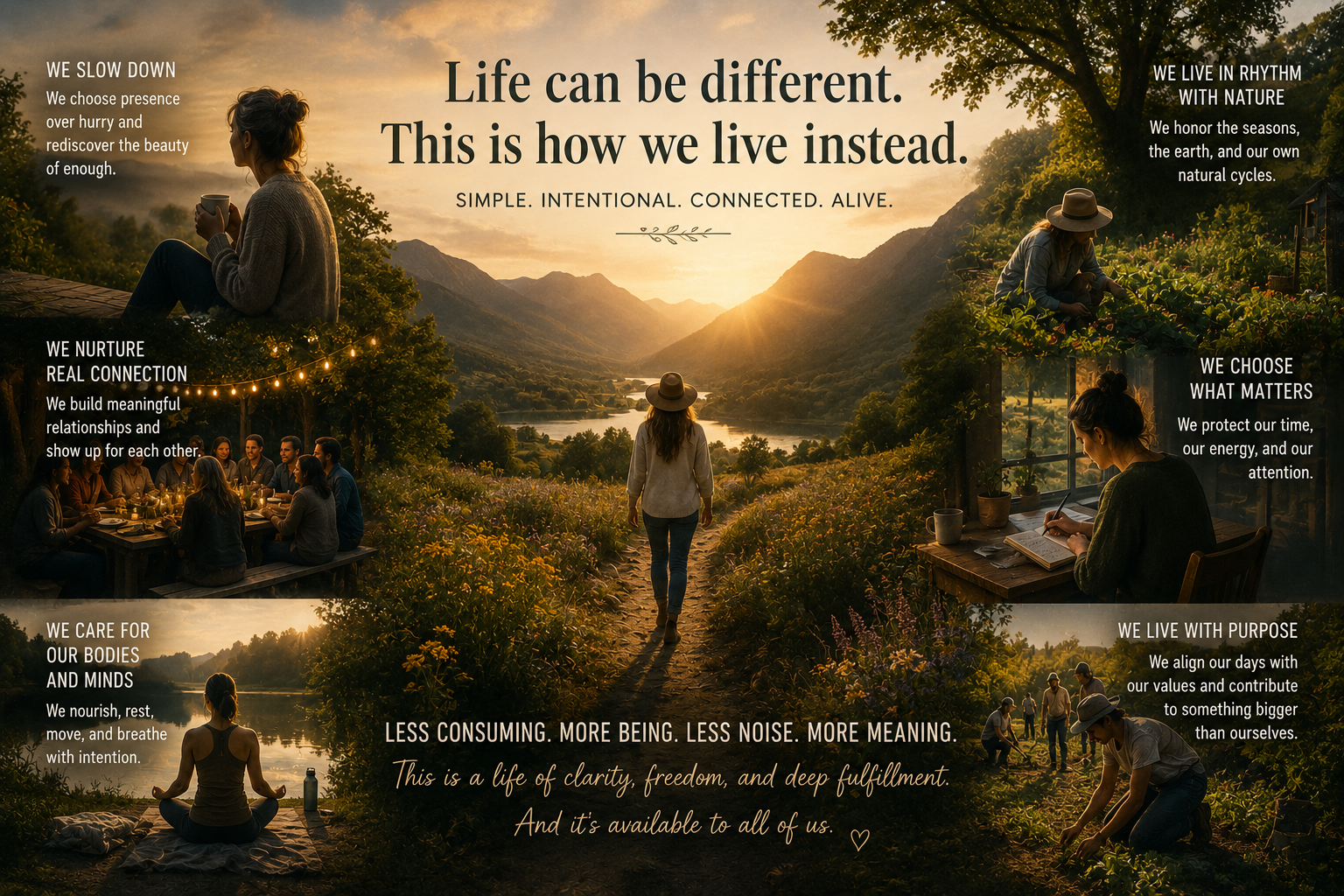
A different future becomes possible the moment we choose presence, community, simplicity, and enough over endless consumption and speed.
Because I also see another movement emerging beneath the noise.
People planting gardens.
People leaving careers that no longer align with their souls.
People rediscovering art, ritual, storytelling, and community.
People spending more time outdoors.
People questioning endless consumption.
I think many of us are trying to remember something ancient.
How to live within limits.
How to live in relationship.
How to live with reverence instead of conquest.
Perhaps the future begins there.
Not in controlling the sky, but in learning once again how to stand barefoot upon the Earth.
And perhaps every small act of intentional living — every moment of mindfulness, simplicity, courage, community, stewardship, and authenticity — becomes part of building a different kind of world.
One rooted not in endless extraction, but in enough.
- Dani Keating
Health & Life Coach