
The Radical Practice of Doing Less
On rest, boredom, recovery, and reclaiming a fully present life
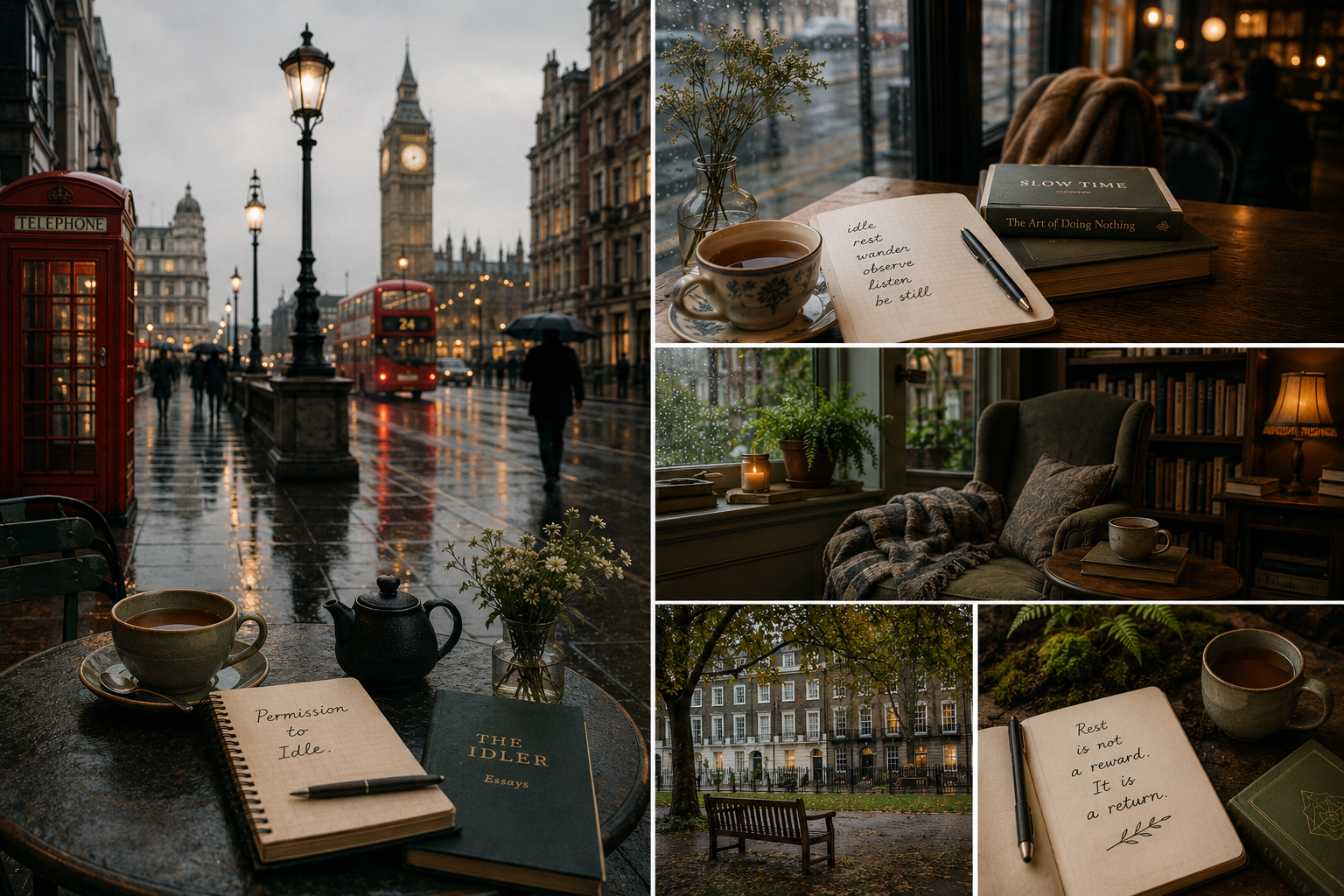
Inspired by the philosophy of idling championed by Tom Hodgkinson and The Idler—a quiet reminder that slowing down, paying attention, and reclaiming time remain radical acts.
Not long after returning from hiking the Camino de Santiago, I stumbled across an article called Permission to Idle. In it, I read about British writer Tom Hodgkinson and the The Idler Academy in London—a place dedicated to conversation, slowing down, reclaiming time from urgency, and honoring the art of simply being.
I remember very little of the article itself now. I could not quote it if I tried.
But I remember exactly how it made me feel.
It felt as though someone had quietly opened a door.
At the time, I had spent much of my life measuring myself by movement. Productivity. Endurance. Achievement. Like many people, I had internalized the belief that rest was something to earn—that stillness came after the work was finished and leisure was a reward for usefulness.
And yet here was this strange, almost rebellious idea:
What if idling was not laziness?
What if it was necessary?
The idea stayed with me. I was enchanted. Then life, in its own way, invited me into the experiment.
Since retiring, I have found more space to rest and idle—not because I became less ambitious or stopped caring about growth, but because there was finally room to notice my own life again.
And what I discovered surprised me.
Doing less did not make life smaller.
It made it richer.
We Have Forgotten How to Rest
Modern life offers us very little permission to be still.
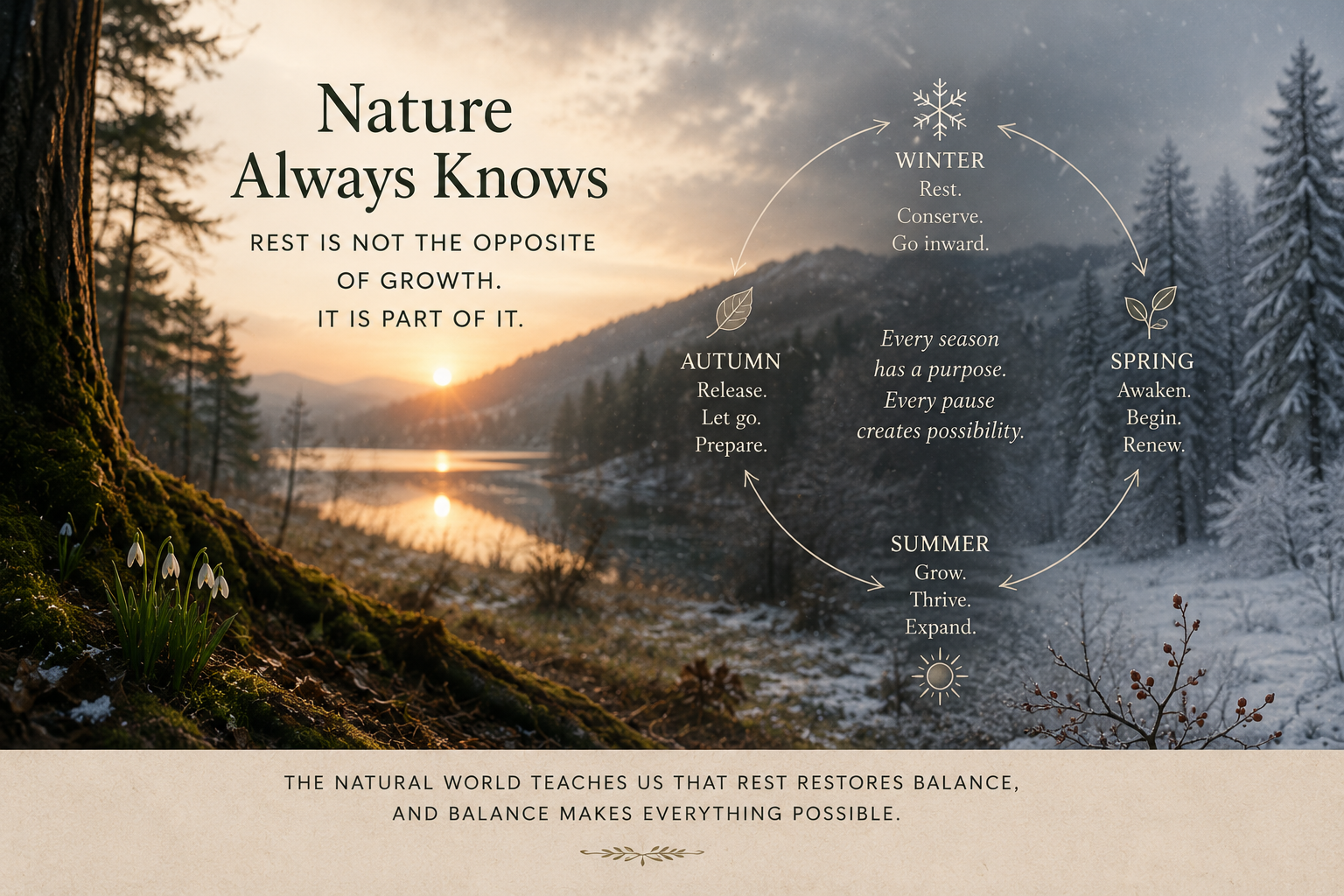
Nature never apologizes for winter, darkness, or stillness—and perhaps we were never meant to either.
We fill waiting rooms with phones. We answer emails while eating. We call exhaustion success and busyness importance. Even our leisure has become optimized, measured, monetized, and curated.
Productivity itself is not the problem. Meaningful work can be deeply fulfilling. But somewhere along the way, many of us absorbed the idea that our value is tied to output.
That a good day is a full day.
That empty space must be filled.
That sitting still is wasted time.
The consequence is not simply tiredness. It is disconnection. We become disconnected from our bodies, from creativity, from intuition, from community, and eventually from ourselves.
I have learned through both experience and my work in wellbeing that recovery is not the absence of effort.
Recovery is where growth happens.
Our nervous systems were never designed for endless activation. They require cycles. Expansion and contraction. Effort and restoration. Input and integration.
Nature understands this.
Winter is not failure.
Night is not failure.
The fallow field is not failure.
Perhaps we are not failing either.
Perhaps we are simply overdue for rest.
Boredom Is Not Empty — It Is Fertile
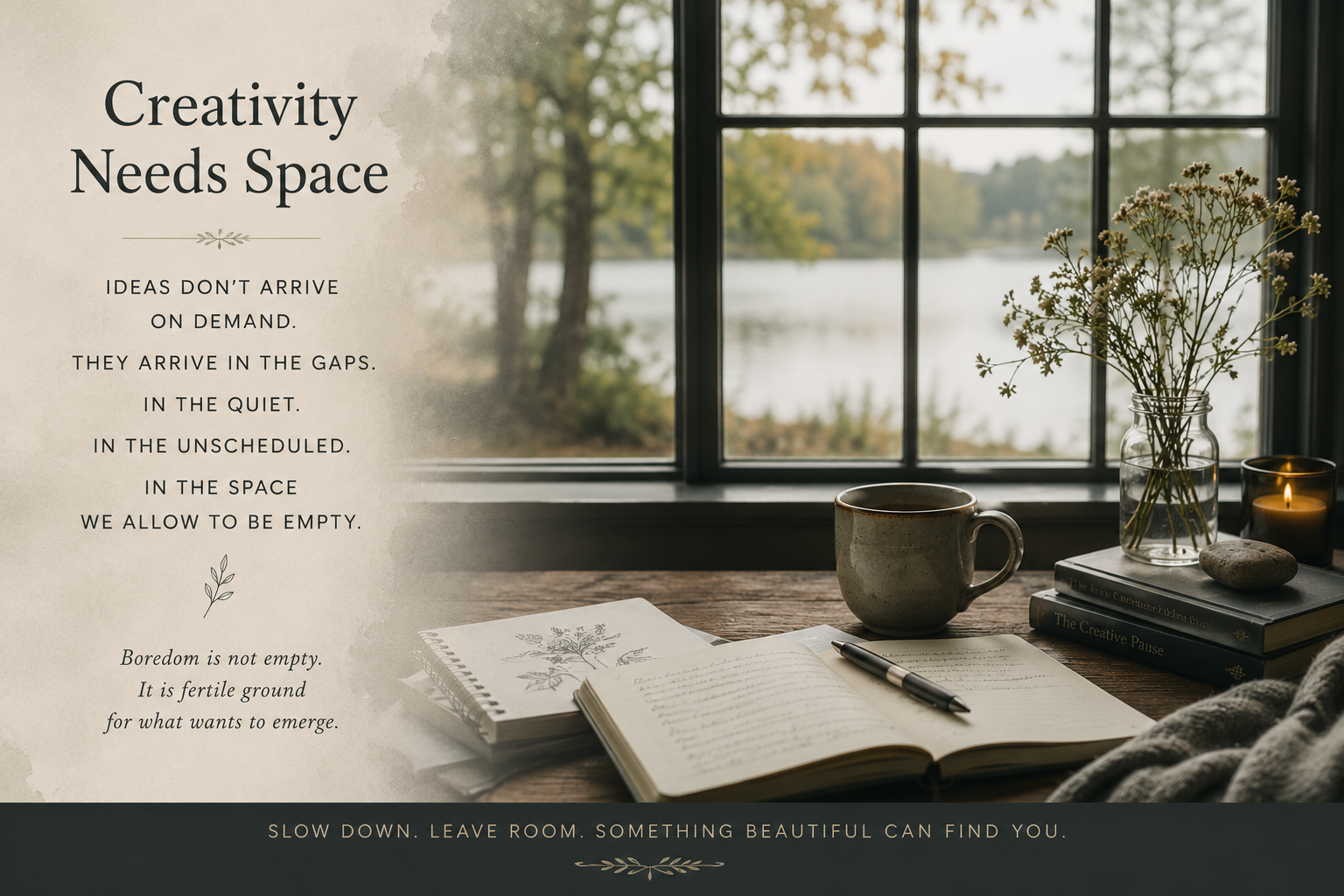
Creativity rarely arrives when every moment is occupied—it appears in the quiet spaces where we finally make room to notice our own lives.
One of the most unexpected gifts of slowing down has been creativity. Not productivity disguised as creativity. Actual creativity. The kind that arrives quietly. The kind that cannot be forced.
Since retiring, my days have become slower and more spacious. I write. I redesign living spaces. I cook meals I have never tried before. I sit outside. I meditate. I read. I dream. I watch light move across the room.
Sometimes I do absolutely nothing.
And strangely enough, this has not made me less engaged with life. It has made me more present. Ideas appear while washing dishes. Solutions emerge while walking. Stories surface while drinking tea.
It seems that creativity does not thrive under constant demand.
It thrives in open fields.
When we eliminate every moment of boredom, we also eliminate the doorway through which imagination often enters.
Children know this instinctively. Artists know this. Pilgrims know this. The Camino taught me this long before I understood it.
There is wisdom in walking slowly enough to notice.
There is wisdom in staring out windows.
There is wisdom in allowing thoughts to arrive rather than chasing them.
Sacred Rest Is a Practice, Not a Reward
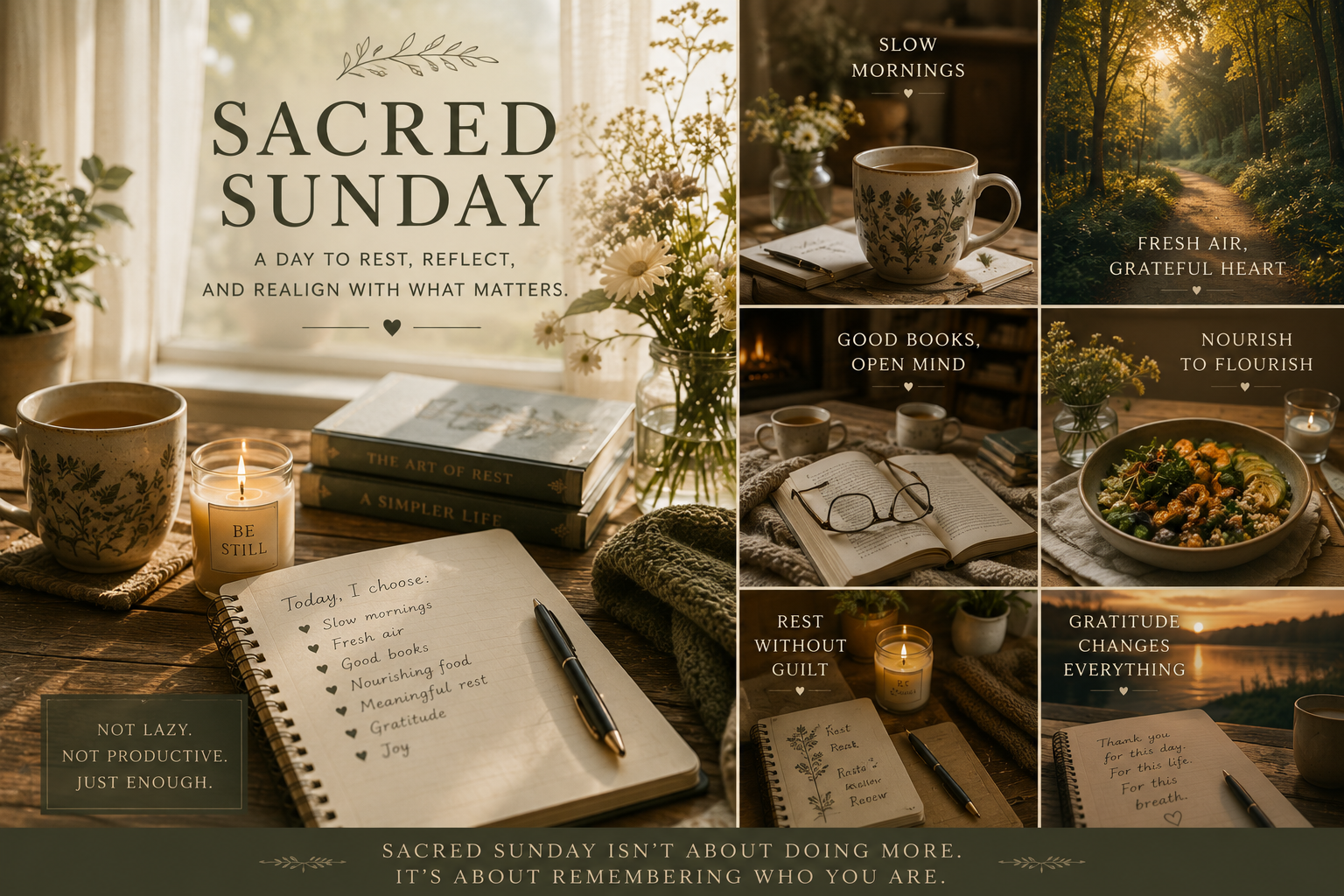
Sacred Sunday is my weekly reminder that I am not here simply to produce—I am here to notice, create, rest, and fully inhabit my own life.
One of my favorite rituals is something I call Sacred Sunday.
No alarm. No obligations. No reaching for the world before I have checked in with myself.
I light candles. Drink tea. Journal. Meditate. Read. Pull tarot or oracle cards. Spend time in silence. Sometimes I walk. Sometimes I do nothing at all.
The point is not productivity.
The point is remembrance.
A weekly ritual of telling myself: My worth does not increase because I produce.
Retirement has made this easier for me. But I do not believe retirement is required. Rest can happen in small ways.
Ten quiet minutes with tea.
Lunch outside.
One unscheduled evening.
A walk without headphones.
Writing one sentence.
Sitting under a tree.
Watching rain arrive at a campsite.
Leaving room.
I think many of us imagine rest as an escape from life. But increasingly, I wonder if rest is how we return to it.
Not withdrawal.
Presence.
Not emptiness.
Attention.
Not doing nothing.
Doing less so we can finally experience more.
And perhaps that is one of the most radical things we can do in a culture that constantly asks us to accelerate.
Become fully present in our own lives.
-Dani Keating
Health & Life Coach